Nazir Afzal Confronts Anti-Muslim Sentiment as Ramadan Culminates
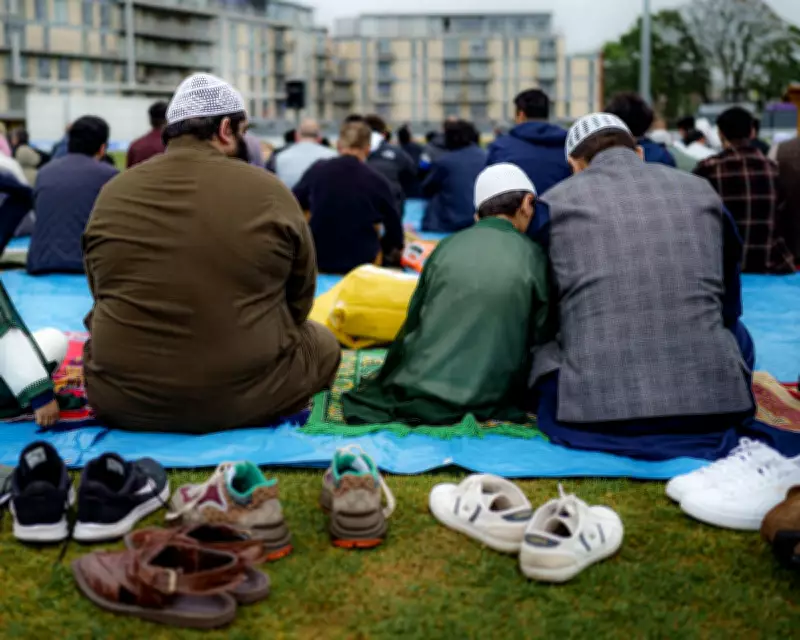
As the holy month of Ramadan draws to a close, with Eid prayers observed across Bristol and other UK cities, a prominent British Muslim voice speaks out against the rising tide of anti-Muslim hostility. Nazir Afzal, chancellor of the University of Manchester and former chief prosecutor for northwest England, delivers a powerful personal testament, asserting that his faith refines rather than defines him, and challenging the pervasive stereotypes that plague Muslim communities.
The Contradiction of Visibility and Invisibility
Afzal highlights a stark contradiction in how his Muslim identity is perceived. In his roles as university chancellor, chair of The Lowry arts centre, or on the Church of England's safeguarding panel, his faith is rarely mentioned or considered relevant. However, when he served as chief prosecutor, particularly in cases involving grooming gangs, he was consistently labeled the "Muslim prosecutor." This selective emphasis on religion, he argues, reflects a broader societal tendency to view Muslims as "other" only in contexts of authority or accusation, while overlooking their daily contributions to British society.
"Why is my faith incidental when I succeed in civic leadership, but central when I exercise authority?" Afzal questions. He points out that Britain's 3.9 million Muslims are integral to the nation's economy, public services, arts, and communities, working as doctors, teachers, entrepreneurs, soldiers, civil servants, and care workers.
Confronting Anti-Muslim Hatred and Misconceptions
Afzal rejects the term "Islamophobia" as too abstract, insisting on calling it what it truly is: anti-Muslim hatred. He describes a daily reality of hostility, suspicion, discrimination, and abuse, exacerbated by social media and legal loopholes. Muslims face collective blame for individual actions, with crimes by one Muslim often portrayed as indictments of all, and cultural or theological concepts distorted to provoke fear.
He addresses specific misconceptions head-on. For instance, he notes that most halal meat in Britain is pre-stunned, similar to non-halal meat, and that practices like honour-based abuse or female genital mutilation are rooted in misogyny and patriarchal cultures, not Islam. Regarding grooming gangs, Afzal, who led prosecutions in such cases, states he never observed religious motivation, only men exploiting vulnerable girls and institutional failures.
Diversity and Nuance Within Muslim Communities
Emphasising the extraordinary diversity among British Muslims, Afzal notes that in London alone, Muslims trace heritage to over 60 countries. This diversity brings complexity, and he acknowledges real challenges, such as extremism, integration issues in some areas, and over-representation in prisons. However, he stresses that confronting these problems honestly is a responsibility to the community, not a concession to bigots.
"Bigots do not require evidence to hate; they require only a target. Silence does not protect us. It merely postpones the reckoning," he warns.
A Call for Recognition and Hope
Despite the challenges, Afzal remains hopeful, citing Britain's strength in tolerance and the insistence that citizenship should not depend on conformity. He describes Ramadan as a time of spiritual discipline, reflection, and charity, where Muslims fast quietly, feed neighbours, and give generously—more than any other group in the UK.
He concludes with a poignant question: "The real question is whether Britain is prepared to see us as we truly are, not a headline, not a threat, not a stereotype, but fellow citizens." Afzal's message is clear: British Muslims are too diverse and embedded in every corner of national life to be reduced to caricatures, and their faith calls them to justice, service, and compassion, refining their contributions to society.