A Lifeline in the Chaos: The Nurse Who Saved a Family
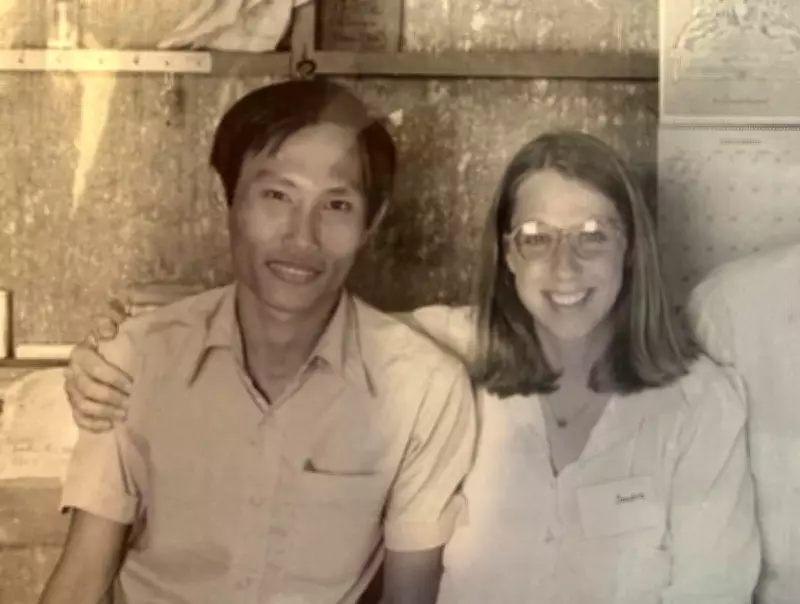
In countless faded photographs from a refugee camp, one woman appeared repeatedly. Rathana Chea's parents would reminisce about her infectious, booming laugh and her unwavering, relentless optimism. This was Sandra Evenson, a nurse from Minneapolis, Minnesota, whose compassion would alter the course of their lives forever.
Surviving the Khmer Rouge Genocide
Four decades ago, Rathana Chea's parents were Cambodian refugees, high school students thrust into one of humanity's darkest chapters. They endured nearly five years in forced labour camps under the brutal Khmer Rouge regime, a period during which an estimated 2.7 million Cambodians perished. Their survival was a miracle in itself.
When Chea's mother discovered she was pregnant, the couple made a desperate decision. They fled on foot through landmine-ridden jungles towards the Thai-Cambodian border, carrying nothing but their lives and a fragile hope for their unborn child's future. It was in a refugee camp, a place defined by loss, fear, and profound uncertainty, that Rathana Chea was born.
The Power of Civil Society and Compassion
What greeted his parents next was not bureaucratic policy or market-driven solutions. It was the power of civil society. Volunteers from across the globe stepped into the void where states and institutions had failed. Among them were American nurses who offered their skills and care in unimaginably difficult conditions.
Sandra Evenson, a nurse from Minneapolis, took the young family under her wing. She guided them through medical checks, complex paperwork, and the daily struggle for survival with dignity. She cared for them, and for the infant Rathana, as if they were her own family. Her kindness included pressing $50 from her own pocket into their hands when she learned of their acceptance for resettlement in Australia, so they could buy clothes for the journey ahead.
A Painful Parallel: The Death of Alex Pretti
Four decades later, another tragic event involving a Minnesotan nurse would unfold. Alex Pretti, a nurse shot by ICE agents while aiding migrants, made the ultimate sacrifice. His reported final words—"Are you OK?"—resonated deeply. Rathana Chea watched this news in horror, seated beside the very nurse who had saved his family: Sandra Evenson, who was visiting them in Sydney that week.
"I was too young to remember her kindness," Chea reflects. "My life is the evidence of it." After resettlement in Australia and Sandra's subsequent relocation to Rwanda, contact was lost. For forty years, she lived only in his parents' memories and in a small album of grainy photographs.
The Search and Emotional Reunion
Determined not to let Sandra become an unsung hero lost to history, Chea embarked on a search. After months of online detective work and countless emails to nurses named Sandra Evenson across the US, he finally received a reply: "Yes, this is me. More to come."
Following tearful video calls, Sandra, accompanied by her former supervisor Patty Seflow, travelled from the freezing Minnesota winter to a humid Sydney summer. Their reunion at Sydney airport was not marked by fanfare but by quiet emotion in a car park—a moment shaped by time, tears, and the enduring power of humanity.
Nurses: The Moral Compass of Society
Chea's story highlights a profound contradiction in our current era, where migrants and refugees are often dehumanised and politicised. In the US, aggressive ICE raids tear families apart, while in Australia, far-right groups challenge multiculturalism. Yet, as Chea argues, America's greatest power has historically been its humanitarianism and civil society—the moral courage at the margins that saves lives.
Nurses like Sandra Evenson and Alex Pretti embody this. They are the carers in crises, often invisible yet carrying the moral infrastructure of our societies. "It was nurses who cared for my parents when they were stateless," Chea writes. "It was nurses who cared for me before I had a passport, a nationality, or a future anyone could name."
His life exists because someone chose compassion over convenience, service over safety, and kindness over borders. Pretti's final question—"Are you OK?"—is not political but fundamentally human. It is a question we must ask ourselves and our societies as we navigate turbulent times, determining who belongs and who is protected.
As we watch events unfold across the Pacific, it is time to pose this question once more, quietly and urgently: Are we OK?