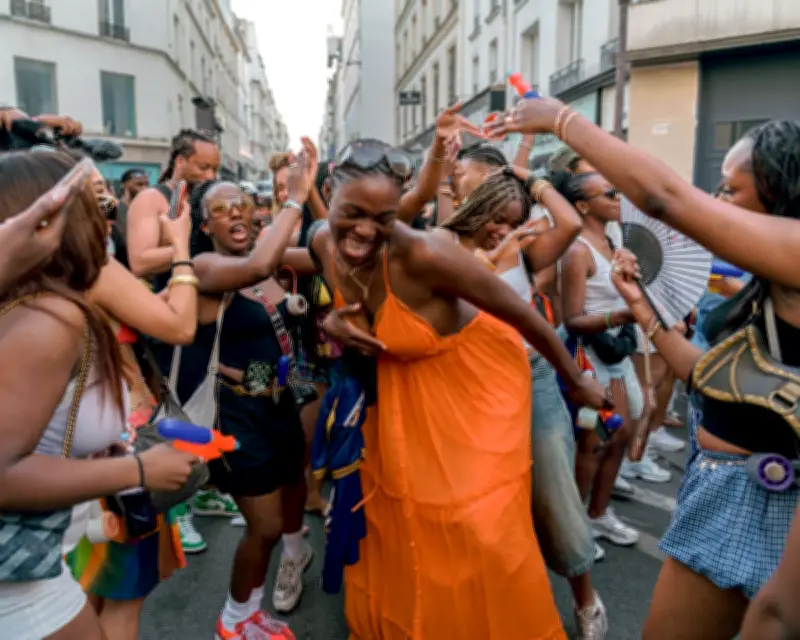
Paris, often associated with cafes and couture, is increasingly defined by its vibrant Black diaspora culture. With Europe's largest Black population and the world's second-largest rap scene, the city has become a nexus for African, Caribbean, and French influences. However, cultural visibility has not yet translated into structural power, according to cultural writer Achille Tenkiang and Liz Gomis, executive director of Maison des Mondes Africains (MansA).
Black Culture, en Français
France is home to the second-largest rap scene globally, and its Black population is the largest in Europe. Events like the Fête de la Musique, now dominated by African French sounds, challenge the idea that Paris's cultural reputation relies solely on traditional institutions. The city's African and Caribbean communities have reshaped its cultural landscape, drawing from west, central, and north Africa as well as the Caribbean.
Tenkiang notes that Paris sustains a granularity of African identity, allowing Cameroonian, Malian, Senegalese, and Congolese identities to remain distinct. "French is ours," he says, highlighting how generations of African and Caribbean speakers have infused the language with new rhythms and references. Gomis adds that Paris is not the source of Afro-francophone creativity but a meeting place where its currents influence each other.
Historical Roots of Black Cultural Exchange
Black cultural exchange in Paris dates back to the 1920s, when Martinican sisters Paulette, Jane, and Andrée Nardal hosted literary salons that shaped the négritude movement, involving figures like Aimé Césaire and Léopold Sédar Senghor. Postwar migration from Senegal, Côte d'Ivoire, and other regions expanded Afro-francophone communities. The French government's Bumidom initiative in the 1960s brought migrants from overseas territories like Guadeloupe and Martinique to address labor shortages.
Gomis explains that these communities created new cultural spaces to exist. By the 1970s, Paris became a hub for music recording and distribution, serving Europe, Africa, and the DOM-TOM market. In the 1980s and 1990s, sapeurs from Congo-Brazzaville transformed elegance into performance, while Caribbean and African communities blended music, fashion, and dance in clubs and house parties.
A Generation Refuses to Choose Between Black and French
Black culture is now mainstream in France, but Tenkiang and Gomis argue that this is not a sudden awakening. Technology has allowed younger artists to bypass traditional gatekeepers, and a new generation refuses to choose between Black and French identities. Tenkiang observes young people wearing locs, natural hair, and patterned clothing with ease, unlike a generation ago. "Our parents were taught that these parts of themselves weren't worth preserving," he says. "This generation is saying no."
African and Caribbean slang from the banlieues has entered everyday French. Rappers like Gazo (of Guinean descent) and Meryl (Martinican) push traditions of metaphor and wordplay. Global stars like Aya Nakamura, Tayc, and Tiakola have crossed over to anglophone markets.
When Will Black Artists Get Their Flowers?
Greater visibility does not equal power. Gomis describes a paradox: "People think we are the hype, and at the same time we don't exist in the actual cultural, political or media landscape. So we create." In 2024, President Macron supported Aya Nakamura performing at the Paris Olympics opening ceremony, sparking far-right backlash questioning her Frenchness. Tenkiang says the debate raged because this generation refuses to be invisible.
Cultural influence often precedes institutional recognition. Congolese-French artist Theodora, whose song "Kongolese Sous BBL" won at the Victoires de la Musique, performed for "all the weird girls who grew up in the suburbs." Independent structures like Maison Château Rouge, a fashion brand using African fabrics, and initiatives like MansA are building community infrastructure.
The Future of Paris as a Black Cultural Hub
Gomis believes the future may involve a distributed network, with cities like Abidjan rivaling Paris. Tenkiang points to Paris's unmatched infrastructure—transport links, publishers, galleries, and fashion houses—that make it easier for artists to circulate. Paris remains a great meeting place for Afro-francophone culture, where ideas and traditions evolve and become visible, sustained by communities that have always shaped it from within.