Football Rivals Discover Common Ground Beyond the Pitch
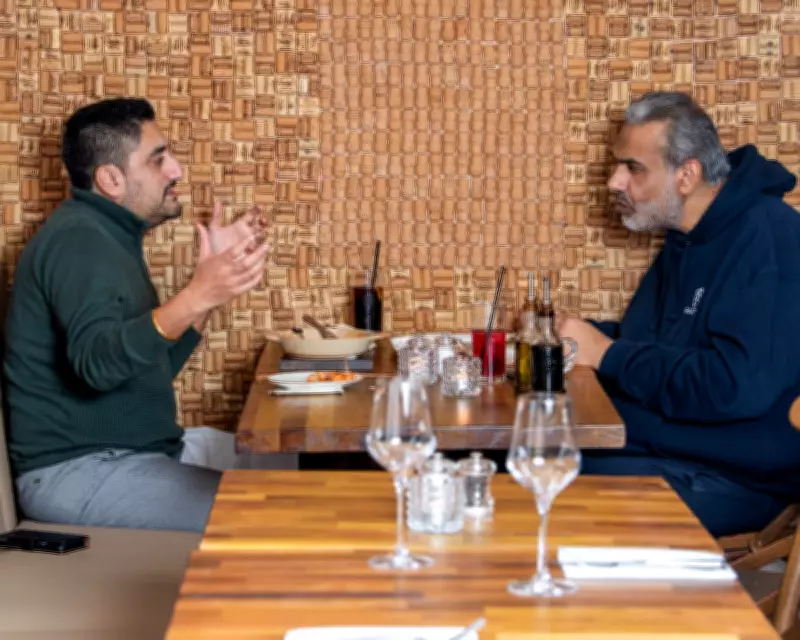
In an unexpected meeting of minds, two football supporters from rival clubs set aside their team allegiances to tackle pressing societal issues during a shared meal. Aaran, a 43-year-old executive recruitment professional from Winchester, and Mashood, a 51-year-old internet broadband CEO from East Hampshire, demonstrated that meaningful dialogue can bridge even the deepest divides.
Contrasting Backgrounds, Shared Concerns
Aaran, who has lived in Malaysia and Indonesia but cherishes British seasons and standards, votes Labour historically but recently switched to Lib Dem after moving to a Tory stronghold. Mashood, who relocated to Dubai in 2005 seeking growth opportunities before returning in 2019, oscillates between Conservative and Lib Dem voting, with growing sympathy for Green policies.
Their conversation began with lighthearted football banter—Aaran supporting Manchester United, Mashood backing Arsenal—but quickly deepened into substantive debate over garlic bread and seafood pasta at Cucina dei Sapori in Alton.
The Smartphone Controversy: Parental Responsibility vs. Government Intervention
The central conflict emerged around children's smartphone use. Aaran argued passionately that smartphones represent a modern public health crisis comparable to tobacco in previous decades. "Tech giants understand exactly how addictive these devices are," he asserted, advocating for government intervention as a necessary protective measure.
Mashood countered with a critique of parental accountability: "Parents who provide smartphones then demand bans are essentially outsourcing their responsibilities to the government." He questioned the practicality of enforcement, noting how virtual private networks (VPNs) proliferated following age verification requirements in the Online Safety Act.
While Aaran maintained that "something is better than nothing" regarding government action, Mashood emphasized that societal safety perceptions often exceed actual risks, with comprehensive CCTV coverage already providing substantial protection.
Taxation Disparities and Environmental Policy
The diners found immediate agreement on taxation inequities. Both expressed frustration with the disproportionate burden placed on individuals compared to corporations. "Half your income disappears to taxes," Aaran noted, "while major organizations often contribute minimally."
Mashood extended this critique to environmental policy, arguing that green taxes unfairly target consumers while allowing oil companies and other major polluters to avoid proportional responsibility. "Effective environmental taxation must prioritize business accountability," he insisted.
Artificial Intelligence: Threat or Opportunity?
Their perspectives diverged again when discussing artificial intelligence. Aaran expressed concern about AI automating entry-level positions traditionally filled by graduates, potentially limiting crucial early career learning opportunities.
Mashood, whose children developed an AI tool for his company, presented a more optimistic vision: "Younger generations view AI as an opportunity rather than a threat. They're developing these technologies at astonishing speeds."
Both acknowledged AI's potential as a democratizing force, with Aaran suggesting it could help bridge educational disadvantages for those with strong work ethics but limited natural academic abilities. They agreed that establishing ethical frameworks represents society's greatest challenge regarding AI development.
Cordial Conclusions and Professional Connections
Despite their disagreements, the conversation remained respectful and productive. "We had a genuinely genial discussion," Aaran reflected. Mashood added, "We parted on excellent terms," noting they exchanged LinkedIn details to maintain their new connection.
Their dialogue demonstrates how individuals with different backgrounds and perspectives can engage constructively on complex issues—finding common ground on corporate accountability while respectfully debating the roles of government, parents, and technology in shaping society's future.