Denmark Defies Global Sex Recession with Unique Cultural Approach
As numerous developed countries grapple with a concerning decline in sexual activity among younger generations, Denmark stands as a striking exception. The Nordic nation's youth continue to maintain active, satisfying sex lives while their international peers report decreasing intimacy. This phenomenon reveals much about cultural attitudes, economic stability, and progressive education.
The Stark Contrast in Sexual Activity Statistics
Recent global surveys paint a troubling picture of declining sexual activity among young adults worldwide. A 2023 United States study found that 24% of adults aged 18 to 29 reported no sexual activity whatsoever in the previous year. The following year, a comprehensive survey by Feeld and Kinsey revealed that 37% of Generation Z respondents globally had not engaged in sex during the past month, compared to just 19% of millennials and 17% of Generation X.
In the United Kingdom, a 2020 YouGov poll indicated that only a quarter of people across all age groups had sexual intercourse in the previous week. Denmark presents a dramatically different scenario, with nearly half of straight men and 43% of straight women across all age groups reporting sexual activity within the same timeframe. Remarkably, the average age of becoming sexually active in Denmark has remained constant at 16.4 since the 1950s, with most Danes expressing satisfaction with their sex lives.
The Cultural Foundations of Danish Sexual Confidence
Multiple factors contribute to Denmark's distinctive approach to sexuality. Economic stability plays a significant role, with only 11% of Danes still living at home by age 24 compared to 18% in the UK. Danish students receive more than €600 monthly to support their education and typically take one to two years between secondary school and university, fostering greater personal confidence and independence.
"Danish people drink a lot—that doesn't hurt, either," notes Christine, a 24-year-old global development student. "But more importantly, it's accepted that you might have an intimate connection with just a friend. It takes a lot to get people to settle into a committed relationship."
Progressive Sex Education and Government Support
Denmark's sex education system has undergone significant evolution in recent years. "It's become gradually more sex positive," explains Katinka, a 25-year-old public health student. "There's more focus on female pleasure. I would definitely say it was inclusive."
This inclusive approach extends to government policy. During the COVID-19 pandemic, Denmark's health minister publicly declared: "Sex is good. Sex is healthy. Of course you can have sex in this situation." This official endorsement reflects a broader cultural acceptance that permeates multiple aspects of Danish society.
Commercial and Social Spaces Embracing Sexual Openness
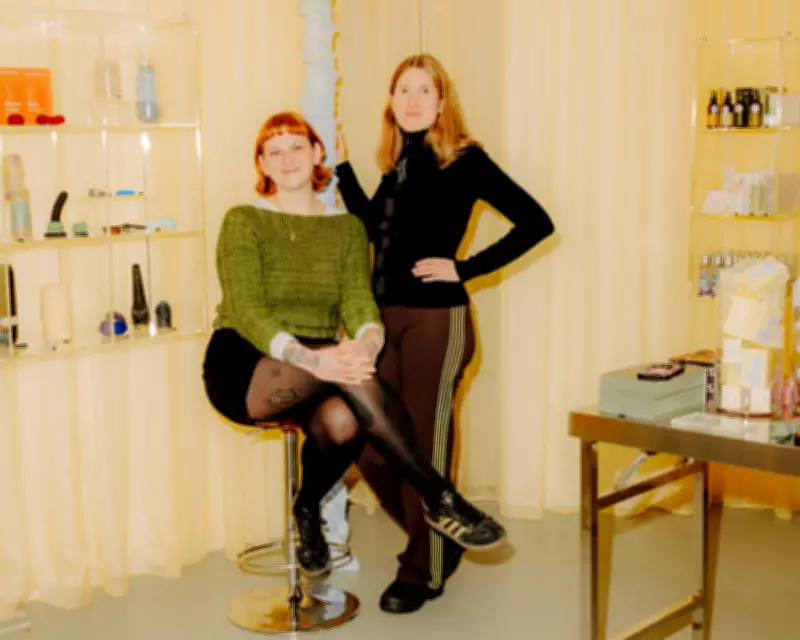
Copenhagen's Peech, an adult entertainment store co-owned by Kathrine Graa and Clara Filippa Andersen, exemplifies Denmark's progressive attitude toward sexuality. "We wanted to stock things that were aesthetically pleasing," Andersen explains, "because when it's beautiful it takes some of the shame out of it."
The country's club culture further reinforces this openness. "A lot of dance clubs observe safer space rules: no homophobia, no transphobia, no misogyny, no crossing boundaries," says Anna, a 35-year-old cultural observer. "Consent is a huge part of it. That's really seeped into the culture of Generation Z—they're very sex positive."
Public Health Challenges and Innovative Solutions
Despite Denmark's sexually active population, public health challenges persist. The country leads OECD nations in chlamydia rates, partly due to low condom usage among young people. "I think maybe people feel fearless," suggests Nanna, a 25-year-old worker with Checkpoint, Denmark's STI testing organization. "A lot of women think: if I can't get pregnant, I'm fine."
Checkpoint addresses gaps in traditional healthcare by providing non-judgmental testing services. "You meet a lot of bias and a lot of stigma and ignorance with traditional GPs," explains Miranda, a 29-year-old Checkpoint employee. Their approach tests based on where individuals actually had sex rather than making assumptions about sexual behavior.
The Global Context and Danish Exceptionalism
Internationally, theories about declining sexual activity often focus on social media and dating apps creating isolation and superficial connections. While Denmark faces similar technological challenges—the government recently announced plans to restrict social media use for those under 15—these factors haven't diminished sexual activity among Danish youth.
"Gen Z and alpha are very fluid, no boxes at all," observes Kathrine Graa of Peech. "The whole reason we're called Peech is that it's emoji language for butt. And everybody's got a butt." This playful attitude reflects Denmark's broader cultural comfort with sexuality as a normal, healthy aspect of human experience.
Denmark's approach combines economic security, inclusivity, gender equality, straightforward communication, sex-positive education, supportive government policies, and hedonistic cultural elements. While no single factor explains the nation's exceptionalism, this comprehensive cultural ecosystem creates an environment where sexual expression flourishes despite global trends toward decreased intimacy.