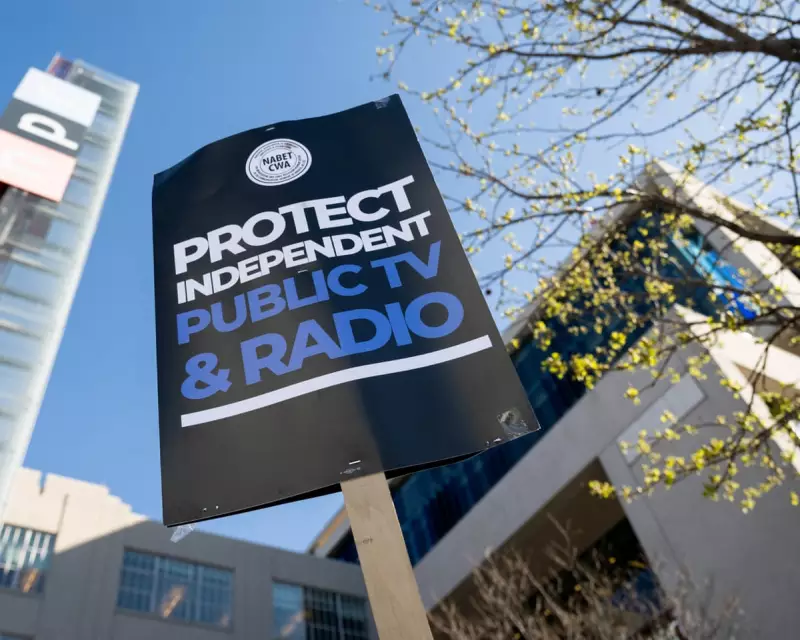
The abrupt termination of federal funding for American public broadcasters has ignited an unprecedented wave of listener donations, dubbed 'rage-giving', as communities rally to save their local radio stations. The move, initiated by the Trump administration in July 2025, has left over 1,500 outlets facing severe financial shortfalls, prompting a grassroots funding surge that has brought both hope and uncertainty.
The Immediate Crisis and Community Backlash
When Congress voted to eliminate funding for the Corporation for Public Broadcasting (CPB) in July 2025, it created an instant crisis. Luke Dennis, general manager of WYSO radio in Yellow Springs, Ohio, describes the decision as 'panic inducing', not just for the loss of funds but for the complete lack of warning. The station was suddenly confronting a $600,000 hole in its budget for the current and upcoming financial year, threatening recently hired staff and ambitious projects like a new public studio in Dayton.
However, the community response was swift and powerful. WYSO, which serves 14 urban and rural counties in south-western Ohio, recorded its largest single-day donation total ever in late July 2025. Dennis notes they have added more new members this year than in any previous period. This pattern has repeated across the United States. By last July, approximately 120,000 new donors had contributed $20 million to public radio and television stations, with overall donations soaring $70 million above the previous year's figures.
'An Act of Resistance': The Rise of Rage-Giving
This phenomenon, now widely termed 'rage-giving', represents a significant shift. For years, donor numbers had been in decline, but 2025 marked a dramatic reversal. A study of 50 public media organisations by Current revealed a 61% increase in donor growth between August 2024 and August 2025. Notably, the proportion of donors aged 45 or younger nearly doubled to 24%.
Luke Dennis interprets this surge as a form of civic action. 'People want to know what they can do to be helpful right now, at a moment when it feels like the government is not listening to their concerns,' he says. 'Sending 25 bucks to your local radio station, for some, I think, it's viewed as an act of resistance.' The data supports this, showing the sharpest increase in online donations, a hallmark of crisis-driven giving.
The impact is tangible from Colorado to Alaska. KSUT, a broadcaster serving Native American communities across several states, recorded its highest-ever donation total. Similar success stories emerged in Kentucky and Vermont. Furthermore, philanthropic foundations announced a $36.5 million 'immediate relief' donation in August 2025, with $26.5 million directed to a newly established Public Media Bridge Fund aiming to raise $100 million for the most at-risk stations.
A Temporary Fix for a Permanent Problem?
Despite this generosity, experts warn it is insufficient to bridge the long-term gap. The cuts eliminated more than $535 million in immediate funding, plus hundreds of millions more that stations had budgeted for future operations. Scott Finn, a former public radio CEO and now an instructor at the University of Vermont, acknowledges the donor response is typical when public media is 'under attack'. However, he cautions, 'It's good – and it's not enough because what tends to also happen is that fades over time.'
Low-population regions are especially vulnerable. Prairie Public in North Dakota cut 12 jobs, while KYUK in Bethel, Alaska—which relied on federal money for 70% of its costs—eliminated six full-time positions. Although NPR offered $8 million to help affiliates license its content, this is a fraction of the total shortfall.
Some political recognition of the value of public broadcasting has surfaced, even among Republicans. Congressman Mike Turner, whose Ohio district includes WYSO listeners, voted against the Rescissions Act of 2025 that ended CPB funding. Yet, for station managers like Luke Dennis in Yellow Springs—a town of just 3,600 people—anxiety about the future persists. 'I'm concerned in two years … when people forget how angry they were,' he admits, while affirming that planning for that eventuality is already underway.
The story of American public radio in 2025 is thus one of remarkable community solidarity forged in crisis, juxtaposed with the stark reality that listener generosity alone may not be a sustainable substitute for systemic public funding.