Channel 4's Tony Blair Documentary Delves into Delusions of Grandeur
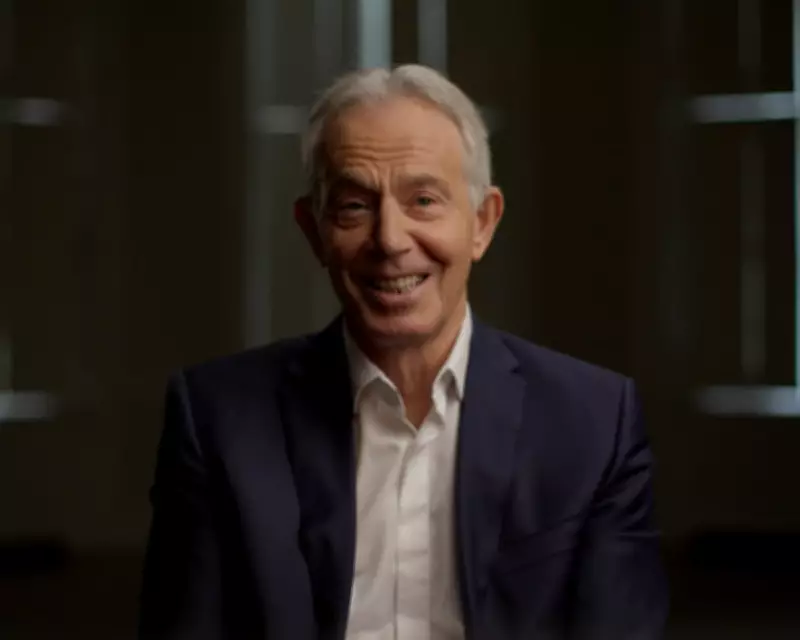
In a revealing moment from Channel 4's three-part documentary, The Tony Blair Story, the former prime minister is asked to introspect about his own personality. Breaking the fourth wall, Blair responds with incredulity, questioning the point of identifying his weaknesses when he would only offer a politician's answer. When reminded he is no longer in office, he replies honestly, You're always a politician, encapsulating the enduring nature of political identity.
Nostalgic Political Footage and Candid Interviews
Directed by Michael Waldman, the series serves as either a futile exercise in confirming existing prejudices or over three hours of compelling television. Viewers are yanked back to memories of political horribles, with footage that triggers nostalgia, such as Robin Cook at John Smith's funeral or Max Hastings describing Blair's henchmen as absolutely ruthless bastards. Jack Straw's interview in a black velvet jacket adds a cinematic touch, reminiscent of Death on the Nile.
The documentary revisits old battles without uncovering new ground, yet it satisfies with reminiscences. Jonathan Powell recalls Mo Mowlam stating that Tony succeeded because he thought he was fucking Jesus, a sentiment echoed by Robert Harris after Kosovo, where Blair thought he could walk on water. This Jesus complex motif runs throughout the show, highlighting perceptions of Blair's delusions of grandeur.

Critiques and Family Insights
Accusations that Blair's emotional intelligence outstripped his intellectual capacity are made, often by figures like Jeremy Corbyn, who labels Blair a man in denial. Corbyn's critique, while not unfair, lacks authority given his own political defeats. The documentary avoids relitigating Iraq in depth, instead focusing on voyeuristic family content. Baby Leo, now 25, and siblings Kathryn and Euan offer sensible perspectives, while Cherie Blair emerges as a forceful presence, candidly discussing political rivalries without remorse.
Cherie's astonishment at feeling sorry for Gordon Brown underscores the vicious reality of political rivalry. She reveals pushing Blair to consider a different successor, challenging observers' unwillingness to process such dynamics. The series also addresses the perennial question of money, critiquing Britain's babyish shock at politicians' financial interests, paralleled with figures like Jacinda Ardern on the speaker circuit.
International Perspectives and Ironies
Bill Clinton expresses sympathy for Blair's divided loyalties between the US and Europe pre-Iraq, carefully choosing words to describe Blair as in a pickle. Blair defends his support for George W. Bush as pragmatism, arguing Britain's middle-sized economy deludes itself about its global place, necessitating alignment with the US. This assessment ironically highlights Blair's own delusional overreach, a theme that persists as he claims more power now than as prime minister through the Tony Blair Institute for Global Change.
His involvement in post-conflict Gaza with Jared Kushner prompts dark humor about regional suffering. Ultimately, the documentary evokes nostalgia not for Blair himself—embarrassing shots of the Gallagher brothers at Downing Street remain—but for an era of political optimism, captured by Blair sprinting up plane stairs, a symbol of energetic leadership now absent in today's political landscape.