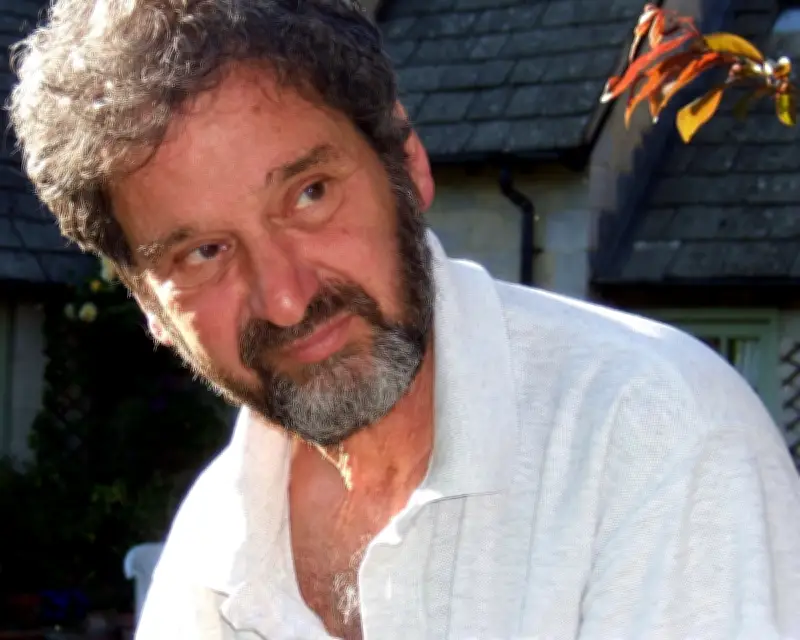
Sam Dastor, an actor whose career spanned seven decades and who believed that Shakespeare's plays were accessible to anyone who heard the verse spoken well, has died of cancer aged 84.
Early life and training
Born in Mumbai to a Parsi family, Dastor was introduced to Shakespeare at a young age by his arts-loving aunt, Roshen. His parents, Shera (nee Sethna) and Homi Dastoor, were sceptical of Indian independence and set sail for Britain, where Homi had studied medicine before taking over the family optician's shop. The emigration proved temporary for his parents, but Sam and his older sister, Zarine, remained in the UK.
At prep school he caught the acting bug, which developed at Bryanston school in Dorset and then exploded at Cambridge University. By his third year he was warned he would lose his scholarship if a student production of Waiting for Godot travelled to a festival in France. “Dastoor has only four weeks to go until his final examination. The college feel he should spend the time studying,” his tutor told the Daily Herald.
Career highlights
Dastor trained at Rada in London in the mid-1960s and had spells in regional repertory theatres before joining Laurence Olivier's National Theatre and then Granada TV's experimental Stables company. For Leeds Playhouse in 1974, he was Ariel to Paul Scofield's Prospero in The Tempest, which also enjoyed a long West End run.
He became a familiar face on British TV in the 1970s in dramas such as I, Claudius and Man of Straw. Roles in Space: 1999 and Blake's 7 earned him an enduring place in sci-fi fandom.
Political and theatrical heroes
Sam was a traditionalist who believed that Shakespeare's plays were accessible to anyone who heard the verse spoken well. If Mahatma Gandhi and Tony Benn were his political heroes, then John Gielgud was his theatrical one. He was honoured to take part in a BBC radio production of King Lear in 1994 led by the 90-year-old Gielgud.
Among his contemporaries was Miriam Margolyes, who in her 2021 memoir This Much Is True recalled his “fine dark eyes, a slender figure and a superb speaking voice”.
Personal life and later career
In 1972 he married Angela Platten, to whom he remained devoted, and became a loving stepfather to Emma and Alice, and father to a son. The family spent four years in mid-Wales followed by a return to London and later Oxfordshire.
Dastor dropped an “o” from his surname in the hope of being less typecast, but felt cursed by being too Indian for English roles and sometimes too English for Indian ones. He was upset not to clinch the lead role of Gandhi in the 1982 biopic, but fulfilled his ambition of playing him in the TV series Mountbatten: The Last Viceroy (1986) and the film Jinnah (1998).
He appeared in three Simon Gray plays, one of which, Cell Mates, in 1995, became famous for the departure of Stephen Fry, suffering a bipolar episode. Dastor later wrote to the Guardian to praise Rik Mayall's “pure guts” in carrying on.
Legacy
His skill as an audiobook performer of titles such as EM Forster's A Passage to India and Rudyard Kipling's Kim brought admirers and sustained his career until, in 2023, dementia forced his retirement.
He is survived by Angela, Emma, Alice, his son, and his younger sister, Yasmin.