The Downward Spiral of Political Journalism in Britain
Former BBC Television News head Roger Mosey has delivered a scathing critique of Britain's political media landscape, arguing that an obsession with sensationalist "hot takes" and personality-driven coverage has created a febrile atmosphere that prevents substantive policy discussion. Mosey contends that this media environment conspires with politicians to turn every incident into a leadership crisis, making it impossible for the country to focus on long-term solutions.
From Mandelson to Modern Media Frenzy
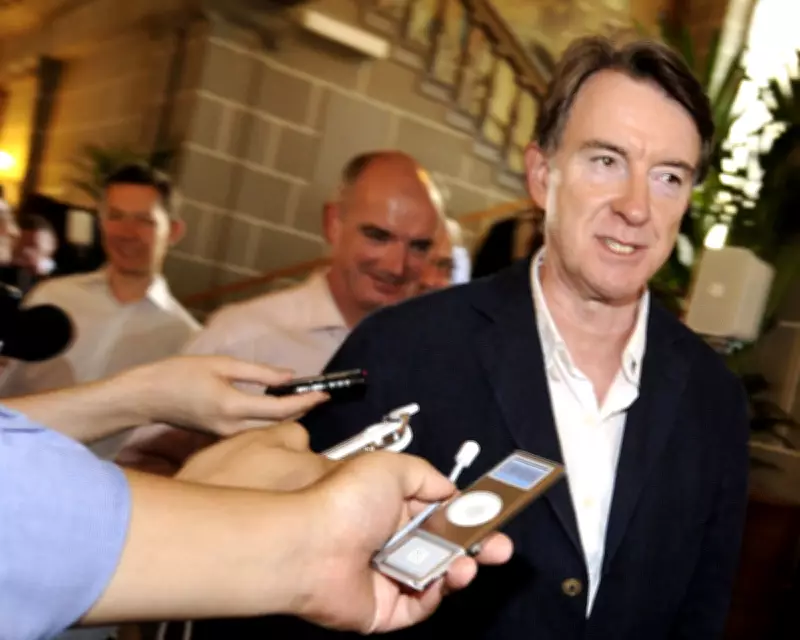
The recent Peter Mandelson affair, which provoked a genuine political crisis according to Mosey, exemplifies how media coverage amplifies Westminster dramas while neglecting substantive policy issues. While acknowledging the media was right to make it headline news, Mosey argues this incident reveals a deeper pattern where political process consistently overshadows policy substance.
"Almost everybody, including Keir Starmer, can see that the Peter Mandelson affair provoked a genuine political crisis," Mosey writes. "But it also shows the febrile atmosphere in which politicians and the media conspire to turn every incident into an issue of confidence in leadership."
A Historical Pattern Intensified
Mosey admits his own complicity during his time as editor of the Today programme in the 1990s, when coverage of John Major's Maastricht treaty ratification focused more on Conservative party infighting than the treaty's actual contents. This established a pattern where European affairs were viewed through a British party prism rather than being explained on their own terms.
"Our listeners had a far better briefing on the meltdown within the Conservative party than they did on what was in the treaty," Mosey acknowledges, describing this as part of a decades-long pattern.
The Social Media Acceleration
The situation has deteriorated significantly with the arrival of social media, according to Mosey. Attention spans have shortened, and the national debate has intensified with fury. For both politicians and journalists, a viral post now represents professional success, with punchier content being prioritized over thoughtful analysis.
"You no longer need to wait to be invited on to Radio 4's World at One to make your case against your leader," Mosey observes. "A few words on X during a boring train journey can change the news agenda in an instant."
The Policy Vacuum
A former senior editor quoted by Mosey puts it bluntly: "Most of the media today can't bear to look at what's actually wrong with Britain because that's policy and needs work that they can't be bothered to do. In any case, why worry when the next sugar-rush of personality or quasi-inquest politics will be along in a minute?"
This creates what Mosey describes as a "downward spiral" or "doom loop" of politics and media, though he insists this trajectory is not inevitable. Public service media and quality journalism organizations should theoretically stand aside from noise and hysteria to focus on substantive matters, but too often they fail to do so.
Recent Examples of Missed Opportunities
Mosey cites several recent examples where substantive policy discussions were overshadowed by personality-driven coverage. After a 2023 G7 summit in Japan, BBC's political editor asked Rishi Sunak not about the world economy or climate change, but about a speeding offence by then-home secretary Suella Braverman. Sunak's response - "Did you have any questions about the summit?" - was portrayed as evidence of his tetchiness rather than highlighting the missed opportunity for substantive discussion.
Similarly, current government initiatives are consistently viewed through the prism of Keir Starmer's survival rather than their policy merits. Home secretary Shabana Mahmood's immigration crackdown, for instance, invariably sees media focus shifting to her supposed leadership ambitions rather than the policy's substance.
The Bias Toward Dissent
While Mosey sees no overall partisan bias in media coverage, he identifies a clear bias toward increasing dissent and generating stories for 24-hour news outlets. Kemi Badenoch faces repeated questions about why she's not performing better in polls, despite historical evidence showing it takes years to recover from landslide defeats.
"Every Sunday on the political shows, there is a drumbeat about Labour's bad polling, when we are still more than three years away from a general election," Mosey notes. "It is becoming standard, rather than the exception, to assume that a leader might have to quit midterm if things don't improve as quickly as journalists think they should."
Short Memories and Selective Outrage
Media memory appears remarkably short, according to Mosey. The Today programme recently challenged a government minister about why Starmer, as a father, approved Mandelson's appointment as ambassador to the US given his friendship with a child sex offender. Yet at the time of the hiring, few journalists raised this point despite having full knowledge of Mandelson's associations.
Mosey clarifies that he's not arguing for politicians to receive a soft ride. "I'm in favour of giving them a harder time, which would happen if they and journalists were given space to think," he writes. The current process stories generate energy-sapping interviews where politicians simply parrot party lines.
The Policy Light Platform Problem
Labour won the recent election on a policy-light platform designed to be resistant to media attacks, Mosey observes. Predictably, this left them without enough thought-through policies and unable to claim a proper mandate for reforms, with welfare reform serving as the prime example.
"The last election campaign barely touched on the more intractable issues and was consumed instead by frothing about Sunak's attendance record at D-day and the alleged betting scandal in Downing Street," Mosey writes.
A Call for Change
While acknowledging that we cannot change politicians who enjoy playing political games or put the "malign social media genie back in its bottle," Mosey insists we can do better. A broadcasting colleague recently described recent coverage as "sensationalist," a characterization Mosey endorses.
"Wouldn't it be refreshing if next time we were praising clever and calm analysis instead?" Mosey concludes, calling for a return to substantive journalism that serves the public interest rather than chasing viral moments and personality dramas.