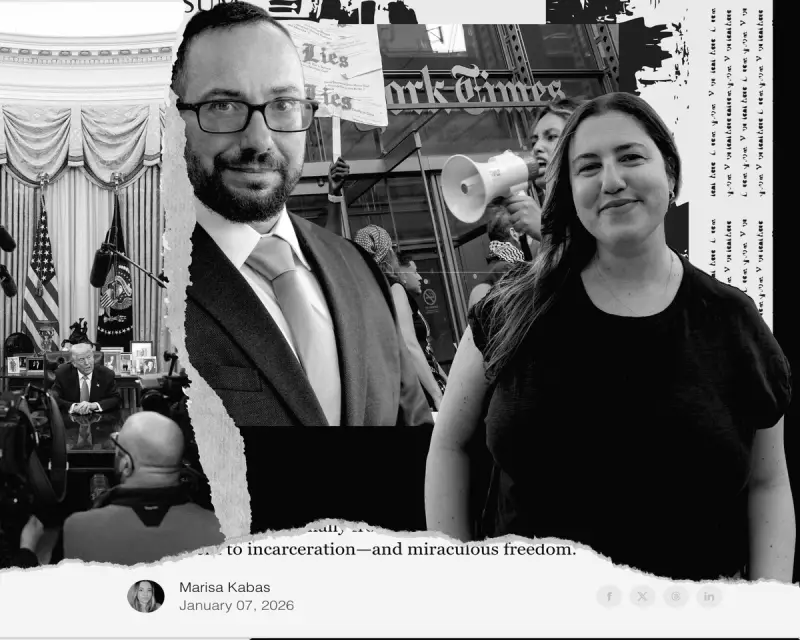
The start of Donald Trump's second term in January proved a deeply turbulent period for established media organisations, but it simultaneously created a significant opportunity for a new wave of independent journalists. Freed from corporate structures and institutional baggage, these reporters are building trusted, reader-funded platforms focused on stories they believe the mainstream is neglecting.
The New Guard: Scoops and Subscribers
When the president returned to office, major newsrooms braced for a barrage of executive orders and the threat of litigation. Against this backdrop, audience trust in media hit historic lows. This environment, however, proved fertile ground for independents like Marisa Kabas. Her newsletter, The Handbasket, broke the news on 27 January that the US Office of Management and Budget was freezing federal grants.
That exclusive led to further scoops, including reports on the US Tennis Association banning transgender athletes from women's competitions and the hiring of conspiracy theorist Gregg Phillips to lead FEMA's office of response and recovery. Kabas's publication is now 100% reader-funded, boasting over 31,000 subscribers, including more than 4,000 paying supporters.
"Being independent is a form of resistance in that it's going up against the old ways of practicing journalism," Kabas stated. "I feel like I have more latitude to come at systems of power, because I'm not answering to anyone."
A Hostile Climate for Legacy Media
The Handbasket is one of many small outlets gaining traction while traditional media faces unprecedented pressure. Over the past year, the Trump administration has taken aggressive actions, including barring the Associated Press from the White House press pool, defunding the Corporation for Public Broadcasting, and launching Federal Communications Commission investigations into NBC. The BBC faced a $10bn lawsuit, while ABC and CBS settled multimillion-dollar defamation suits.
Concurrently, internal shifts at legacy outlets have raised concerns. CNN dismantled its race and equity team in the summer, and NBC News did the same with teams dedicated to covering marginalised communities. In a controversial October move, CBS News hired conservative commentator Bari Weiss as editor-in-chief; she later pulled a 60 Minutes segment on a Venezuelan prison holding Trump administration deportees.
A 2024 Free Press survey found Americans increasingly desire independent news for the "health of our democracy." This sentiment is reflected in the numbers: a recent Muck Rack report indicates more than one-third of all journalists now identify as independent creators.
Filling the Gaps in Coverage
This independent surge is particularly evident in coverage of topics mainstream media often shies away from. Evan Urquhart founded Assigned Media in 2022 as a blog fact-checking anti-trans propaganda. It has since grown into a full news platform with nearly 59,000 Bluesky followers. "The trans community really doesn't trust legacy media," Urquhart explained, highlighting a core motivation for his work.
In June 2025, journalists Garnet Henderson and Susan Rinkunas launched the worker-owned Autonomy News, focusing on reproductive rights and gender-affirming care. They quickly published a major scoop about Planned Parenthood considering letting affiliates abandon abortion care to preserve Medicaid funding.
Other notable independents include Bolts, covering local prison organising, and 404 Media, founded by former Vice Motherboard staff. 404 Media's reporting on ICE's use of automatic license plate readers directly led the camera company to disable certain searches in four US states.
Navigating Risk and Building Resilience
Operating in a climate with a litigious president carries significant legal risks. Autonomy News secured pro bono legal review via Lawyers for Reporters and used a grant to obtain media liability insurance. "I'm certainly sleeping better now that we have it," Henderson noted.
Urquhart has moved Assigned Media's servers outside the US for greater protection. "I'm concerned about legal and government suppression, more broadly," he said. "I take it very seriously."
Jeremy Caplan, director of teaching and learning at CUNY's Newmark School of Journalism, believes collaboration will be key for these new ventures to thrive. "For that independence to remain strong and vibrant, we need some institutions that essentially help support those individuals," he argued, pointing to needs like legal training, health insurance, and physical safety protocols.
The trend has deep roots in the early blog era of the 2000s, but modern tools like Substack, Beehiiv, and Ghost have dramatically lowered barriers to entry. Where early digital media relied on vast ad revenue, today's independents are pioneering sustainable, reader-supported models. As traditional media contracts—with over 17,000 job losses in 2025 alone—these agile, trusted voices are poised to define an increasing share of the public conversation.