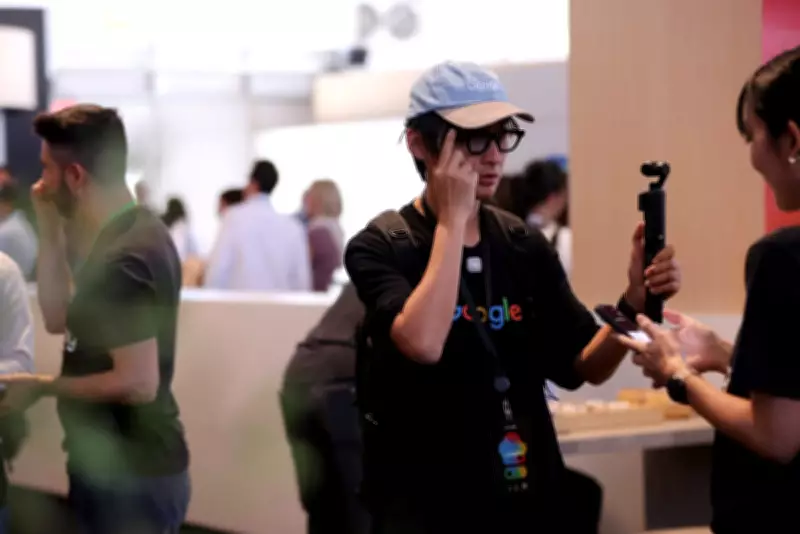
At the annual Google I/O developer conference in Mountain View on Tuesday, Google announced a major overhaul of its search engine, integrating advanced artificial intelligence to handle longer and more conversational queries. The company also unveiled a new line of smart glasses, marking its return to wearable technology more than a decade after the original Google Glass faced public ridicule.
AI-Powered Search Enhancements
Google executives revealed that the search bar, the centerpiece of the world's most visited website, will now accommodate more complex and natural language questions. This shift is powered by the company's latest AI model, Gemini 3.5, which enables longer text predictions and richer visual responses. Users will be encouraged to interact directly with Google's chatbot for tasks like creating calendar invites or spreadsheet plans.
Elizabeth Reid, who oversees Google Search, described the changes as the most significant in the product's nearly 30-year history. The updates rolled out globally on desktop and mobile versions on Tuesday. A promotional video showed results resembling visually enhanced AI Overviews, with bullet-point summaries rather than traditional link lists. Users can still opt for the classic link view by clicking a tab labeled "Web."
Reid noted that Google Search queries reached an all-time high last month. Since the debut of AI Mode a year ago, which allows users to chat with a Gemini-powered bot, queries to the chatbot interface have doubled every quarter. If users add photos, videos, or documents to the Chrome browser's search bar, Search automatically switches to AI mode.
Gemini: A Universal Assistant
Josh Woodward, head of Gemini development, stated the goal is to create "a universal assistant that's personal, proactive, and persistent." The company reported 900 million monthly users of the Gemini app, though that lags behind ChatGPT's 900 million weekly users. For subscribers to Google's AI Pro and Ultra plans, Search will offer "information agents"—autonomous AI bots that conduct in-depth research and return summaries or action plans. A "generative user interface" feature can create customized visuals and dashboards based on user requests.
A new agent feature, Gemini Spark, will access data from users' Gmail, Google Calendar, and other Google products to perform research, shop, and plan trips or recurring tasks.
Return of Smart Glasses
In partnership with Samsung, Warby Parker, and Gentle Monster, Google unveiled "intelligent eyewear"—a line of sunglasses and eyeglasses set for release in the fall. The glasses respond to voice commands to Gemini and can take photos or videos with embedded cameras. This follows Meta's collaboration with EssilorLuxottica on similar Ray-Ban Meta glasses since 2021.
Google's earlier attempt, Google Glass, launched in 2014 at $1,500, faced widespread derision and was discontinued the following year. Now, attitudes have shifted, with Meta viewing augmented-reality glasses as a major growth area. Google is also working on a second model with an in-lens display, codenamed Project Aura.
Other Announcements
Additional I/O highlights included AI coding features for Gemini and cybersecurity-focused AI tools.