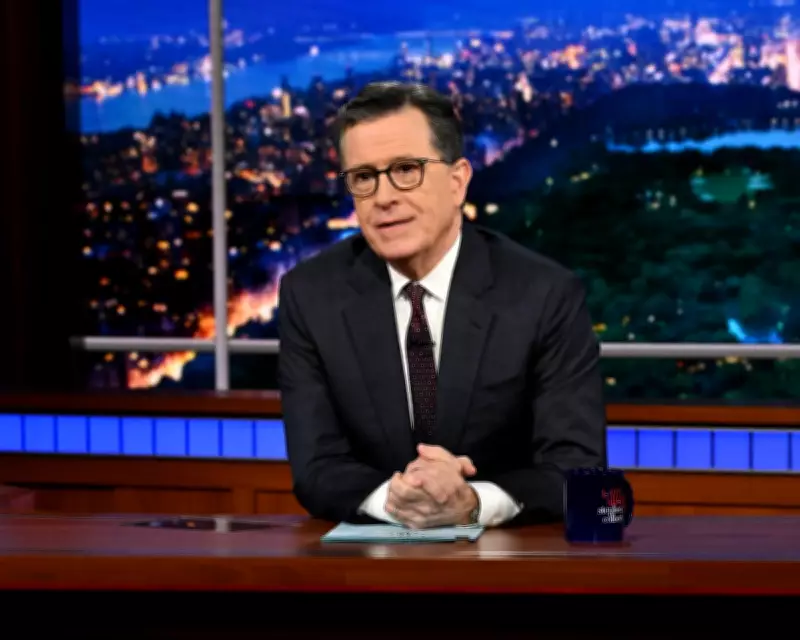
FCC Commissioner Accuses CBS of 'Corporate Capitulation' in Colbert Censorship Dispute
Federal Communications Commission (FCC) Commissioner Anna Gomez has launched a scathing critique of CBS, accusing the network of "corporate capitulation" in a growing controversy involving talk show host Stephen Colbert. Gomez, the sole Democrat on the FCC board, condemned CBS for yielding to political pressure, which she claims is part of a broader administration campaign to control speech.
Gomez's Strong Statement on Free Expression
In an official statement, Gomez emphasized that the FCC lacks any lawful authority to pressure broadcasters for political purposes or to create an environment that chills free expression. "This is yet another troubling example of corporate capitulation in the face of this administration's broader campaign to censor and control speech," Gomez declared. She further noted that CBS is fully protected under the First Amendment to determine its broadcast content, making its decision to acquiesce to political pressure particularly disappointing.
Gomez was appointed to the five-person FCC board by former President Joe Biden in 2023. Her comments follow Colbert's public accusations against both the Trump administration and CBS for censorship. The controversy erupted after Colbert claimed that network lawyers instructed him not to air a television interview with James Talarico, a Texas Democrat running for the Senate.
Colbert's Allegations and CBS's Response
On his show, The Late Show, Colbert informed viewers that network lawyers directly prohibited him from discussing their refusal to broadcast the interview with Talarico, who is seeking the Democratic nomination to challenge Republican incumbent John Cornyn. The network's concern centered on potential violations of FCC equal access rules, which could require providing similar airtime to Talarico's campaign rivals.
Ultimately, the interview was broadcast on Colbert's YouTube channel, which operates outside the FCC's regulatory jurisdiction. CBS has disputed Colbert's account, asserting that the network merely "provided legal guidance" regarding potential FCC directive violations, rather than issuing a direct prohibition.
Broader Political Context and Additional Developments
This incident occurs amidst a highly charged political climate. In other recent developments:
- Democrats are mourning the passing of civil rights leader Jesse Jackson, whose 1988 presidential campaign paved the way for Barack Obama.
- Donald Trump's former receptionist, Chamberlain Harris, age 26, will be sworn in as the newest member of the U.S. Commission of Fine Arts.
- U.S. Capitol Police arrested a man who ran toward the Capitol with a loaded shotgun.
- An immigration judge ended Trump administration efforts to deport Mohsen Mahdawi, a Palestinian green-card holder and Columbia University student involved in Gaza protests.
- Republican Congressman Randy Fine faces swift Democratic backlash after posting an Islamophobic comment on social media.
The Colbert-CBS dispute highlights ongoing tensions between media freedom, corporate responsibility, and political influence, with Gomez's condemnation underscoring the critical importance of protecting free expression in broadcasting.