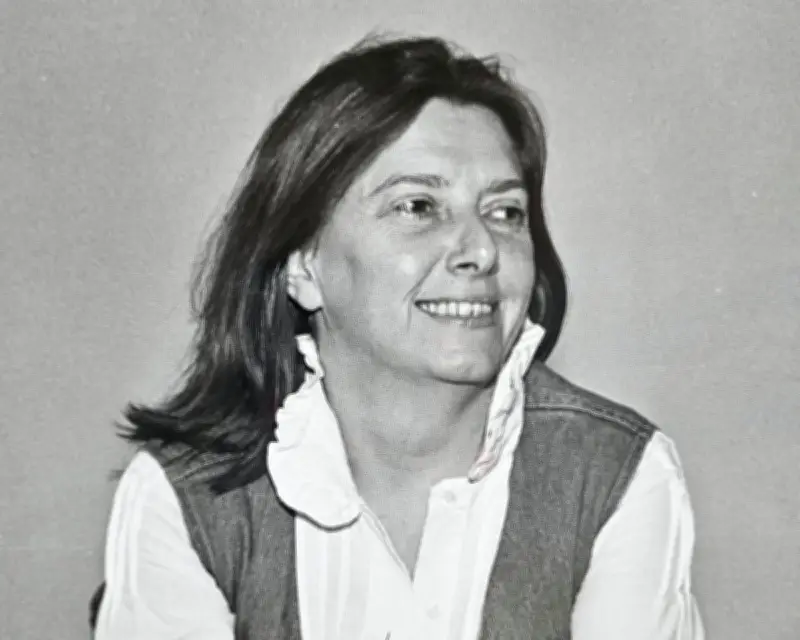
Enyd Williams, the acclaimed BBC radio drama director and producer best known for her serialisations of classic detective fiction, has died of heart failure at the age of 83. Her inspired casting of June Whitfield as Agatha Christie's Miss Marple and her role in producing the complete Sherlock Holmes canon with consistent actors earned her a lasting place in broadcasting history.
Miss Marple and Hercule Poirot adaptations
Williams collaborated with dramatist Michael Bakewell on all 12 of Christie's Miss Marple novels between 1993 and 2001 for BBC Radio 4. The pairing of Whitfield as the elderly amateur sleuth from St Mary Mead with Bakewell's faithful adaptations proved a winning combination with audiences. Despite fondly remembered screen versions starring Margaret Rutherford and Joan Hickson, Whitfield noted: "Fortunately, I did not have to worry about people comparing the way I looked. I simply concentrated on Miss Marple's busybody personality to conjure up a new picture in the minds of listeners."
Williams's meticulous attention to casting extended to supporting roles, demonstrated by appearances from Imelda Staunton, Francis Matthews and Nigel Davenport in her first Miss Marple dramatisation, The Murder at the Vicarage, broadcast in five parts.
These serials aired during Williams's long run directing Bakewell's Radio 4 adaptations of Christie's Hercule Poirot novels. David Johnston directed the first, The Mystery of the Blue Train (1985), with Maurice Denham as the Belgian detective. Williams teamed with Bakewell the following year for Hercule Poirot's Christmas, casting Peter Sallis. "I enjoyed very much working with Peter Sallis," she said, "but he's not a very happy person doing accents, so we decided to leave it there." She then handed the role to John Moffatt, a stalwart of BBC radio drama, for the remaining 25 adaptations, running until 2007. Only the final novel, Curtain: Poirot's Last Case, was not serialised due to rights issues.
Sherlock Holmes canon and crime fiction
Williams's involvement with crime fiction began after marrying Jonathan Clowes in 1968 and working in his literary agency, which represented the Conan Doyle estate. From 1991 to 1998, she produced and directed almost half of Radio 4's adaptations of all four Sherlock Holmes novels and 56 short stories, which had started in 1989. Patrick Rayner handled the rest, with Bert Coules as head writer. Clive Merrison took the role of Conan Doyle's Victorian detective and Michael Williams played Watson, making it the first time anywhere in the world and in any medium that the entire canon featured the same two actors.
Williams's attention to detail in a sound-only medium meant listeners heard real hansom cabs with trotting ponies on Edinburgh cobbles, recorded early in the morning before traffic noise. For her final production, The Hound of the Baskervilles, sound effects included gusting wind, fearsome shrieks and a howling dog.
Collaboration with Peter Tinniswood and other works
Outside detective fiction, Williams was known for her association with playwright Peter Tinniswood, admiring his talent for depicting northern English character and dialogue, along with eccentricity and social absurdity. As a producer, she encouraged him to write for Radio 4 and once locked him in her office until he produced a synopsis for a Saturday Night Theatre production. She later directed his plays, such as the comedy Next Time We Might Play Better (1997) about inept musicians, and produced and directed his series Tales from the Backbench (2001), starring Leslie Phillips as an ineffectual MP.
Early life and career
Enyd was born Enid Williams in Liverpool to Welsh parents Myra (née Hughes), a nurse, and William Williams, a butcher. As an adult, she styled her name as Enyd to aid pronunciation (Enn-id in Welsh), though many still pronounced it as in Enid Blyton. At Dovedale primary school, she played the triangle in the orchestra alongside future Beatle George Harrison. She acted in Children's Hour on BBC radio in Manchester and, after leaving secondary education at the Belvedere school in Liverpool, had parts in dramas there and at the BBC's Leeds studio with producer Alfred Bradley, who recognised her wider interest in production. She followed his suggestion to become a studio manager, working for the World Service, then the BBC in Cardiff.
After a brief stint in television, she returned to radio as a studio manager in London. While doing a "spot effect" in a bikini, splashing in a child's inflatable rubber bath to produce the sound of harem girls in a fountain for a programme about the Kama Sutra, she caught the attention of a national newspaper, which teased: "Not a word to Mary Whitehouse."
In 1979, she became a radio drama producer based at BBC Wales and directed Juliet Ace's first play, Speak No Evil, in 1980, before moving to London as a producer and director three years later. Alongside dozens of other dramas, including productions of the popular Afternoon Play, she directed Bakewell's serialisations of Daphne du Maurier's Jamaica Inn (1991) and Ngaio Marsh's Inspector Alleyn stories (2001-03), starring Jeremy Clyde. She also produced a version of Miriam Margolyes's one-woman West End show Dickens' Women (1991) and, for Radio 2, The Women in His Life (1996), having secured rights from Barbara Taylor Bradford.
After retiring from the BBC, she directed audiobook productions. Williams's marriage to Clowes ended in divorce. Following a relationship with Swedish hot-air balloon pilot Arne Ahlstrom from 1973 to 1982, she started a relationship with actor John Hartley, marrying him in 2000; he died two years later. She is survived by her daughter Victoria from her first marriage, and a grandson, Cassius.