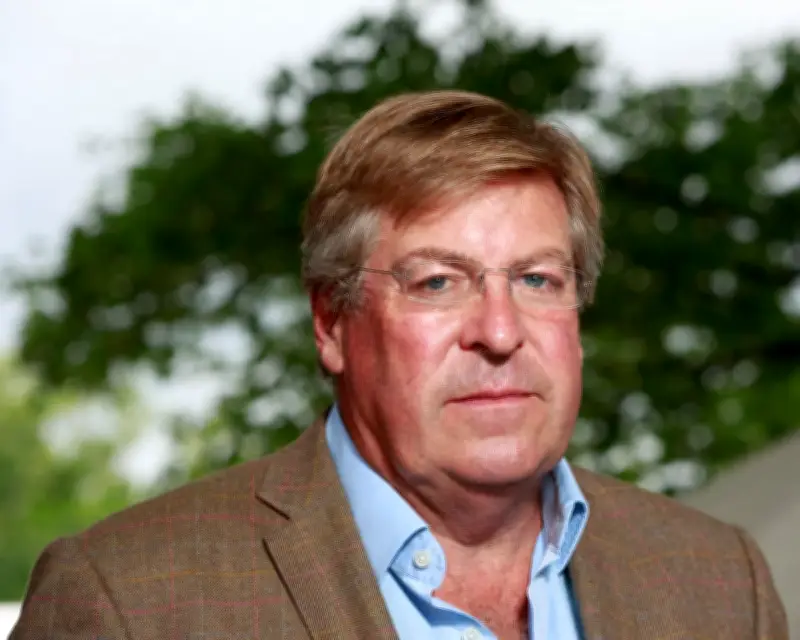
Ed Stourton, the authoritative and unflappable presenter of BBC Radio 4's Today programme, has died at the age of 68 from prostate cancer. His death was announced on 18 July 2026, a day after he passed away.
A voice that epitomised the BBC
For many listeners, Stourton embodied the values they cherished in the BBC: an authoritative, unflappable voice, unmistakably posh and stately. His interviews were courteous but incisive, and his knowledge and insight were unimpeachable. These qualities made his unexpected effective sacking from Today in 2008 a major backlash, especially among right-wing newspapers and devoted followers. The corporation's brusque handling of his contract ending—he learned about it from a Daily Mail journalist while away from the office—added fuel to the fire.
The perception that his dismissal was due to his patrician manner, reinforced by a programme editor's comment that “he does not make your pulse race,” caused the uproar. Many listeners did not want their pulses set racing more than the morning news already did. The network's hierarchy was taken aback when he refused to shake hands with the manager who belatedly delivered the bad news in person. He might be “Posh Ed” to some, but his gentility had limits.
Early life and education
Stourton was born in Lagos, Nigeria, on 24 November 1957, the eldest of four children of Nigel Stourton, an executive with British American Tobacco from a family whose barony dated back to the Middle Ages, and his wife, Jenny (née Abbott). He had a peripatetic childhood, following his father's postings to Switzerland and Malta. He was educated at Catholic boarding schools, including the Benedictine foundation Ampleforth, whose headmaster Basil Hume later became cardinal archbishop of Westminster. Stourton became head boy and played rugby for the school team. In later life, he was haunted by revelations of child abuse at the school, of which he had no knowledge at the time.
At Trinity College, Cambridge, he studied English, became president of the union debating society, edited a student newspaper called Rampage, and made lifelong friends including Charles Moore, later editor of the Daily Telegraph, Nicholas Coleridge, and Tory MPs Oliver Letwin and Andrew Mitchell. His first wife, Margaret McEwen, whom he married in 1980, was the daughter of a baronet.
Career in journalism
After graduation, the BBC initially turned him down; interviewer John Birt told him that “frankly, it would be a waste of the postage stamp” to tell him he had failed. Stourton went to ITN as a news trainee. An early assignment as a producer was to help organise coverage of the wedding of Prince Charles and Lady Diana Spencer. His ascent was rapid: he was a founder member of Channel 4 News in 1982 and became its first Washington correspondent in 1986 at age 27, covering the final years of the Reagan presidency. He then moved to the BBC as Paris correspondent, speaking fluent French from his Swiss childhood and being an expert skier. He returned to ITN as diplomatic editor for three years (1990-93) before returning to the BBC as a presenter of the One O'Clock News.
His unflappability was demonstrated when, as a colleague recalled, he reported in pouring rain while filling time waiting for former hostages to emerge from an RAF flight. Reporting on the Bosnian war, he was nearly killed by a sniper whose shot passed between him and his cameraman through a car window. He witnessed the red flag being lowered on Moscow's Red Square in 1991 and the release of Nelson Mandela from prison in 1990.
The Today programme and sacking
Stourton became a presenter of Today in 1999, initially with a contract for 50 shows a year, later reaching more than 110. He was genial but acknowledged, “you don't spend 10 years on the Today programme without a measure of monsterishness.” One editor, Rod Liddle, wrote that on air he was “possessed of a courtly and disarming interviewing manner from which occasionally a cunning stiletto would emerge.” He did not react when John Prescott tried to distract him by calling him Eddie.
His style did not suit a more demotic trend at the BBC. Former ITN editor Stewart Purvis said: “Ed had a strong natural authority of a sort that previous generations such as Sandy Gall all had, but his poshness became a disadvantage.”
Later work and personal life
After leaving Today, Stourton freelanced, presenting other BBC programmes and writing books, several on religion, particularly Catholicism. He told the Daily Telegraph in 2023: “It never really occurred to me that I might have to apologise for who I am or make myself different in some way.” He made documentary series including Absolute Truth (1998) on the Catholic church and regularly presented Sunday, the Radio 4 religious news programme, until recently. He also wrote books such as In the Footsteps of St Paul (2004) and a biography of Pope John Paul II (2006). In It's a PC World (2008), he disclosed that the Queen Mother had told him the EU was run by “huns, wops and dagos”—ghastly old bigot, he added.
Stourton was diagnosed with prostate cancer in 2014 and spoke regularly about the illness. He is survived by his second wife, Fiona Murch, whom he married in 2002, three children from his first marriage—Ivo, Eleanor, and Tom—and a stepdaughter, Rosie. His remarriage meant he could no longer receive communion at mass, but he remained a Catholic, though non-practising. In his memoir Confessions (2023), he wrote: “I cannot quite shake off the idea that life is a journey with a moral destination… My attachment to Catholicism owes much more to a sense that it is a good guide to this life than to any conviction that it is a passport to the next.”