For decades, the World Cup belonged to broadcasters. Fans gathered around the television, watched the game live or caught the highlights later that evening. In the UK, BBC and ITV acted as gatekeepers, deciding which stories were told and how audiences experienced football’s biggest tournament.
That world still exists. Millions watch live matches on television, and broadcasters remain dominant when it comes to rights and access. But alongside them, another layer of football media has emerged.
Creators build their own World Cup
While television crews crisscross North America covering matches, content creators are building their own World Cups online. Some host live watchalongs. Others produce daily YouTube analyses. Many are documenting fan culture, diaspora communities and stories that exist beyond the 90 minutes on the pitch. For a growing number of supporters, particularly younger fans, the World Cup is just another sporting event to experience through creators before, during and after kick-off.
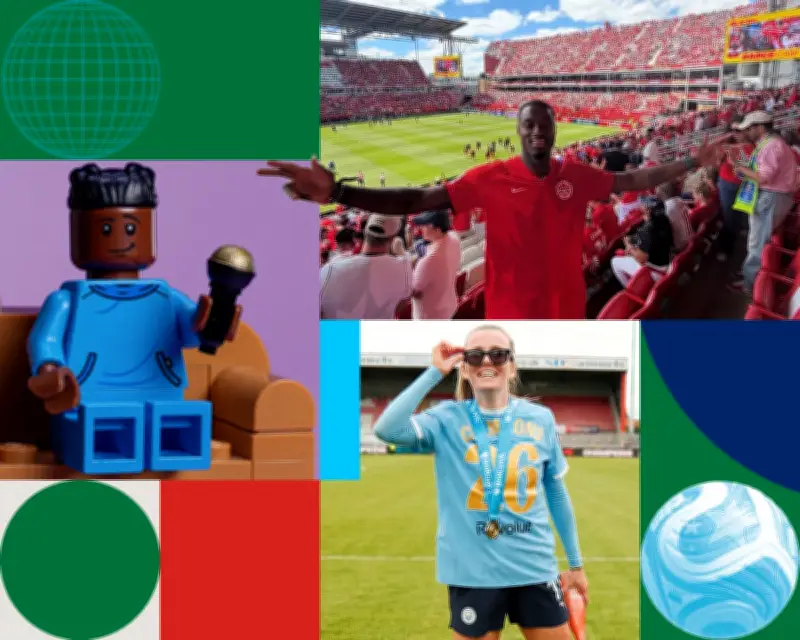
Few people embody that shift more than Jide Maduako, who set himself an ambitious challenge for the tournament: travel to every nation at the World Cup and document football culture along the way.
“I make documentaries where I immerse myself in the culture of a football team,” he says. “Whenever I land somewhere, I am on a mission to become a local. The World Cup has been pretty inaccessible for a lot of people. If people can’t make it to the World Cup, I want to bring the World Cup to the people.”
Real-time interaction with audiences
His days are spent filming, livestreaming and attending local watch parties. Much of it happens live on Twitch, where viewers effectively become participants in the coverage. “What I have realised with livestreaming is, it is actually better to take people along the journey. Some of my audience will say, ‘You should do this,’ ‘You should eat this.’ They give me recommendations.”
The result is something fundamentally different from traditional television coverage. Rather than a finished product presented to viewers, the content evolves in real time with audience input. That distinction lies at the heart of why creators have become increasingly influential in football media.
“People trust us as well – and not just in terms of my audience,” Maduako says. “Whether I am in Brooklyn or somewhere in Africa, because I’m a black man and I look like I should be there, it allows me to get a more authentic story. Unlike media companies, who have to get authorisation to go to certain places, we don’t have walls. Traditional media can be so corporate that the process is longer. By that point the story is gone. I see myself as an independent journalist. I’m making content that’s more mission-driven. I’ve always called it edutainment – education for entertainment.”
Lego show and fresh perspectives
That sentiment is echoed by Manny Brown, who has been creating content for almost 15 years. During this World Cup he is hosting The Build Up, a YouTube show produced with the Lego Group that blends discussion, games and audience interaction, featuring guests including Harry Aikines-Aryeetey, Harry Pinero and Lauren Hemp. Brown sees creator-led shows as another way for fans to engage with the tournament. “It is a different purpose,” he says. “It’s to get people engaged and hyped up for the games. It has that potential to go alongside traditional media.”
Now more than ever, Brown believes viewers increasingly seek out personalities and different perspectives alongside the live broadcast. “People always flock to what is fresh and then they’ll stick around when it caters to what they’re looking for,” he says. “You have a lot of big creators that have come through and people are watching their coverage because they’re showing a different perspective that you wouldn’t otherwise have on the World Cup.”
Editorial freedom and fan voice
That perspective is shared by Lyés Bouzidi, who is at the World Cup working on shows with Sports Illustrated and a Fifa-affiliated programme produced by Goal and Aramco while creating content for his own platforms. Never one to shy away from voicing his thoughts as an Algeria and Manchester United supporter, he occupies a space between traditional broadcasting and independent creator culture.
“I’m not arrogant enough to ever think that, no matter how many viewers I conjure up, I can ever compete with historic powerhouses like the BBC and ITV,” he says. “The day I start thinking that is the day someone needs to slap me on the back of the head. I view them as the standard. But they exist in their own space and I exist in my own.”
That separation also gives him something he thinks traditional broadcasters cannot always offer: editorial freedom. “I’m very opinionated,” he says. “That is one advantage of having your own platform. I have complete freedom to talk about anything.” He acknowledges this comes with trade-offs. “If we translate that to me being critical of Fifa or critical of the US not allowing people to enter the country and their treatment of the Iranian team … I am fully aware that how opinionated I am blocks blessings in terms of me wanting to go to games via Fifa or me working with Fifa in any capacity. But that is a con to the many pros I have.”
Fans turn to creators for authenticity
That independence is part of the reason audiences increasingly turn to creators. “The amount of options that someone has after a game to go and hear someone’s thoughts is almost infinite,” Bouzidi says. “That’s not to say that if you’re watching a content creator rather than the post-match on BBC or ITV, the content creator is coming with better information. But maybe viewers want a fan’s point of view rather than an ex-player speaking about something from a lens that they just never could understand.
“I was watching Algeria on ITV. And with all due respect to the broadcasters and commentators – they did the best job they could – I know, deep down, none of those guys know more about Algeria than I do. There will always be a difference between someone who breathes the team and someone who is just getting to grips with them the night before.”
Younger fans consume football in bursts
Brown also sees the change reflected in how people watch football altogether. “Younger fans consume football in bursts,” he says. “People are consuming football through social media or through the eyes of a content creator, whether that’s a watchalong or highlights, rather than just sitting watching a 90-minute football game.
“If we look at mainstream media, they’re trying to follow that mould. They’re getting characters that you might not see in traditional media. Creators are massively part of the tournament and it’s only a matter of time before bodies like Fifa implement more. Five or six years ago creators still weren’t being taken seriously. The way they are covering this World Cup is something we’ve never seen before.”