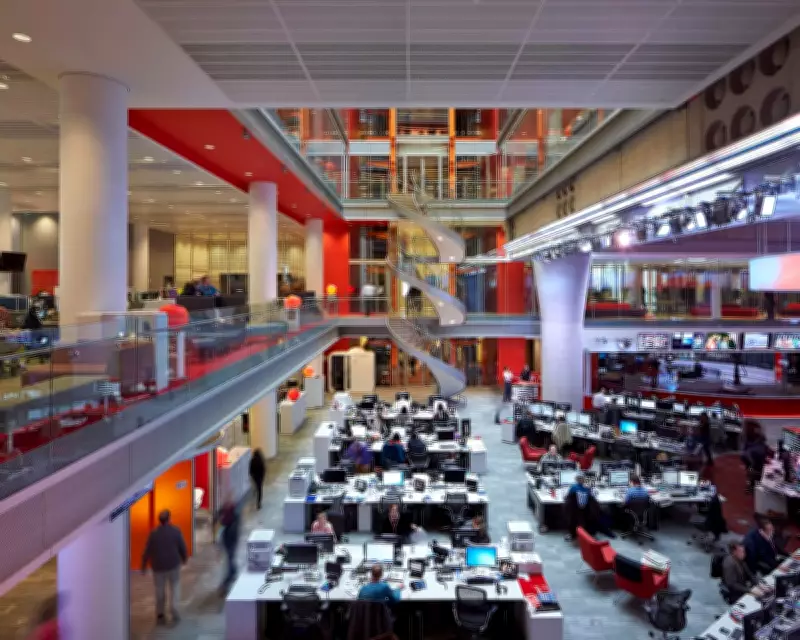
The Critical Role of the BBC World Service in Global Affairs
In an era marked by escalating geopolitical tensions and rampant digital misinformation, the BBC World Service stands as a beacon of reliable journalism and impartial reporting. Media experts and diplomatic insiders are issuing a stark warning: any reduction in funding for this venerable institution would constitute a catastrophic blow to the United Kingdom's international standing. The service, which broadcasts in over forty languages to an audience exceeding three hundred million people weekly, is not merely a media outlet but a cornerstone of British soft power.
Unmatched Global Reach and Trust
The BBC World Service operates in some of the world's most volatile regions, providing news where local media is often suppressed or biased. Its reputation for accuracy and fairness has been painstakingly built over decades, earning the trust of listeners from Afghanistan to Zimbabwe. This trust translates into tangible influence, shaping perceptions of the UK as a champion of democracy and free speech. Analysts emphasize that no other British institution wields such consistent and positive global impact through purely informational means.
The Dire Consequences of Defunding
Financial pressures have placed the World Service under severe strain, with real-term budget cuts threatening its operational capacity. Critics argue that scaling back its services would create dangerous information vacuums, swiftly filled by state-sponsored propaganda outlets and unverified social media channels. Such a scenario would not only diminish the UK's voice on the world stage but also actively empower adversarial narratives. The cost of preservation, while substantial, is framed as an essential investment in national security and global stability.

- Maintaining a critical counterweight to disinformation campaigns from authoritarian regimes.
- Providing life-saving information during crises, such as natural disasters or conflicts.
- Supporting democratic movements and human rights advocacy in closed societies.
- Upholding the UK's reputation as a reliable source of news in multiple languages.
A Call for Strategic Investment
Proponents are urging the government to view the World Service not as a discretionary expense but as a core component of the UK's foreign policy toolkit. They advocate for a long-term, ring-fenced funding model that recognizes its unique role. This includes modernizing its digital platforms to compete with global tech giants while preserving its traditional radio broadcasts in areas with limited internet access. The consensus is clear: in a fragmented media landscape, the value of a trusted, publicly-funded global broadcaster is immeasurable and its preservation, whatever the financial cost, is non-negotiable for the nation's future influence.