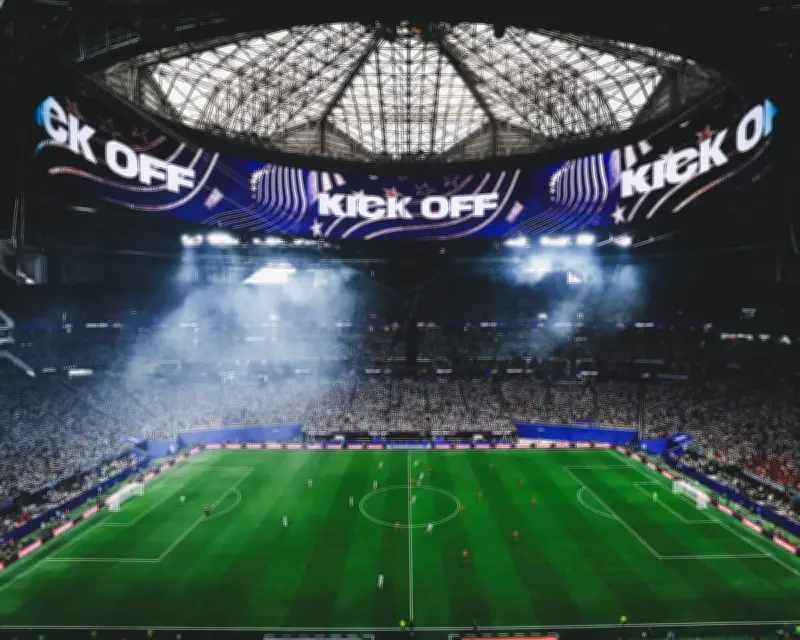
The BBC will present its coverage of England's World Cup semi-final against Argentina live from Atlanta, with the corporation's gamble on Thomas Tuchel's side set to be rewarded with record viewing figures. ITV attracted a peak audience of 18 million for Saturday's dramatic extra-time win over Norway, a figure that is likely to be beaten on Wednesday as England seeks to reach their first World Cup final since 1966 with a primetime 8pm UK kick-off.
BBC's Salford gamble pays off
The BBC has exclusive live rights and all its main pundits in place having taken the decision to present the World Cup from Salford for the bulk of the tournament. Having so far relied on brief in-stadium updates from Alan Shearer, who is also working for BBC 5 Live, fellow pundits Wayne Rooney and Micah Richards have now joined him in the United States and will be in place at the Atlanta Stadium. ITV will continue with its hybrid approach of presenting from a rooftop studio in Brooklyn with a team of reporters and pundits in the stadium.
Record viewing figures expected
England's progress to the semi-finals for the second time in three World Cups has justified the BBC's risky undertaking in keeping its first-pick of matches until later in the tournament, with ITV having broadcast two of its group games and the last-32 win over DR Congo before the Norway thriller. While ITV has won the ratings war to date, the BBC appears set to surpass its rivals in the final stages, with history suggesting it will get a bigger audience for Sunday's final, which both will broadcast live.
BBC defends Salford decision
The BBC was hindered by a 2am Monday morning kick-off for England's thrilling last-16 victory over Mexico but still attracted a peak audience of 9.1 million, tripling the record for the largest television audience for a live broadcast between 2am and 4am, held by the 2016 Rio Olympics. The BBC has strongly defended its decision to stay in Salford at a time when it has begun the process of cutting 2,000 jobs in an attempt to save £500 million. "To have what would probably be an extra couple of hundred people out there – and that's before you build a studio – you're talking millions," BBC Sport director Alex Kay-Jelski said last month. "The actual end product people are getting at home, I don't really think it's that different."