What was once a symbol of rebellion on the fringes of society has blossomed into a mainstream form of personal expression across the United Kingdom. The journey from taboo skin art to a widely accepted, and often celebrated, practice mirrors a significant cultural shift. This evolution encompasses everything from aesthetic choice to profound acts of healing and reclamation.
The Inked Generation: A Statistical Portrait
The data tells a compelling story of transformation. Research from McCrindle highlights a dramatic global trend: where once only about one in ten Australians had a tattoo, by 2023 that figure had surged to 30%. Notably, women have now overtaken men, with 33% of women sporting at least one tattoo compared to 26% of men.
This pattern of adoption is reflected in British society, where tattoo studios have become as commonplace as high-street salons. The initial act of getting inked often opens the floodgates. More than a third of tattooed individuals collect five or more pieces, while only a quarter stop at a single design.
"Once you break that first barrier, it's much less scary," explains Paige Klimentou, an expert in tattoo culture from RMIT University. "For some people it is very much an adrenaline thing... it's a collectible thing. They may really agonise over that first tattoo, but once they're on their third they're like, 'oh, I just saw a funny bird'."
More Than Skin Deep: From Ancient Ritual to Modern Healing
The human desire to mark the skin is ancient, with evidence dating back thousands of years to figures like Ötzi the Iceman. Historically, tattoos have denoted status, tribe, and ownership. In a British context, the practice was long associated with sailors, travellers, and those on society's margins.
That stigma has decisively faded. "Tattooing has constantly evolved," says Klimentou. "In a western setting, it was associated with criminals, sailors, the lower social classes. But it's been co-opted by the middle class... We see people wanting to frame them as fine art."
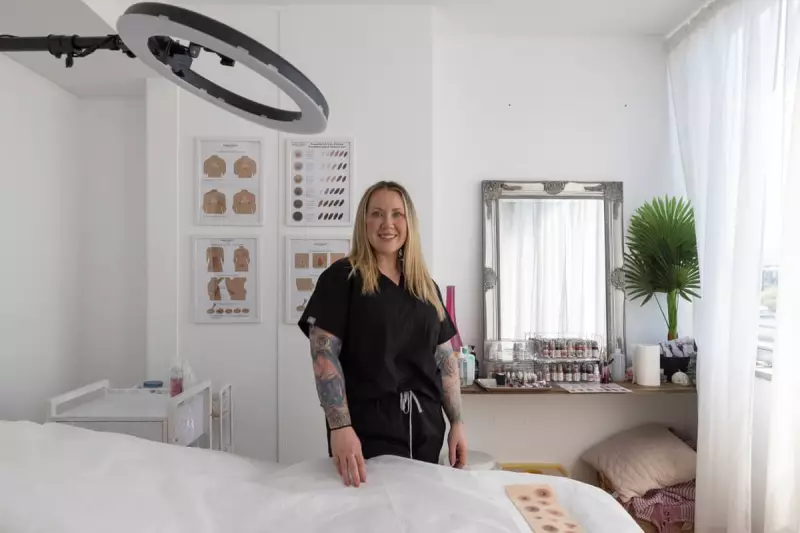
This modern embrace has unlocked a powerful therapeutic dimension: paramedical tattooing. Artists like Aleisha Michael specialise in hyper-realistic 3D areola and nipple tattoos for women who have undergone breast reconstruction after cancer. "It's a healing aspect, a closure to their journey [that] restores their sense of femininity, of sexuality," Michael states.
Her Pink Lotus Australia Foundation provides low-cost or fully subsidised services, a model of compassionate care that resonates with needs in the UK's NHS context. Beyond restorative work, tattoos are also used to camouflage scars from surgery, accidents, or self-harm, transforming marks of trauma into symbols of survival.
The Future of Ink: Commercialisation and Control
With popularity comes commercialisation, a shift that divides opinion within the industry. Veteran tattooist Jeff Rhodes, with over four decades of experience, recalls when his home state had just five studios. "Now it's the trend," he observes, noting the proliferation of shops. He laments the loss of traditional craft, where hand-mixed inks and wall-to-wall flash designs have given way to digital portfolios and pre-made colour ranges.
Yet, for many, particularly women, tattoos remain a potent act of personal autonomy. Klimentou notes they can be a deliberate rebellion against restrictive gender norms. "We're socialised as young girls into this idea of purity, of a clean girl aesthetic," she says. "[Tattoos] can be a way of rebelling... That's not what the patriarchy wants."
The cycle of ink is now complemented by advanced removal technologies, allowing for greater experimentation. The narrative of a 'terrible first tattoo' leading to a cover-up, and perhaps another, is a familiar rite of passage for many. What endures is the fundamental human drive the tattoo represents: to tell a story, claim an identity, heal a wound, or simply collect a beautiful piece of art that moves with you through life. In the UK, as elsewhere, that story is now being written on skin more than ever before.