Political Battle Erupts Over Picasso's Guernica Location
A fierce political confrontation has erupted between the Madrid and Basque regional governments in Spain over repeated requests to relocate Pablo Picasso's celebrated masterpiece, Guernica, from the Reina Sofía museum in Madrid to the Basque Country. The latest proposal seeks to temporarily house the painting at the Guggenheim Museum in Bilbao to mark the 90th anniversary of the bombing of the Basque town of Guernica, but it has sparked a war of words between conservative and nationalist leaders.
Insults and Accusations Fly in Cultural Dispute
Isabel Díaz Ayuso, the outspoken conservative president of Madrid, and Aitor Esteban, leader of the Basque nationalist party, have traded sharp insults, each labeling the other as "provincial" in their cultural outlook. Ayuso argued that moving the artwork risks damage and reflects a narrow mindset, stating, "It makes no sense for everything to be returned to its origin. In that case we should send all of Picasso's works to Málaga," referring to the artist's birthplace. She emphasized that culture is universal and should not be confined to regional claims.
Esteban fired back, suggesting Ayuso's vision of national identity is limited to "drink beer on the terrace of a bar," a pointed reference to her stance on keeping bars open during the COVID-19 pandemic. The Basque president, Imanol Pradales, challenged the Spanish government's courage, questioning, "Does the Spanish government have the courage to move Guernica? They dragged Franco out of his tomb and aren't capable of moving a painting from Madrid to Euskadi? The ball is in their court."
Historical Significance and Current Stalemate
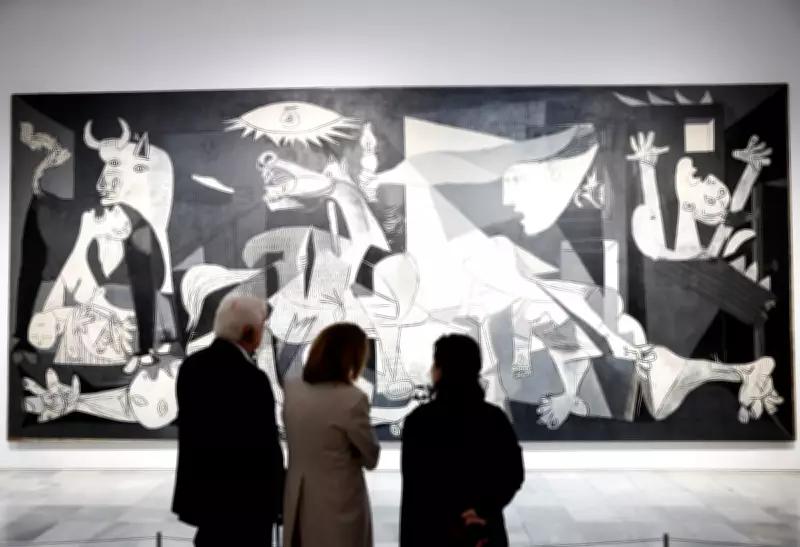
Guernica, Picasso's powerful black-and-white masterpiece, vividly depicts the violence of the aerial bombardment carried out by the Italian air force on April 26, 1937, during the Spanish Civil War. This attack, an early experiment in targeting civilians, resulted in widely varying death estimates, from 126 to 1,654, but the painting has since become an international symbol of the horrors of war. Painted shortly after the event and exhibited at the 1937 Paris International Exposition, it toured Europe and the United States before being housed at the Museum of Modern Art (MoMA) in New York for decades, as Picasso opposed its return to Spain during Francisco Franco's dictatorship.
Since 1992, the painting has been displayed at the Reina Sofía museum in Madrid, where all previous requests for relocation have been refused. The Reina Sofía has maintained a firm stance, notably rejecting a loan request from MoMA in 2000 by asserting that "the great icon of our museum must remain, without exception, separate from the policy on lending works to other museums." The Basque government's current proposal aims to display Guernica at the Guggenheim from October 1 to June 30 as a commemoration, but it faces strong opposition from Madrid authorities.
This dispute highlights deeper tensions over cultural heritage, regional identity, and political power in Spain, with both sides digging in their heels. The outcome remains uncertain, but the debate underscores the painting's enduring symbolic weight and its role in contemporary Spanish politics.