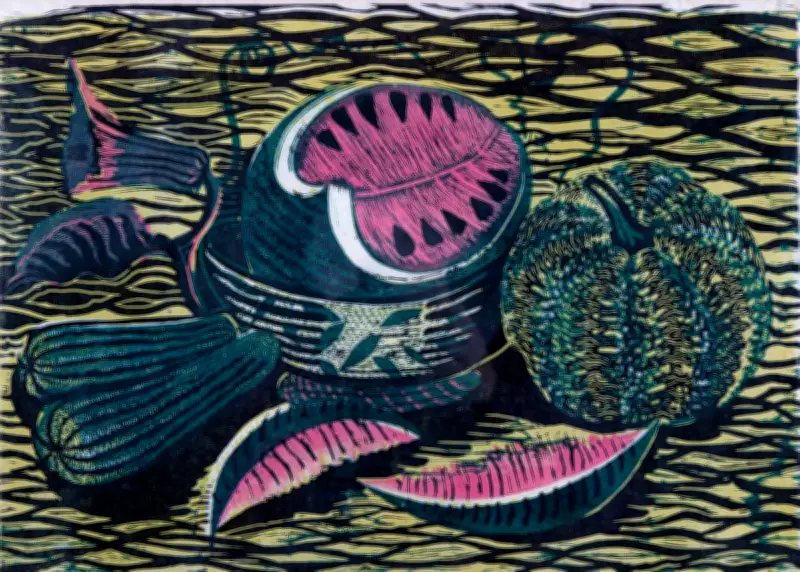
Enid Marx's fabric designs for the London Underground in the 1930s revolutionized the commuter experience, replacing the dreary brown and grey moquette with bright, cheerful patterns that disguised dirt. Her work, long overlooked, is now the focus of a new exhibition at Compton Verney in Warwickshire, opening on Saturday.
Marx's Design Philosophy
Commissioned in 1937 alongside Paul Nash and Marion Dorn, Marx created the iconic Shield pattern—red and green geometric ovals and diamonds—inspired by African designs at the British Museum. She believed seats should be exciting and cheerful, a principle that has guided London Transport ever since.
Curator Az Crawford notes that Marx's work marks a watershed between Arts and Crafts and modern British design. She rejected "washed-out William Morris stuff" and embedded messages about African art and colonial influences in her patterns.
Personal Life and Paradoxes
Marx lived with historian Margaret Lambert for over 60 years, part of a sapphic community. She went by the name Marco and designed her own bow ties, including Spreyton spot ties named after Lambert's Devon village. Despite her non-conformity, Crawford describes Marx as conservative with a small 'c', not seeing herself as a feminist.
Career and Legacy
Born in 1902, Marx studied at the Royal College of Art but failed her final assessment. She trained under Phyllis Barron and Dorothy Larcher before pivoting to industrial design for London Transport. During WWII, she designed for the utility scheme, creating fabrics like Chevron to furnish bombed-out homes.
In 1944, she became the third woman awarded Royal Designer for Industry. However, later disappointments included only one design at the 1951 Festival of Britain and rejected stamp designs for Queen Elizabeth II—one rejected by the sovereign herself for placing her head in an oak tree, evoking Charles II's hiding place.
Exhibition Highlights
The Pattern of Life: Enid Marx and Modern British Design runs from 18 July to 3 January at Compton Verney. It features 165 works, including moquette samples, handblocked textiles, and the couple's collection of popular art—corn dollies, ceramics, and a plaster gingerbread cat. Senior curator Oli McCall says, "She believed there was a space for popular art that was mass produced."