A newly published book is offering a crunchy, colourful trip down memory lane, celebrating the garish and often bizarre world of British crisp packet design from a bygone era. UK Crisp Packets 1970-2000 is a 140-page compendium that archives everything from hedgehog flavour snacks to union jack-clad cheese and onion, presenting what its creator calls a unique piece of alternative history.
A Savoury Snapshot of British Pop Culture
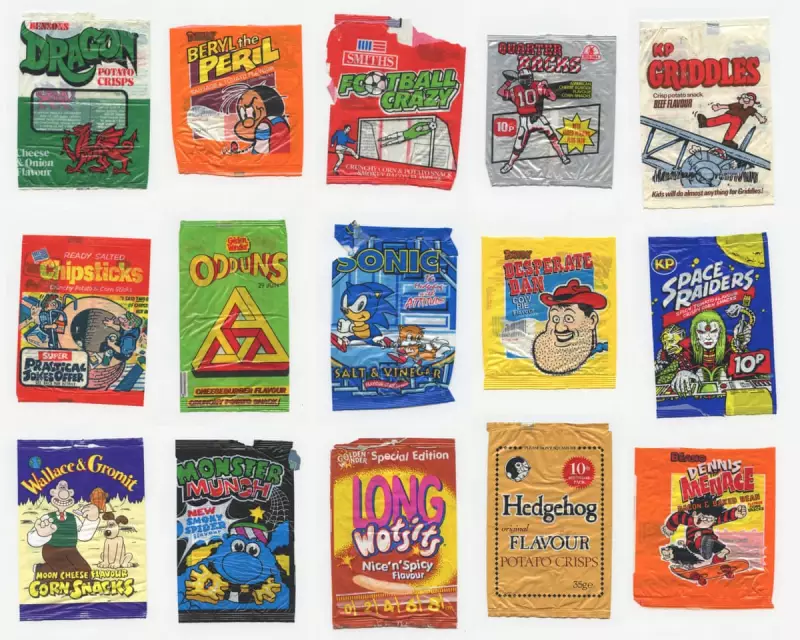
The book serves as a heavy hit of nostalgia, featuring childhood favourites like Chipsticks, Frazzles, and Quavers alongside rarer, regional brands. It delves into a world where crisp packets became a canvas for pop culture, boasting special editions tied to The Spice Girls, Thunderbirds, Dr Who, and Jurassic Park. Readers will find Dennis the Menace promoting bacon and baked bean flavour, Sonic the Hedgehog on salt and vinegar, and even a Wallace and Gromit snack designed to taste of 'moon cheese'.
Compiled by a 43-year-old artist known as Chris Packet, the collection is notably eclectic. The designs range from straightforward to inspired to utterly bizarre. One packet features a comic strip with seaside postcard-style innuendo, while another, for a cheeseburger flavour snack called Odduns, sports a geometrically impossible triangular design reminiscent of Pink Floyd's Dark Side of the Moon album cover.
From Tunnel Litter to Cultural Archive
The story of this unique archive began in 2018 in a disused London train tunnel. While exploring, Packet spotted a tatty item on the ground. Brushing off the dirt revealed sharp blues and vivid greens and an Alien-like figure firing a laser gun. It was a decades-old pickled onion Space Raiders packet, still marked 10p. Protected from the elements, this piece of 'cultural detritus' had survived.
"I was also like, 'Wow, I forgot how good these graphics are,'" Packet recalls. "I realised they were actually unique pieces of history." This initial find sparked a collecting mission. He began scouring the internet and buying from collectors, with friends joining the hunt. One packet was even discovered in a Second World War bunker in Dover, where it had lain since the 1980s.
Packet, who has a graffiti and art background, judges items purely on their artwork. He laments the decline in design quality after the year 2000, when computer-aided design took over. "Some of the designs were hand-drawn but when computers started coming in, I think a lot of these guys lost their trade," he says. "You obviously lose a lot of character and detail with that."
More Than Just Empty Packets: Filling Them With Memory
The book features a foreword by Professor Annebella Pollen, an expert in visual and material culture at the University of Brighton. She describes the packets as humble material that can tell an alternative history, touching on themes from gender representation to the loss of regional independent companies.
"This is children's culture," Pollen states, noting a strategic shift to move crisps from pub snacks into kids' lunch boxes. She believes the powerful nostalgia these packets evoke is nuanced. "It's reminding them of those moments as kids when they have a bit of autonomy," she explains. "Maybe it's over what goes in their lunch box or their first 10p to spend in a tuck shop – those early choices that were your own. These may just be empty packets now, but we are filling them with memories."
UK Crisp Packets 1970-2000 is published by Sports Banger and is available now, offering a savoury slice of British social and design history that is, for many, indelibly linked to the taste of childhood.