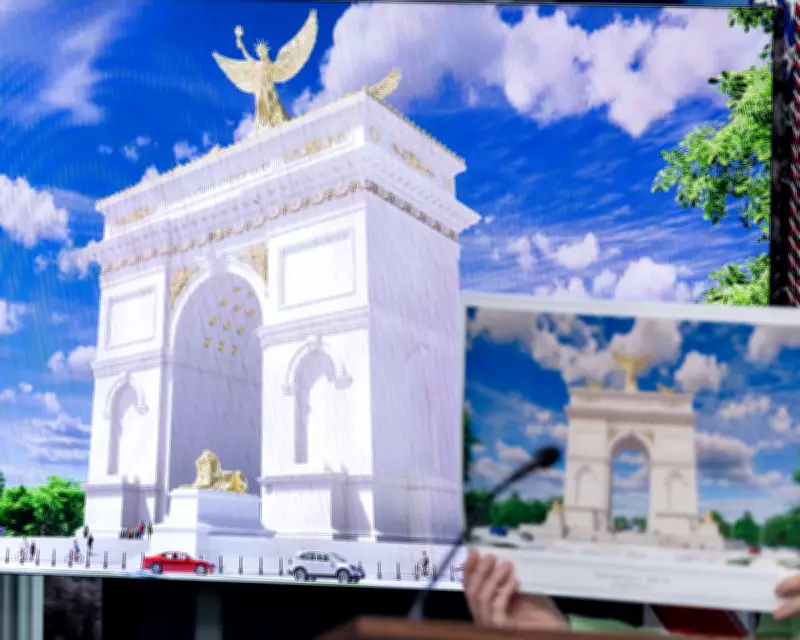
Karoline Leavitt, the White House press secretary, presented an illustration of a proposed triumphal arch at the White House on Wednesday, highlighting a key moment in the ongoing review process for this ambitious project. The design, championed by former President Donald Trump, is set for evaluation and a potential vote by the U.S. Commission of Fine Arts on Thursday, marking a critical step in its development.
Federal Review and Legal Challenges
Trump's triumphal arch plan is among several projects under consideration by the commission, all aimed at leaving a lasting legacy in the U.S. capital. The arch, described by Trump on social media as the "GREATEST and MOST BEAUTIFUL Triumphal Arch, anywhere in the World," would stand 250 feet tall from base to torch, featuring a Lady Liberty-like figure flanked by eagles and guarded by gilded lions. Inscriptions such as "One Nation Under God" and "Liberty and Justice for All" would adorn the structure in gold lettering.
However, the project faces significant hurdles. A lawsuit filed by a group of veterans and a historian seeks to block construction, arguing that the arch would disrupt the sightline between the Lincoln Memorial and Arlington House at Arlington National Cemetery. This legal challenge adds complexity to the review process, as commissioners weigh the arch's scale and impact on the historic landscape.

Other White House Projects Under Scrutiny
In addition to the triumphal arch, the commission's agenda includes Trump's plan to paint the gray granite exterior of the Eisenhower Executive Office Building white and the construction of an underground security screening center for White House visitors. These projects, like the arch, are part of Trump's broader efforts to imprint his vision on Washington D.C.
The commission, whose seven members were appointed by Trump, will review design plans for all three projects for the first time, with the visitors' center having been discussed previously in March. It remains uncertain whether any approvals will be granted during Thursday's meeting.
Location and Symbolism
The proposed arch would be situated on a human-made island managed by the National Park Service on the Virginia side of the Potomac River, at the end of Memorial Bridge from the Lincoln Memorial. At 250 feet tall, it would significantly overshadow the Lincoln Memorial, which stands at 99 feet. Karoline Leavitt emphasized that this height is intended to honor the United States' 250 years of existence, adding a symbolic layer to the project.
Meanwhile, a separate oversight panel, the National Capital Planning Commission, has begun its consideration of the visitors' center and is expected to review the arch design soon for potential approval. This multi-agency process underscores the extensive regulatory hurdles facing such high-profile developments.
As the review unfolds, stakeholders and the public await the outcomes, which could shape the architectural and historical fabric of Washington D.C. for decades to come. The decisions made by these federal bodies will not only impact Trump's legacy projects but also set precedents for future developments in the nation's capital.