A Concrete Giant Rises in Los Angeles
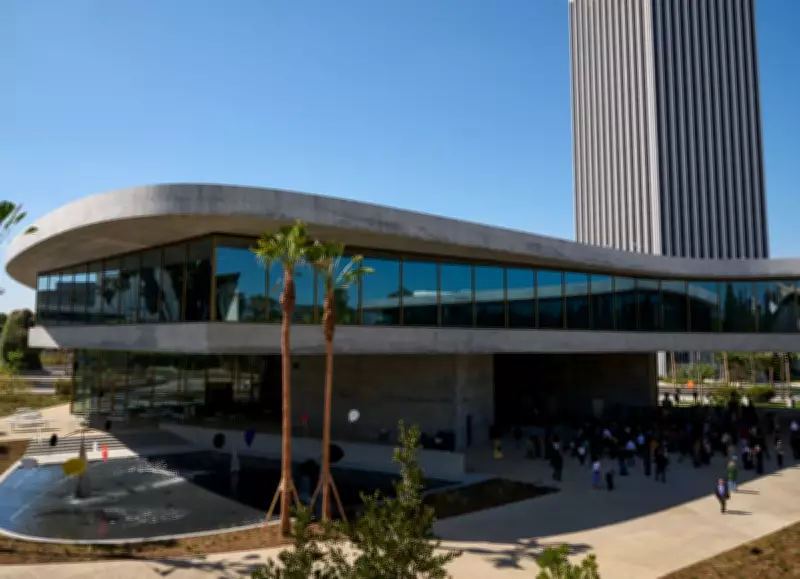
Driving along Wilshire Boulevard in Los Angeles, a striking new architectural marvel dominates the skyline. The David Geffen Galleries at the Los Angeles County Museum of Art (Lacma) present a ribbon of glass and concrete, soaring over the road in sinuous, amoebic shapes. With a retro-futuristic aesthetic reminiscent of Jetsons-era design or California's Googie style, this $724 million structure designed by revered Swiss architect Peter Zumthor has finally opened after two decades of planning and delays.
Building on a Tar Swamp
Constructed on unstable tar swamps in a seismic zone, the project faced numerous challenges. The building spans 110,000 square feet, elevated nine meters above ground, resembling a concrete aircraft carrier more than a traditional museum. It required 15,000 tonnes of steel reinforcement—twice the metal used in the Eiffel Tower—and 65,000 cubic meters of concrete, nearly double the amount in LA's massive Sixth Street Viaduct.
Michael Govan, Lacma's director since 2006, envisioned a museum without hierarchy or facade, inspired by his experiences at the Guggenheim and Dia:Beacon. He bypassed design competitions to commission Zumthor directly, aiming for a monument that would last centuries. "People say concrete is not the most environmentally friendly medium," Govan remarked, "but if it lasts 500 years, it's very friendly!"

Inside the Galleries
Upon ascending via outdoor staircases or elevators housed in chunky concrete pavilions, visitors enter a series of varied galleries. Some are intimate, chapel-like spaces showcasing single items like a Qing dynasty court robe against dark blue walls. Others feature old masters against rusty red walls, evoking Corten steel. However, the dim lighting and dark concrete can create a sepulchral atmosphere, lightened only by panoramic views of the park and street through shimmering metallic curtains by textile designer Reiko Sudo.
The design encourages a thematic, non-chronological display, blending artworks from different cultures and eras—reflecting LA's diverse neighborhoods. Open areas allow for day-lit exhibits, including a section dedicated to car culture, where visitors can view a 1961 Studebaker Avanti while watching traffic below.
Environmental and Social Costs
The project's carbon footprint is substantial, with concrete usage far exceeding typical buildings. Zumthor defended the design, stating, "This building will still be there when people are talking about other things." The irony is heightened by the nearby La Brea Tar Pits, where fossils are preserved in tar, and the building's namesake, David Geffen, ranked as a top polluter due to his yachts and private jets.
Critics question whether the reduced gallery space compared to the replaced buildings justifies the environmental impact. The original complex, designed by William Pereira, was demolished despite its historical significance, with Govan citing poor condition and donor reluctance.
A Legacy of Controversy
As Lacma's new galleries open, they symbolize both architectural ambition and the tensions between art, philanthropy, and sustainability. The structure stands as a testament to Zumthor's vision and Govan's persistence, yet it prompts broader discussions about the future of museum design in an era of climate consciousness.