UK's Daily £5bn Trade Powerhouse: Unlocking Growth Through Global Deals
Britain is significantly underestimating the immense power and potential of international trade, according to recent analysis. New data reveals that the United Kingdom conducts more than £5 billion in trade every single day, yet this monumental economic activity often goes uncelebrated, along with the vast number of jobs it sustains and creates across the nation.
Trade as a Pillar of Economic Strength
While business leaders and politicians grapple with wildly fluctuating global stock markets and volatile energy prices, exacerbated by ongoing events in the Middle East, the latest trade figures might appear as a minor distraction. However, in reality, global trade highlights the UK's underlying economic strengths, which must be emphasized to safeguard national prosperity and security during this period of acute global uncertainty.
Getting trade policy right directly boosts the economy, generating additional revenue for the Treasury. This revenue, in turn, funds essential public services such as schools, hospitals, and vital needs for the armed forces. The most recent statistics confirm that the UK's trade in services is experiencing a significant boom, with the surplus in services increasing by £1.3 billion to reach an impressive £54.2 billion.

Exports Driving High-Quality Job Creation
Exports serve as one of the primary drivers of job creation in the UK, with a healthy export market acting as the most reliable engine for local recruitment. When a British firm secures a contract in a new international market, the benefits resonate through enhanced job security and new hiring opportunities in communities nationwide.
Government data clearly demonstrates that exporters are consistently more productive and pay higher wages compared to firms that solely serve the domestic market. This disparity critically impacts living standards. To ensure more people in regions like the West Midlands, the North East, or South Wales can access quality employment, it is imperative that more businesses in these areas become integrated into global markets.
Addressing the Two-Tiered Economy Challenge
Despite the positive news in today's figures, substantial challenges persist and must be addressed urgently. The data reveals a growing gap between the performance of services and goods, indicating the development of a two-tiered economy. Immediate steps are vital to counter this trend and ensure balanced growth across all sectors.
The Jobs Foundation recently polled over 1,150 family businesses, bringing the human reality of this economic debate sharply into focus. The findings revealed well-meaning frustration with successive governments regarding trade policies. Family businesses form the backbone of British employment, accounting for 85 percent of all private sector businesses and more than half of all private sector jobs.
These enterprises are not merely commercial entities; they are community institutions, often rooted in the same towns and streets for generations, measuring their ambitions in decades rather than financial quarters. The same polling indicated that three-quarters of family business owners believe successive governments have lacked the ambition to make the UK a truly great place to conduct business.
Trade Deals as the Key to Britain's Future
There is a real and pressing opportunity for the current government to alter this narrative, with trade representing one of the most powerful levers available. Exploring alliances, both new and old, to reduce barriers and enhance collaboration is essential for fostering increased trade activity.
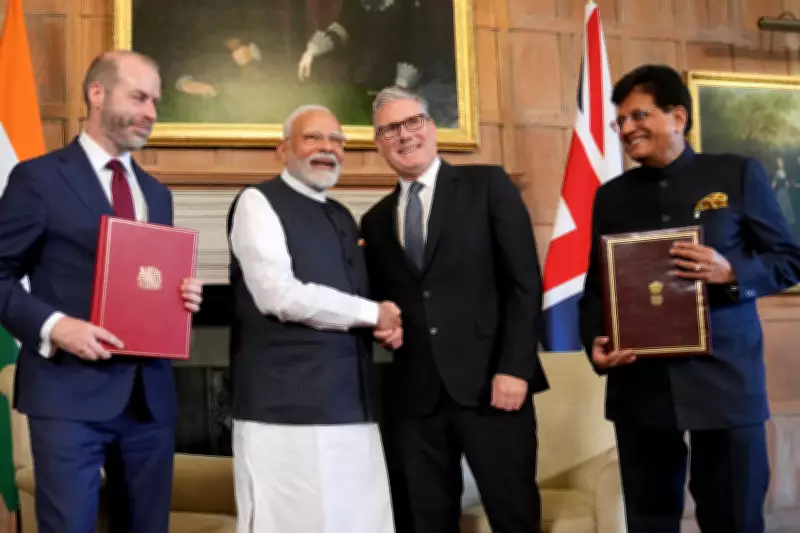
It is encouraging that ministers in both previous and current governments have actively developed new global trade partnerships, such as the Comprehensive and Progressive Agreement for Trans-Pacific Partnership. The prospective UK-India trade deal offers the promise of unlocking a vast and rapidly growing market with deep historical ties.

Alongside these headline agreements, quieter yet equally significant initiatives, like memoranda of understanding with individual US states, demonstrate a flexible, sub-national approach to trade diplomacy. This strategy enables the UK to build sector-specific relationships in the absence of a federal UK-US trade deal. Collectively, these efforts point toward an agile, outward-looking trade policy.
Strategic Logic and Global Collaboration
A deeper strategic logic is emerging, echoing themes articulated by Canadian leader Mark Carney in his recent Davos speech. In a more fragmented and uncertain global economy, "middle powers" like the UK must work more closely together to uphold open markets and shared standards.
Since entering office in 2024, the government has consistently emphasized the importance of driving economic growth, and this proactive approach to trade is highly encouraging. Notably, it was positive to see the Chancellor in her Spring Forecast highlight boosting trade as a key pillar in achieving this growth objective.
This focus on trade genuinely matters. Beyond the data, trade can play a major role in securing good jobs at a time when many individuals, especially those starting their careers, struggle to secure stable roles. We must critically assess whether we are currently maximizing the current geopolitical environment as an opportunity to boost trade and, consequently, expand access to good, secure work for more people.
With careful and strategic diplomacy, the UK may be able to leverage geopolitical uncertainties to forge stronger relationships with like-minded allies worldwide. By boosting trade through these alliances, the nation can create more high-paid, high-skilled jobs across the UK, ensuring long-term economic resilience and prosperity.