Ukraine's Economic Resilience Highlights Path to Progressive EU Membership
As the four-year anniversary of Russia's full-scale invasion of Ukraine is marked, the Ukrainian economy continues to demonstrate remarkable resilience under immense strain. Despite ongoing attacks, joint ventures in defense, green energy, and telecommunications are integrating Ukraine deeper into the European Union's industrial network, suggesting a future where the country could join the bloc in stages rather than waiting for full status.
Joint Ventures and Economic Growth
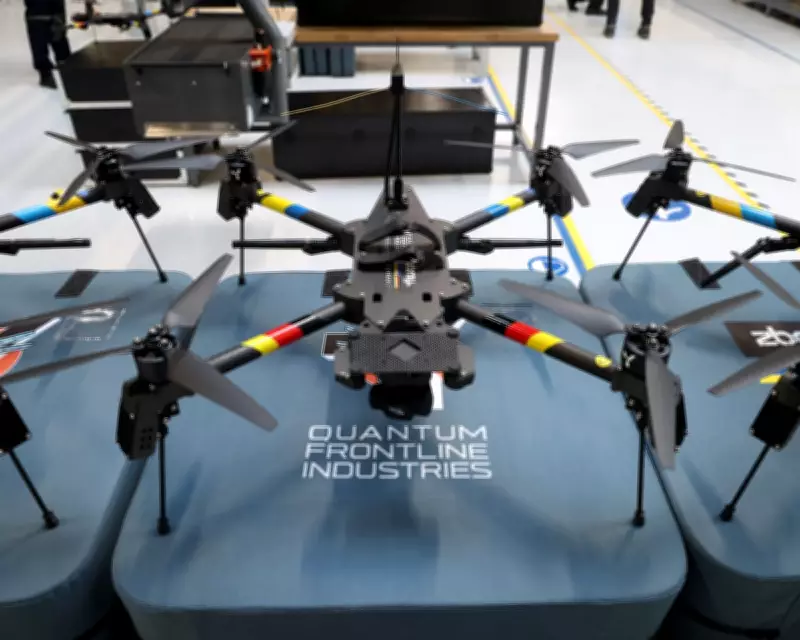
Last month, the first Ukrainian-designed drone manufactured in a German factory rolled off the production line, a significant milestone celebrated by President Volodymyr Zelenskyy. With similar drone-making partnerships advancing in Finland and Denmark, Ukrainian businesses are adapting and expanding beyond their domestic confines, increasingly becoming part of the EU's industrial fabric.
Economic forecasts reflect this resilience. Last year, growth was expected to reach 2% to 3%, but Russian attacks reduced it to 1%. This year, expansion is projected to improve, though persistent assaults will likely cut the rate from an anticipated 2.2% to 1.8%, according to Ukraine's central bank. Brussels has also taken steps to facilitate trade, such as simplifying paperwork for Ukrainian-registered trucks crossing EU borders.
The Concept of Progressive Membership
Kurt Volker, a distinguished fellow at the Centre for European Policy Analysis and former US ambassador to NATO, advocates for a "progressive membership" approach. He argues that while Ukraine is not yet ready for full EU membership due to reform and implementation gaps, Brussels could set minimum compliance levels and grant Kyiv greater access to the single market and customs union as benchmarks are met.
"More of the benefits of participation in the EU would be opened as Ukraine goes through that process, but it would have the political effect of bringing Ukraine into the EU sooner," Volker explains. This strategy aims to accelerate integration without waiting for Ukraine to meet every requirement upfront.
Defense and Business Collaborations
Approximately 1,000 Ukrainian companies are engaged in defense research, leveraging knowledge gained during the war. Many collaborate with EU and US defense contractors, such as Boeing, which employs thousands of workers in Ukraine. Andy Hunder, president of the American Chamber of Commerce in Ukraine, notes that 90% of member companies remain fully operational despite security challenges, including targeted attacks by Russia.
For instance, a factory owned by US electronics group Flex was hit by missiles last year, though all employees were evacuated safely. Hunder emphasizes that security is a daily concern, with about half of represented companies experiencing some damage since the war began. However, the commitment to long-term investment, often spanning a decade, remains strong among international partners.
Trade Challenges and Sectoral Growth
Natalie Shapoval, chair of the Kyiv School of Economics, highlights ongoing struggles, particularly in agriculture. Production declined by nearly 7% last year and fell by 20% in January compared to the previous year, partly due to trade restrictions and blockades by Poland, Hungary, and Slovakia. Exports trailed imports by $45 billion in 2025, a gap largely covered by EU aid.
Despite these hurdles, sectors like IT, green energy, and telecommunications are growing. EU trade liberalization in digital markets has benefited Ukrainian tech firms, many of which use cloud services to protect data from physical destruction. Shapoval notes that these industries continue to expand even as infrastructure faces repeated bombing.
Labor Market and Future Prospects
Maria Repko, deputy director at the Centre for Economic Strategy, points to recruitment difficulties, with the ratio of applicants to vacancies dropping from 5-10 before the conflict to no more than two this year. Salaries have risen, but inequality is increasing, which could impact political stability if elections are held. President Zelenskyy has expressed readiness for elections, a condition tied to potential peace talks influenced by figures like Donald Trump.
Looking ahead, US companies and thinktanks emphasize Ukraine's future alignment with the EU over Russia. The World Bank estimates reconstruction costs exceeding $400 billion, with private investment likely to follow, potentially positioning Ukraine as one of Europe's strongest economies. European leaders recognize that Ukraine's military expertise and technological advancements hold significant value, ensuring its strategic importance beyond the current conflict.