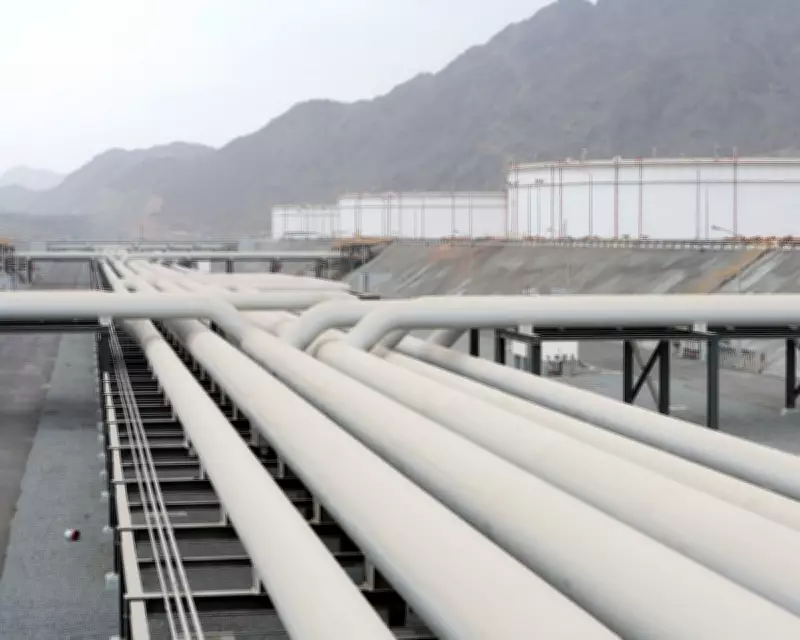
The United Arab Emirates has announced plans to complete a new oil pipeline bypassing the strategically vital Strait of Hormuz by 2027, aiming to safeguard its crude exports against potential disruptions. The project, previously undisclosed, has been fast-tracked by Sheikh Khaled bin Mohamed bin Zayed Al Nahyan, Abu Dhabi's crown prince, who directed the state oil company to expedite construction.
Doubling Export Capacity
The new pipeline is expected to double the UAE's export capacity via the existing Habshan-Fujairah route, which currently transports up to 1.8 million barrels per day to the port of Fujairah on the Gulf of Oman. Once completed, the combined capacity could reach 3.6 million barrels daily, bringing the UAE's pipeline exports closer to Saudi Arabia's 7 million barrels per day capacity to the Red Sea port of Yanbu.
The existing pipeline has proven crucial for the UAE to continue oil exports since Iran blocked tankers passing through the Strait of Hormuz shortly after US and Israeli attacks on February 28. The blockade, now approaching its 11th week, has sent global energy prices soaring and strained Gulf economies. The UAE and Saudi Arabia are the only Gulf producers with pipelines that bypass the narrow waterway between Iranian and Omani territory.
Strategic Implications
The decision to fast-track a second pipeline comes just weeks after the UAE left OPEC after 60 years of membership, signaling a rift with Saudi Arabia, the group's de facto leader. Leaving the cartel was expected to allow the UAE, OPEC's third-largest oil producer, to pump more than future quotas might permit once the conflict ends and normal trade through the Strait resumes. However, the new pipeline ensures the UAE can ramp up exports even if the conflict persists or a peace plan fails to restore pre-crisis tanker traffic.
The UAE's departure from OPEC has exposed long-standing tensions between Abu Dhabi and Riyadh, with Saudi Arabia typically favoring strict production quotas to maintain high oil prices. The exact capacity of the new pipeline has not been disclosed, but doubling existing capacity would significantly enhance the UAE's export flexibility.
The Strait of Hormuz is a critical chokepoint through which 20% of global oil and seaborne gas flowed before the recent conflict. The ongoing blockade has throttled Gulf economies and sent energy prices soaring worldwide. The UAE's pipeline expansion is a strategic move to secure its economic interests amid regional instability.