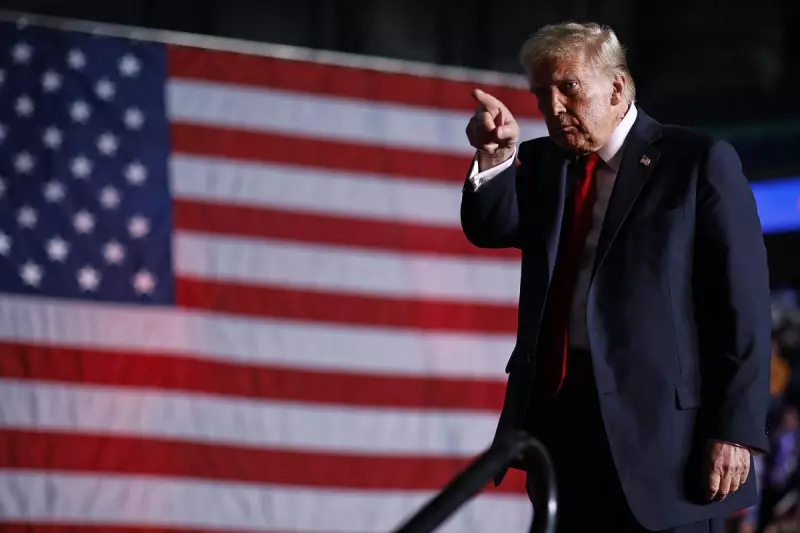
The opening days of 2026 have delivered geopolitical shocks that few analysts dared predict: the dramatic capture of Venezuela's autocratic leader, Nicolas Maduro, in a US-led raid, and a rapid escalation in former President Donald Trump's threats to annex Greenland. Yet, in a striking departure from historical precedent, global financial markets have responded with a collective shrug.
A Historical Aberration in Market Response
It is a scenario that defies conventional wisdom. Typically, sudden geopolitical convulsions trigger a classic flight to safety: stocks fall, while bonds and gold rise. The Russian invasion of Ukraine in 2022 sent European equities down roughly four per cent. The 9/11 attacks in 2001 sparked a brutal sell-off, with the Dow Jones Industrial Average plunging over seven per cent when markets reopened. Even the attack on Pearl Harbor in 1941 saw a 3.5 per cent drop.
Yet, as of Wednesday 07 January 2026, the picture is starkly different. Major indexes, including the FTSE 100, S&P 500, and Germany's Dax, are hovering near or at all-time highs. Sovereign debt markets have barely budged. Even oil futures, which one might expect to react to turmoil in a major oil-producing region, have traded as if the Venezuelan intervention never occurred.
Logical Explanations for the Muted Moves
Analysts point to several rational factors behind the calm. In the case of Venezuela, while the nation holds the world's largest proven oil reserves, its current output is a mere one per cent of the global market. Maurizio Carulli, a global energy analyst at Quilter Cheviot, notes that any significant impact on oil supply "would require years of work and favourable conditions."
In equity markets, Kathleen Brooks, research director at XTB, suggests investors were looking past the headlines towards a big week of economic data, after a US government shutdown had starved traders of official information. Furthermore, the immediate political fallout saw figures like UK Prime Minister Keir Starmer stating he "shed no tears" over Maduro's toppling, suggesting a degree of Western political unity.
The Rise of 'Trump Torpor'
Beyond these specifics lies a broader, more psychological phenomenon that some are dubbing 'Trump torpor'. Trump's second term has been punctuated by a relentless series of high-stakes shocks: an airstrike on Iran, constant friction with NATO allies, and volatile tariff announcements, often delivered via Truth Social.
Neil Wilson of Saxo Markets observed that traders simply "kind of yawned and shrugged" at the events in Caracas, despite acknowledging they marked a major shift in global power dynamics. This points to an emerging investor fatigue. Many are now guided by two truisms: that Trump is to be taken seriously, not literally, and that there is money in the so-called 'Taco trade' (Trump Always Chickens Out).
However, a note of caution has been sounded. In the wake of the Venezuela raid, Secretary of State Marco Rubio asserted, "The President of the United States is not a game player... When he tells you he's going to do something and address a problem, he means it." The question for exhausted markets is whether, this time, the rhetoric should be taken both seriously and literally, even if the immediate instinct is to tune out the noise.