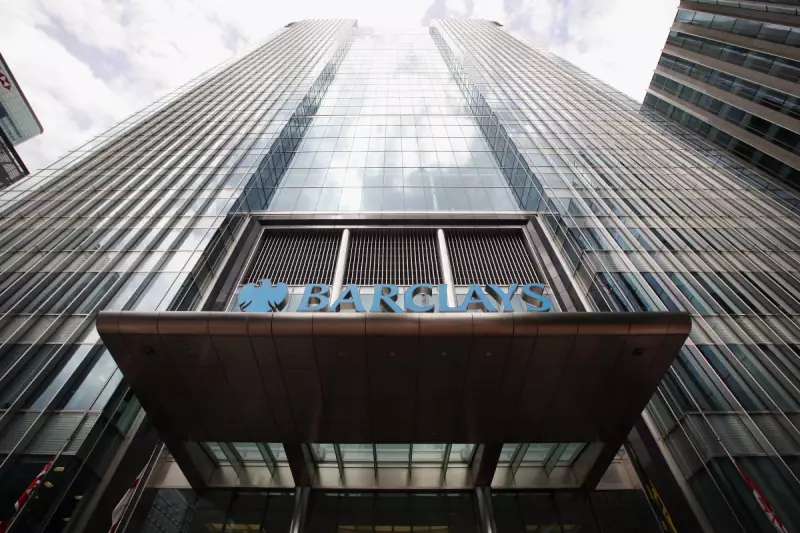
Shares in Barclays Bank suffered a sharp sell-off on Monday, becoming the worst performer on the FTSE 100, after former US President Donald Trump unveiled plans to dramatically limit credit card costs for American consumers.
Market Reaction to Presidential Proposal
The bank's stock, which had been riding high after an 80 per cent surge over the past year, fell by 5 per cent to 462p in early trading. Investors moved swiftly to price in a potential blow to the profitability of Barclays' substantial US consumer banking division.
The sell-off was triggered by a weekend announcement from Donald Trump on his Truth Social platform. He declared an intention to impose a cap on credit card interest rates at 10 per cent, a level far below the 20-30% rates common in the US market. He criticised the "Sleepy Joe Biden Administration" for allowing high rates to "fester unimpeded."
Trump stated the cap would be introduced on 20 January and remain in place for 12 months, coinciding with the anniversary of his previous administration's start. However, he provided no specific details on the implementation mechanism for this policy.
Barclays' Significant Exposure to US Market
The London-based lender is a major force in the American credit card industry, estimated to be behind roughly one in every 30 credit cards issued in the United States. Its US consumer bank serves over 20 million customers and maintains key partnerships with brands like General Motors (Chevrolet) and Breeze Airways.
This operation is a crucial revenue stream for Barclays. In 2024, the US consumer arm generated £3.3 billion in income. A significant portion of this, £2.7 billion, came from net interest income, with a further £667 million from fees and commissions. A large chunk of the interest income is directly linked to credit card lending.
Industry Backlash and Potential Mitigation
The proposal, which would require legislative approval, has already drawn fierce opposition from banking groups. Its passage into law is far from certain. Notably, billionaire hedge fund manager and Trump supporter Bill Ackman publicly criticised the move, calling it "a mistake" in a since-deleted tweet.
Ackman warned that lenders could respond by cancelling consumer cards if they cannot charge rates high enough to cover losses and generate a reasonable return. Analysts suggest banks like Barclays might seek to cushion the impact of lower interest revenue by:
- Increasing various account and service fees.
- Scaling back rewards programmes and customer perks.
- Tightening lending criteria.
The market's dramatic reaction underscores the high stakes for Barclays, whose recent share price strength now faces a direct challenge from potential political intervention in its most profitable overseas market.