Shares in London's premier oil companies suffered a significant setback on Wednesday morning, dragged down by renewed geopolitical tensions initiated by the United States. The FTSE 100 index felt the weight of the declines, halting its promising New Year rally.
Market Reaction to Geopolitical Shockwaves
As trading commenced on Wednesday 7 January 2026, investors witnessed a sharp sell-off in the energy sector. Shell's share price sank by two per cent, opening at 2,692p. Its rival, BP, experienced an even steeper decline of 2.5 per cent, falling to 420.83p. This sector-wide weakness contributed to a 0.3 per cent slump for the broader FTSE 100.
The catalyst was a pronounced drop in the global oil price. The international benchmark, Brent crude, fell below the critical $60 mark to $59.97, registering a 1.2 per cent loss. Chris Beauchamp, chief market analyst at IG, noted the shift in focus, telling City AM: "Record highs for the FTSE 100 and Dow yesterday came as the initial equity bounce reached a peak, but today’s focus is more on the slump in oil prices, which seem to be set for a new push to recent lows."
The Source of the Pressure: Trump's Venezuela Gambit
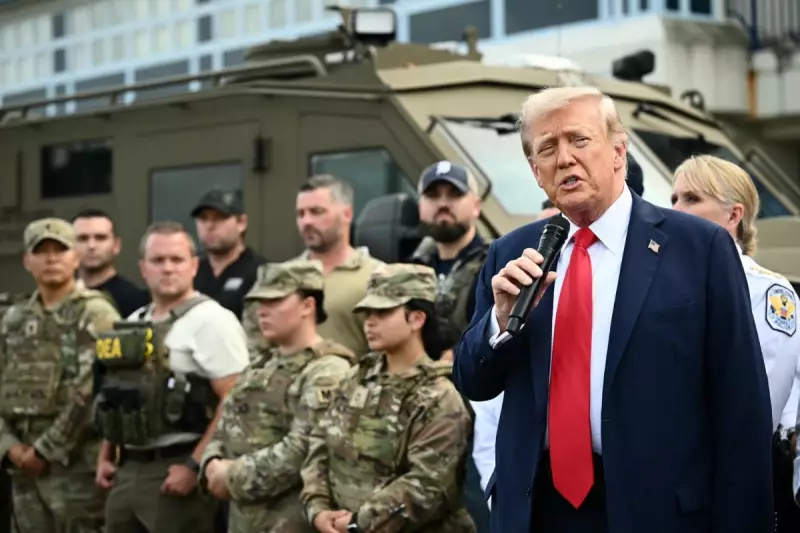
The market volatility followed a direct intervention from former President Donald Trump. In a post on Truth Social, Trump declared that Venezuela would be "turning over" $2 billion worth of oil to the US. He stated the proceeds would be sold at market price and controlled by the President. This move is seen as a significant escalation with immediate implications for global energy flows and trading relations, particularly with China.
Venezuela holds the world's largest proven oil reserves, estimated by the US Energy Information Administration at nearly 303 billion barrels, or about 20 per cent of the global total. However, its current exports are modest at roughly 900,000 barrels per day, with China acting as its primary customer.
Global Repercussions and Rising Tensions
Analysts swiftly highlighted the strategic implications. Jordan Rochester, an analyst at Mizuho Bank, explained: "By controlling Venezuela, the US doesn't need to own the oil; it just needs a hand on the tap. This shapes global energy flows and decides whether China gets cheap heavy crude or has to pay market rates elsewhere." Following the arrest of President Maduro, experts suggested China could be forced to pay higher rates for oil if the US maintains control over Venezuelan production.
The situation has ignited a diplomatic row. Beijing has urged the US to "stop toppling" the Venezuelan government, with a top Chinese diplomat accusing the White House of behaving like a "world judge." This adds a new layer to the ongoing tensions between the two superpowers.
In a separate but parallel development, Trump doubled down on historical claims that the US "needed" Greenland. The White House confirmed a "range of options" were being considered for acquisition, including military means. This prompted a firm joint statement from European leaders—including those from the UK, France, Germany, Italy, Poland, Spain, and Denmark—who rallied behind NATO member Denmark. They asserted that "Greenland belongs to its people" and only Denmark and Greenland could decide on their relations.
Amidst the uncertainty, investors sought traditional safe havens. The price of gold reached a fresh peak above $4,500 on Tuesday night, underscoring the market's flight to safety in the face of escalating geopolitical risk.