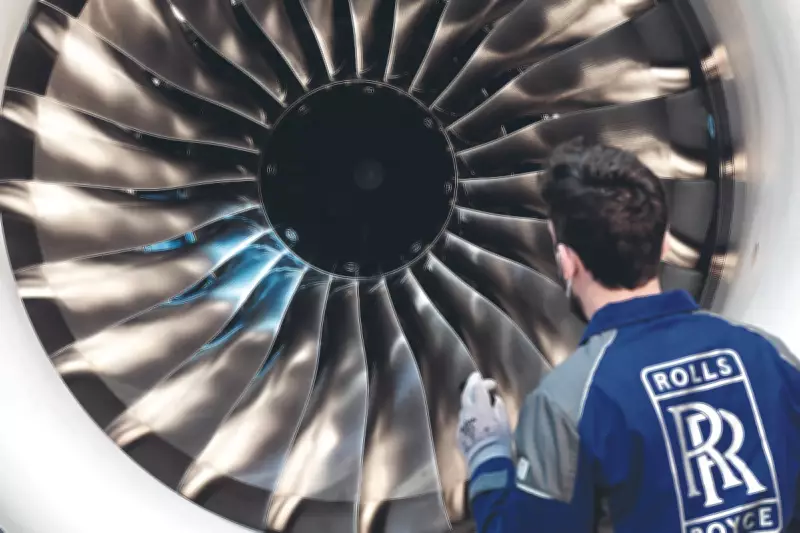
Rolls-Royce has been caught in a widespread stock sell-off triggered by escalating tensions in the Iran conflict, contributing to a significant downturn in the FTSE 100 on Monday morning. The aerospace giant's shares plummeted as much as five percent at market open, before recovering slightly to a three percent loss, trading at 1,225.00p. This decline occurred amid a broader retreat across the blue-chip index, with the FTSE 100 falling approximately 1.5 percent to 10,131.97p as investors grappled with the economic implications of the Middle Eastern crisis.
Aviation Sector Under Pressure
Neil Wilson, an investor strategist at Saxo Markets, highlighted that "global air travel demand worries" are weighing heavily on Rolls-Royce. Flight paths have been severely constrained due to the conflict, with the airspace over southern Azerbaijan closing last week. This adds to existing disruptions in the Gulf region, a critical hub for international airlines, exacerbating operational challenges for the industry.
Airline Stocks in Freefall
The ripple effects of the Iran war have devastated airline stocks. Wizz Air recently warned that the conflict would slash its income by €50 million for the financial year ending March 31, leading to a crash in share prices. Over the past week, British Airways owner IAG and EasyJet have both sunk more than ten percent, reflecting heightened investor anxiety over prolonged travel disruptions and reduced passenger demand.
Investor Sentiment Shifts
Dan Coatsworth, head of markets at AJ Bell, noted that "investors are now weighing up the prospect of the Iran conflict lasting longer than they previously thought." As risk appetite evaporated, many are fleeing to secure profits from previously strong performers. This includes selling shares in companies like Rolls-Royce and Lloyds, while turning to safe-haven assets such as gold. Lloyds saw a 1.7 percent drop in early trading, and Fresnillo, a gold miner and the FTSE 100's top riser in 2025, tumbled two percent.
Oil Prices and Inflation Concerns
Fears were further amplified as oil prices breached the $100 per barrel mark for the first time since the 2022 energy crisis. This surge has reignited inflation worries, leading investors to adjust expectations for interest rate cuts at the upcoming Bank of England meeting. However, the commodity's rise provided a boost to some sectors, with oil giants Shell and BP climbing 1.7 percent to 3,188.00p and 1.3 percent to 505.50p, respectively.
The ongoing Iran conflict continues to create volatility in financial markets, with Rolls-Royce and the FTSE 100 bearing the brunt of investor caution. As geopolitical tensions persist, market participants remain vigilant, anticipating further fluctuations in stock prices and economic indicators.