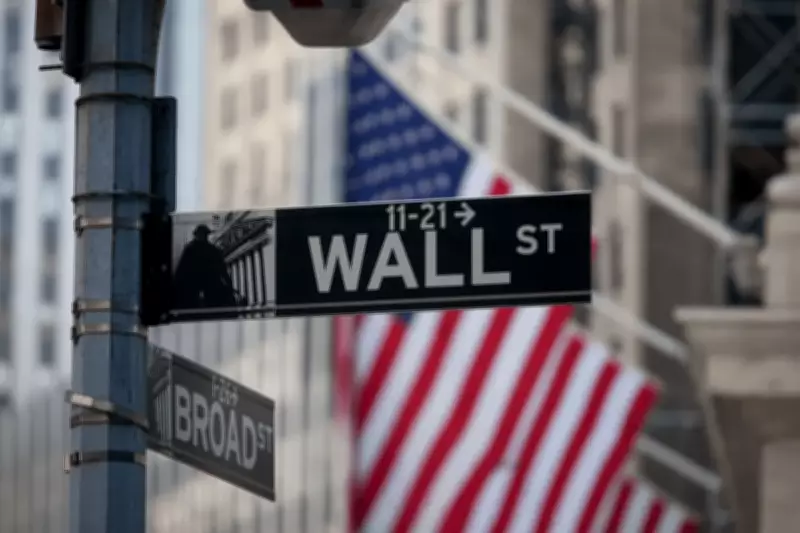
Global Stock Markets Rocked by Middle East Conflict as Oil Prices Soar
Global stock markets experienced significant turbulence on Monday, March 2, 2026, as escalating tensions in the Middle East following US strikes on Iran triggered widespread selling pressure. Wall Street joined European markets in opening with substantial losses, reflecting investor anxiety over the geopolitical instability and its potential impact on global energy supplies.
Sharp Declines Across Major Indices
The Dow Jones Industrial Average dropped nearly one percent at the opening bell, falling to 48,534.58 points. Similarly, the S&P 500 index shed approximately 0.7 percent to 6,828.47, while the technology-focused Nasdaq Composite tumbled 0.7 percent to 22,505.32. In London, the FTSE 100 index extended its losses throughout the trading session, ultimately declining by a sharp 1.4 percent.
Banking and Airline Sectors Hit Hardest
The FTSE 100's decline was led by steep drops in banking stocks, with Standard Chartered and Barclays both falling over six percent. British Airways owner International Airlines Group (IAG) saw its shares drop more than five percent as airlines were forced to halt flights due to the conflict. These losses coincided with a dramatic surge in oil prices amid the unstable climate in the Middle East.
Oil Prices Skyrocket to Multi-Year Highs
During early trading on Monday, the cost of a barrel of Brent crude oil – the international benchmark for oil prices – climbed 13 percent to $82, marking its highest level since July 2024. This substantial increase reflected growing concerns about potential disruptions to a significant portion of the world's oil supply following the attacks on Iran. The rocketing oil prices provided some support to major oil companies, with Shell and BP initially surging at the open before settling back to a more modest one percent rally.
"Global stock markets have found themselves caught up in a bout of broad-based selling, with the FTSE 100 no exception," said Chris Beauchamp, chief market analyst at IG. "The index would be 50 points lower were it not for BP and Shell, which have surged as oil prices rocket skywards."
Strait of Hormuz: The Critical Chokepoint
The market turmoil followed joint strikes from the United States and Israel that killed Iran's Supreme Leader Ayatollah Ali Khamenei. President Trump called for Iranian citizens to use the opportunity to "take over," but fears have grown that a substantial portion of the world's oil supply could become entangled in the conflict if navigation through the Strait of Hormuz is halted.
The Strait of Hormuz provides the only sea passage from the Persian Gulf to the open ocean and is recognized as one of the world's most strategically important chokepoints. This narrow maritime passage connects two larger bodies of water, forcing high volumes of shipping traffic to converge and creating a critical bottleneck for global energy transportation. It is estimated that ships crossing the Strait of Hormuz carry approximately one-fifth of global oil supplies, amounting to around 20 million barrels per day.
"From a global perspective, pretty much everything hinges on the Strait of Hormuz and the implications of any disruption to global energy flows," stated John Wyn Evans, head of market analysis at Rathbones. "Oil prices already reflect a sizeable risk premium, with current levels implying an expectation of a limited but meaningful interruption to shipping, but analysts note that the impact would worsen quickly if the closure were protracted, given the non-linear nature of supply constraints."
Historical Warnings About Strait Disruption
Former foreign secretary David Lammy previously warned that blocking the Strait of Hormuz would be a "catastrophic mistake" when the United States and Iran engaged in a 12-day war in June 2025. His comments underscore the severe economic consequences that could result from any prolonged disruption to shipping through this vital waterway.
The combination of geopolitical uncertainty, potential energy supply disruptions, and market volatility has created a perfect storm for global financial markets, with investors closely monitoring developments in the Middle East and their implications for oil prices and economic stability worldwide.