The Rise of Halo Companies in a Shifting Investment Landscape
As artificial intelligence continues to reshape the global economy, investors are adopting a new strategy known as the Halo trade. This approach focuses on companies with substantial physical assets that are less vulnerable to AI disruption, driving UK and European Union markets to unprecedented heights in early 2026.
Defining the Halo Investment Strategy
The term Halo stands for "heavy assets, low obsolescence," representing businesses with tangible, productive infrastructure that maintains long-term economic relevance. According to Goldman Sachs analysts, these companies combine significant physical capital with barriers to replication, including high costs, regulatory hurdles, extended construction timelines, and engineering complexity.
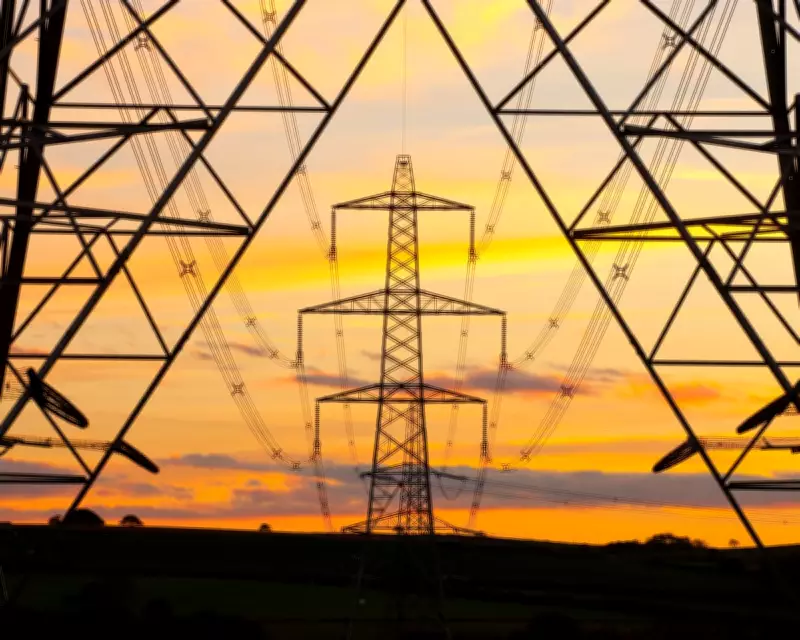
Examples of Halo companies include energy grids, pipelines, utilities, transport infrastructure, critical machinery, and long-cycle industrial capacity. These enterprises form the backbone of essential services that remain indispensable regardless of technological advancements.
Market Performance and Investor Rotation
While US mega-cap technology companies experienced a challenging start to 2026, the Halo trade propelled UK and EU stock markets to record levels by February's end. Goldman Sachs reported that its basket of over 100 capital-intensive companies outperformed comparable capital-light firms by 35% since 2025, signaling a fundamental shift in investment priorities.
"After more than a decade of under-investment, particularly in Europe, corporations are decisively shifting back toward physical assets," Goldman analysts noted in client communications. They emphasized that asset intensity has become a crucial driver of valuations and returns in the current market environment.
European Market Dynamics
The valuation gap between capital-intensive and capital-light businesses in Europe has narrowed significantly, with capital-intensive firms now commanding higher price-to-earnings ratios. This reversal marks a departure from previous market trends that favored asset-light technology companies.
Ruben Dalfovo, an investment strategist at Saxo, highlighted that energy infrastructure companies and integrated oil and gas majors represent classic Halo investments. He also pointed to essential service providers like utilities, waste collection, and water services as prime examples.
"These businesses rarely dominate dinner party conversations," Dalfovo observed. "They tend to gain attention when investors stop paying for excitement and start prioritizing reliability."
FTSE 100 and European Indices Benefit
The FTSE 100, with its concentration of traditional economy companies, achieved multiple record highs in 2026. February marked the blue-chip index's strongest month since November 2022, representing its eighth consecutive monthly gain.
Ipek Ozkardeskaya, a senior analyst at Swissquote, explained the market dynamics: "Investors are rotating from expensive AI and growth stocks into businesses with tangible infrastructure and long-lived assets—energy, materials, industrials, shipping, and other 'real world' enterprises."
She added, "In this context, the FTSE 100 is well positioned to benefit from Halo inflows, rallying from record to record, driven primarily by energy and mining companies."
The pan-European Stoxx 600 share index similarly reached record highs, supported by capital rotation away from US technology stocks toward other sectors. Cyprus-based oil tanker shipping company Frontline emerged as the Stoxx 600's best-performing member in early 2026, with shares rising 57%. Norway's Kongsberg Gruppen, which supplies high-tech systems to marine, aerospace, defense, and energy producers, gained 46% since January.
Contrasting Sector Performance
While Halo companies thrive, software and data-focused enterprises face increasing pressure. AI companies have introduced services that threaten traditional revenue models, creating uncertainty for technology-dependent businesses.
Market sentiment received a jolt when analysts at Citrini Research published a speculative report outlining a potential future where autonomous AI systems could disrupt the entire US economy. The report suggested possible impacts ranging from employment shifts to market volatility and mortgage instability, contributing to investor caution toward purely digital business models.
This investment paradigm shift reflects growing recognition that while artificial intelligence transforms many industries, physical infrastructure and essential services maintain inherent value that technological disruption cannot easily erase. The Halo trade represents not just a temporary market trend but potentially a fundamental revaluation of what constitutes durable investment value in an increasingly digital world.