Barclays Positioned to Capitalize on Market Turmoil Amid Middle East Crisis
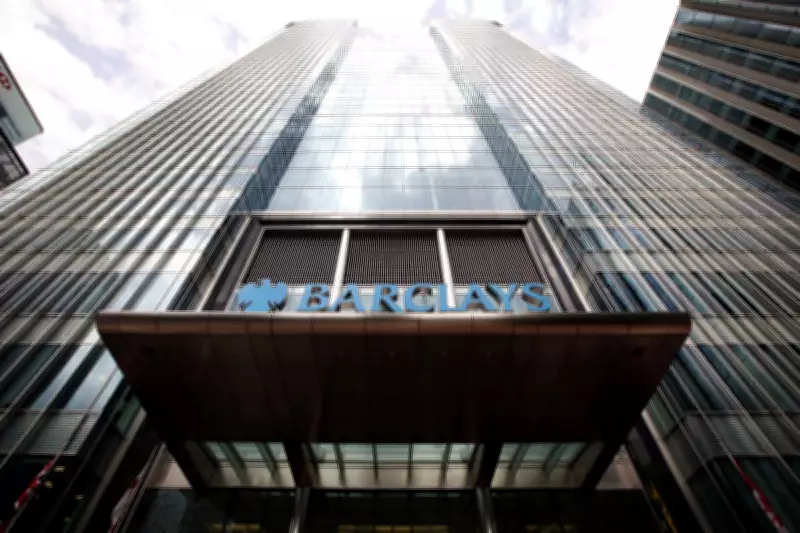
Barclays and other major UK banking institutions are poised to receive a substantial financial boost from the escalating crisis in the Middle East, as investors rapidly exit equity positions and concerns about inflation spikes intensify across global markets.
Market Volatility Creates Unique Opportunity for Barclays
Analysts have identified FTSE 100 heavyweight Barclays as particularly well-positioned to benefit from current market conditions due to its extensive market divisions. According to Jefferies analysts, the bank's revenue from high-speed market volatility trading operations is approximately 3.5 times greater than the fees generated from traditional investment banking activities.
This significant disparity suggests that while other financial institutions might struggle with market instability, Barclays could potentially generate substantial profits from the very volatility that threatens other market participants.
Strong Historical Performance in Volatile Conditions
During the first half of 2025, Barclays' investment banking division drove a remarkable £1 billion profit increase for the entire organization by capitalizing on market volatility. The investment bank reported total income of £7.1 billion for the six-month period, representing a 13 percent year-over-year increase.
For the quarter ending June 30, the division's income surged ten percent annually to reach £3.3 billion. Barclays attributed this robust performance primarily to exceptional results in global markets operations, particularly equities trading, which partially offset weaker performance in traditional investment banking activities such as mergers and acquisitions.
This strong showing occurred during a period of heightened equities trading activity following market disruptions triggered by what became known as Trump's 'Liberation Day' levies in early April, which prompted widespread investor sell-offs.
Global Market Impact and Banking Sector Implications
The ongoing Middle East conflict has created significant ripples throughout international financial markets, with the FTSE 100 experiencing a nearly three percent decline in a single trading session - the most substantial drop since President Trump's tariff measures in April of the previous year.
Jefferies analysts noted that any "increased volatility is likely to assist markets' revenue" for leading banking institutions, suggesting that turbulent market conditions could paradoxically benefit certain financial players.
Interest Rate Environment and Profit Projections
Following recent volatility in energy prices, economic analysts are forecasting potential inflation increases that could delay the Bank of England's planned acceleration of interest rate reductions this year.
The National Institute for Economic and Social Research (NIESR) has projected that a temporary surge in oil prices to $100 per barrel could add as much as 0.3 percentage points to inflation, while a year-long price shock might increase inflation by 0.7 points. City economists have warned that such developments would significantly alter the Bank of England's "gradual" approach to reducing the base interest rate.
Jefferies banking analysts noted that Middle East developments have already caused markets to revise their expectations, now anticipating the UK base rate to be 0.3 percent higher by year-end than previously forecast.
The analysts added: "All else equal, we estimate this would lift [banking] sector profits by four percent in 2028."
Structural Hedges and Long-Term Profit Potential
Financial institutions appear positioned for a delayed profit surge as the anticipated 'higher-for-longer' interest rate environment takes hold. This scenario would allow banks to roll over their multi-billion pound internal investment portfolios - known as structural hedges - into new contracts with higher yields than previously anticipated.
The repricing of these hedges means that even if economic conditions cool, banking income is likely to remain artificially elevated well into 2028. Lloyds Banking Group, with its "longer than average" structural hedge, is expected to see increased earnings in the coming year as older hedges established at lower rates mature.
Should interest rates remain elevated for an extended period, this financial boost could materialize sooner than originally projected, creating additional profit opportunities for UK banking institutions beyond current expectations.