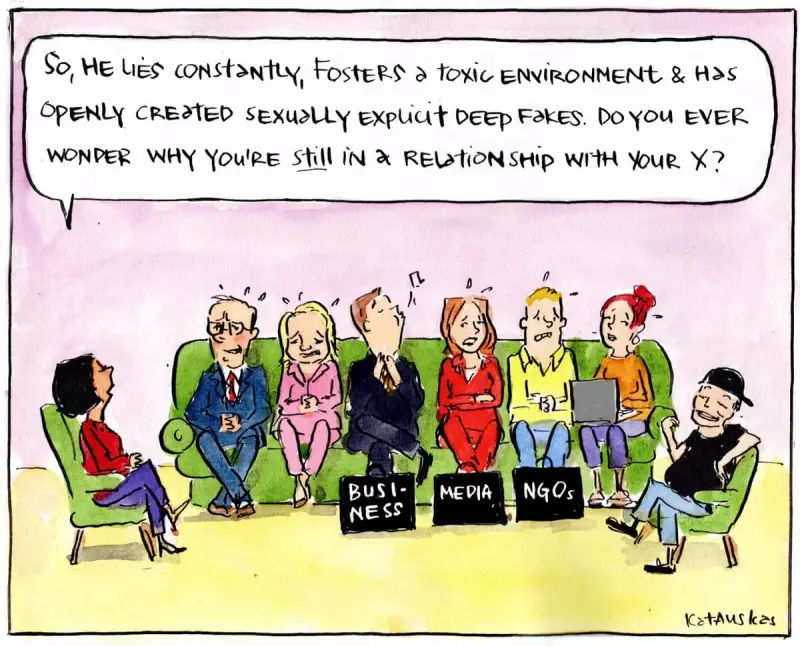
In the ever-shifting landscape of social media, one platform continues to provoke debate and defy predictions of its demise. X, the platform formerly known as Twitter, enters 2026 with a significant and active user base, despite a torrent of controversies and changes since its acquisition. The question of why so many individuals and organisations remain steadfast users is more pertinent than ever.
The Enduring Pull of Established Networks
A primary factor in X's continued relevance is the sheer inertia of established digital communities. For journalists, politicians, activists, and countless professionals, the platform has been the central nervous system of real-time news and public discourse for well over a decade. Migrating an entire network of contacts, followers, and curated sources to a rival platform represents a monumental effort. The value is not solely in the platform's features, but in the people who use it. Where else can one find such a concentration of world leaders, celebrities, academics, and journalists all posting in the same chaotic arena?
This network effect creates a powerful lock-in. Breaking away means potentially missing vital conversations, career opportunities, or the rapid spread of breaking news. For many, the cost of leaving—the professional and social isolation—outweighs the discomfort with the platform's management and policy directions. The community, however fractious, has become indispensable.
Functionality Versus Ideology
Beyond community, the platform's core functionality retains a unique appeal. The brevity of posts, the speed of information dissemination, and the algorithmically driven 'For You' feed offer a specific utility that alternatives have struggled to perfectly replicate. For users focused on niche interests—from sports updates to academic debates—X remains an unparalleled tool for accessing filtered, real-time information.
For a substantial segment of users, engagement is transactional rather than ideological. They are not there to endorse the owner's views but to leverage the tool for their own purposes: promoting a business, tracking market trends, or following a favourite football team. This pragmatic approach insulates their usage from the broader political storms that frequently engulf the platform. The service is judged on its utility in the moment, not on the statements of its proprietor.
A Landscape of Imperfect Alternatives
The resilience of X is also a story of the competition, or lack thereof. While platforms like Mastodon, Bluesky, and Threads have emerged, each presents its own hurdles. Mastodon's federated model can be confusing for mainstream users, Bluesky has faced scaling and invitation hurdles, and Threads from Meta is viewed with suspicion by those wary of consolidating more power with another tech giant. No clear successor has yet managed to combine a critical mass of users with a familiar, seamless experience.
Consequently, for all its flaws, X often still feels like the 'town square'—even if many are unhappy with the square's current management. The fragmentation of audiences across multiple new platforms can dilute conversation, making a return to the larger, if more contentious, pool of users on X seem like the path of least resistance for those seeking maximum reach or engagement.
As we move through 2026, the loyalty to X is revealed to be a complex calculus of habit, necessity, and pragmatism. It is less about unwavering brand loyalty and more about the absence of a universally acceptable alternative that replicates both its network and its function. The platform's future may remain uncertain, but for now, its role in the digital ecosystem is secured by the very communities it hosts, for better or worse.