Suda51 Unveils 'Ad-Lib Development' Philosophy in Exclusive Interview
Goichi Suda, the visionary game creator better known as Suda51, has revealed the secret behind his distinctive development approach in an exclusive interview about his upcoming title Romeo Is A Deadman. The CEO of Grasshopper Manufacture, often compared to cinematic auteur Quentin Tarantino for his unique style, discussed his improvisational methods and the evolution of game development during a rare London visit.
The Maverick's Latest Creation
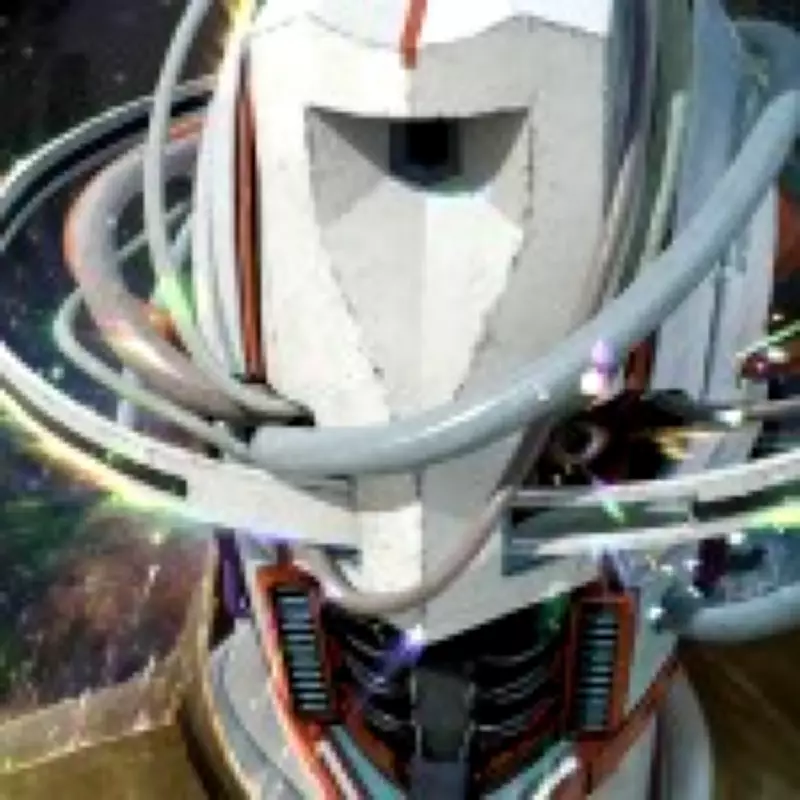
Scheduled for release on February 11 for PlayStation 5, Xbox Series X/S, and PC, Romeo Is A Deadman represents Suda51's 28th project at Grasshopper Manufacture. The game follows the bizarre adventures of Romeo Stargazer, an American police officer resurrected by his scientist grandfather to become a lightsaber-wielding FBI Space-Time Department operative. Players will travel through time and space to confront temporal criminals, including Stargazer's ex-girlfriend in multiple guises, who threaten reality with world-destroying anomalies.
What immediately distinguishes this title is its remarkable visual journey through multiple art styles within the first hour alone. The experience transitions from diorama-style introductions to comic book cutscenes, conventional third-person 3D graphics, and retro 8-bit top-down spaceship sections featuring subtle homages to classic games like Pong and Pac-Man. Remarkably, these seemingly disparate elements coalesce into a coherent whole with its own peculiar logic.
The Economics of Creative Adaptation
Contrary to expectations, Suda51 explained that incorporating multiple visual styles actually reduced development costs rather than increasing them. 'Some people think that it must have been really expensive putting all these different visual styles in the game, but actually, it's the opposite,' he revealed. The development team initially planned a fully 3D polygonal game but realized this approach would require excessive time and financial resources.
The solution emerged from recognizing individual team members' specialized talents. 'We have a bunch of people at the studio who are really good at a specific art style, or at a specific aspect of the development,' Suda51 explained. 'So what I wanted to do is have the light shone on each of these people who are really specialised in these certain styles.' This collaborative approach transformed potential limitations into creative opportunities.
Improvisation as Development Superpower
Suda51 described his development philosophy as 'ad-lib development', comparing the process to musical improvisation. 'It's kind of like jazz-jamming: 'This guy's doing this, and if I do this, it's going to match in some cool way,'' he explained. 'When you get a really good bunch of improvisers together, then you have a really good jazz jam band.' This approach has become particularly valuable given recent industry challenges.
The developer acknowledged that Romeo Is A Deadman emerged during a particularly challenging period for Grasshopper Manufacture. Following NetEase's 2021 acquisition of the studio and subsequent 2025 announcement about selling international developers, Suda51 found himself working under increased pressure. 'It ended up pretty much from the earlier stages of development, both as a studio and also for me personally being: 'OK, we've got to do something about this, or this has to be worked out somehow',' he confessed.
Evolution of Game Development Practices
With over thirty years in the industry, Suda51 possesses unique perspective on how game development has transformed. 'As the general scale of games got bigger and bigger, over the past 30 years, the amount of work that goes into a game, the amount of people that you need working on a game, and the number of types of specialists and professionals you need working on a game has also expanded,' he observed.
He contrasted contemporary practices with earlier approaches: 'Back in the day, there weren't level designers. One of the planning guys would draw the map on a piece of paper, and the graphics guys would turn that into a level, and there you go.' Today's development requires specialized teams for planning, level design, graphics implementation, and background creation, increasing both production quality and complexity.
Mentorship and Creative Influences
Suda51 highlighted Shinji Mikami, creator of Resident Evil and founder of multiple renowned studios, as his most significant mentor. Their collaborations on killer7 and Shadows Of The Damned profoundly influenced Grasshopper Manufacture's approach to action games. 'I've learned so much from him over the years,' Suda51 acknowledged. 'He's had the biggest impact, not only on myself, but on Grasshopper Manufacture as a studio, as far as the way we make games is concerned.'
This mentorship wasn't formalized through explicit instruction but emerged through collaborative practice. 'It's hard to explain, but it's almost as though I learned it through feeling and sensing and working with him,' Suda51 reflected, emphasizing the intuitive nature of creative development.
Future Prospects and UK Inspirations
Despite the demanding development cycle for Romeo Is A Deadman, Suda51 shows no signs of slowing down. 'I'm going right back into work, work, work mode, basically,' he declared, already planning future projects. Intriguingly, he suggested potential UK settings for upcoming games, noting the relative scarcity of London-based video games despite the city's rich narrative potential.
'You feel like there should be lots of games set in London, but when you think about it, there aren't that many,' he observed, mentioning television series MobLand as inspiration. 'The UK would be a really cool place to set a game.' Given Suda51's signature blend of hard-bitten action and literary influences, a British setting could provide fascinating creative territory for future exploration.
As the gaming industry continues evolving, Suda51's commitment to improvisational development and creative problem-solving demonstrates how individual vision can thrive within increasingly complex production environments. His ability to transform constraints into distinctive artistic statements ensures that whatever project emerges next will bear the unmistakable imprint of gaming's most celebrated maverick.