Ukraine-Russia Peace Talks Resume in Abu Dhabi Amid Deep Divisions
Senior Ukrainian and Russian officials have convened in Abu Dhabi for a second round of high-stakes peace negotiations, brokered by the Trump administration. The two-day talks follow a similar format to last month's discussions, with delegations from Washington, Kyiv, and Moscow participating directly.
Despite recent optimistic statements from Donald Trump suggesting that an end to the four-year conflict might be within reach, both Moscow and Kyiv have deliberately tempered expectations. Officials from both nations have played down the likelihood of any immediate breakthrough, acknowledging the substantial obstacles that remain.
The Core Issue: Territorial Demands and Security Guarantees
The path to a viable peace agreement remains exceptionally complicated, primarily due to Moscow's continued insistence on maximalist territorial demands. The Kremlin has repeatedly stated that any peace deal must include Ukraine ceding the entire eastern Donbas region, including areas that remain under Ukrainian control.
Kyiv has firmly rejected these terms. President Volodymyr Zelenskyy has indicated a willingness to consider alternative arrangements, such as the withdrawal of Ukrainian troops from certain eastern areas and the establishment of a demilitarised zone. However, the fundamental disagreement over territory represents the most significant barrier to progress.
US Secretary of State Marco Rubio confirmed last week that negotiations are currently hinging on this single, highly contentious issue. American officials have reportedly been pressuring Ukraine to make territorial concessions in Donbas, offering security guarantees in return, a proposition that faces strong domestic resistance in Ukraine.
Additional Obstacles Beyond Territory
Even if a compromise on territory could somehow be reached, numerous other substantial hurdles would remain. Moscow has declared it would not tolerate the presence of European troops on Ukrainian soil, a condition Kyiv views as essential for any meaningful security guarantees. Furthermore, the Kremlin has demanded strict limits on the size and capability of Ukraine's military, a condition President Zelenskyy has repeatedly ruled out as unacceptable.
Despite the wide chasm between their official positions, both sides have engaged in a careful diplomatic dance, particularly in front of the Trump administration. Each seeks to appear open to peace to avoid angering the US president, while simultaneously attempting to place the blame for the stalemate squarely on the other side.
Key Participants in the Abu Dhabi Talks
The Ukrainian delegation includes several high-profile figures: Kyrylo Budanov, the former head of military intelligence who now serves as head of the presidential administration; David Arakhamia, a trusted negotiator; and Andrii Hnatov, the chief of the general staff.
The Russian team is led by Igor Kostyukov, the head of the GRU military intelligence service. He is accompanied by other intelligence officials and the Kremlin's special envoy, Kirill Dmitriev. The presence of both current and former intelligence chiefs overseeing covert campaigns against each other adds a particularly charged dynamic to the negotiations.
From the United States, special envoy Steve Witkoff and Jared Kushner, Donald Trump's son-in-law, are expected to attend. Both men have become fixtures in US diplomacy under the Trump administration, involved in Middle East negotiations, the Iran crisis, and now the Ukraine war, though they have faced criticism for their lack of formal diplomatic experience.
Public Sentiment in Ukraine and Russia
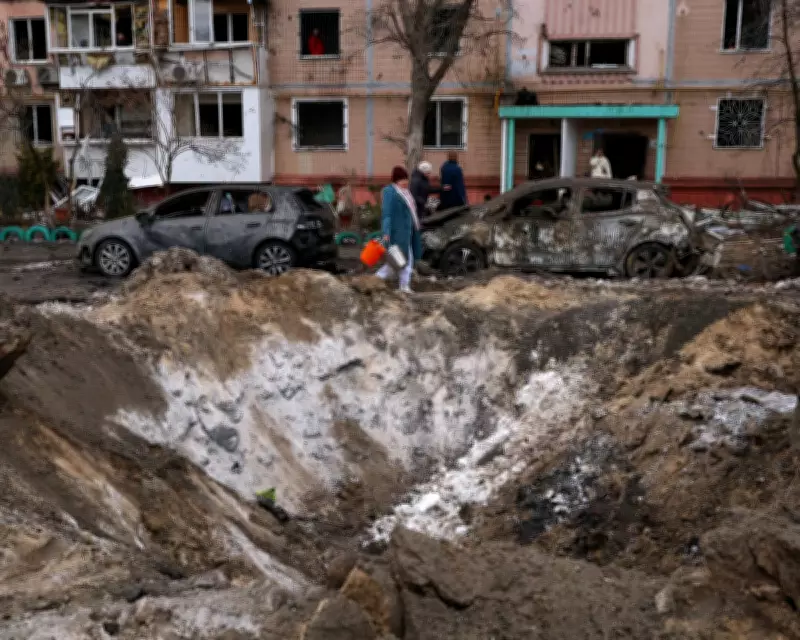
In Ukraine, battered by a historically cold winter and facing months of hardship with much civilian infrastructure damaged by Russian strikes, clear signs of exhaustion are emerging. While the desire for peace is widespread, polling indicates firm resistance to any settlement that would hand over the entire Donbas region to Russia. Many Ukrainians fear such a compromise would not bring lasting peace but instead embolden Moscow to press its campaign further into Ukrainian territory.
Gauging public sentiment in Russia is more difficult, as any criticism of the war can result in severe penalties, including prison sentences. The few independent polls that still exist suggest that the share of Russians who favour peace talks has risen to approximately 61%. However, these same surveys indicate that Russians, much like their leadership, remain largely unwilling to support territorial concessions as part of any peace settlement.
The Stakes if Talks Fail Again
Vladimir Putin has consistently argued that Russia is winning the war and has indicated a preparedness to continue fighting indefinitely unless Ukraine agrees to Moscow's terms. In a war of attrition that has produced close to 2 million casualties, the central question remains: which side will reach a breaking point first?
Ukraine, with a far smaller population than Russia, is struggling to mobilise enough troops to fill battlefield gaps. Furthermore, serious doubts persist over whether Europe's military-industrial capacity can scale up quickly enough to compensate for potential reductions in US military aid.
Russia, meanwhile, is under mounting economic strain. The economy is stagnating, many non-military sectors are shrinking, and oil revenues have fallen sharply due to international sanctions. The conflict has become a test of endurance, with the war likely to continue until one side is forced into a position where concession becomes the only viable option.
The Abu Dhabi talks represent another critical juncture in this prolonged conflict, but with fundamental issues unresolved and public positions seemingly entrenched, the prospect of a swift diplomatic resolution appears distant. The gap between what each side is willing to accept remains vast, suggesting that the path to peace will be neither short nor straightforward.