The $75bn Fintech Juggernaut Still Chasing Its Crown
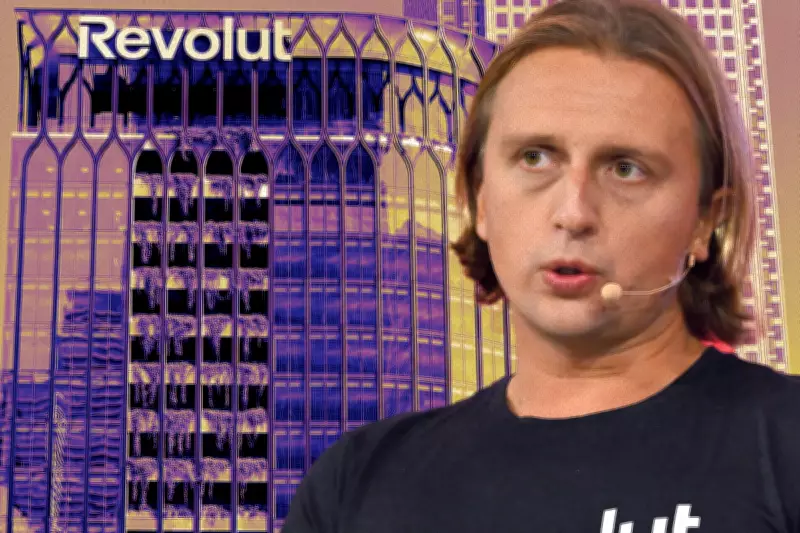
In the gleaming Canary Wharf headquarters of Revolut, the blunt command 'Get Sh*t Done' is permanently affixed to the walls. This unconventional office mantra perfectly encapsulates the driven, no-nonsense approach of co-founder Nik Storonsky, whose acerbic leadership has propelled the UK's most valuable fintech since its 2015 launch.
Radical Ambition Meets Radical Candor
"Whenever a target is set, you should expect to be challenged," reveals a former insider. "Not just why isn't this two times higher, but ten times higher." While some initially dismissed such statements as hyperbolic, Storonsky's vision of building a $100bn financial powerhouse was deadly serious. The Russian-born billionaire has transformed Revolut into a sprawling global empire spanning dozens of countries, putting centuries-old British banking institutions firmly on the defensive.
Last November's $75bn valuation milestone sent shockwaves through traditional banking circles. Natwest chief Paul Thwaite acknowledged Revolut had "raised the bar," while Barclays boss CS Venkatkrishnan conceded the firm had "laid down the gauntlet." The question remains: how did this digital upstart leave established rivals so far behind?
Former employees describe a culture of "radical candor" where corporate niceties are discarded in favor of brutal honesty. "People are brutally honest with one another," explains another insider. "A lot of those niceties and corporate dogma is lost." This uncompromising approach has yielded staggering results. Just five years after founding Revolut with chief technology officer Vlad Yatsenko, the company secured a $500m Series D funding round valuing the business at $5.5bn.
Explosive Growth and Cultural Scrutiny
By 2025, Revolut's valuation rocketed to $75bn following fresh investment from chipmaker Nvidia, placing the fintech alongside City giants. The last twelve months saw revenue surge 72% to £3.1bn as the company diversified into cryptocurrency, hotel bookings, and mobile plans. However, this rapid ascent has brought intense scrutiny of Revolut's corporate culture.
The company recently implemented a points-based system called 'Karma' to track employee behavior, with points affecting bonuses based on engagement with risk and compliance processes. Some view this as dystopian, but many employees defend the environment. "I don't think too many people are particularly negative on it," reflects one former staffer. "Given that most of them are millionaires."
Analysis of Companies House records indicates over 200 individuals stood to become millionaires if they sold their stakes in Revolut's secondary share sale last year, with employee stock valued at $1,381.06 per share. This wealth creation has spawned the 'Revolut Mafia' – a powerful network of former employees launching their own fintech ventures.
The Banking Licence Conundrum
Despite its explosive growth, Revolut faces significant regulatory hurdles. Storonsky has repeatedly emphasized that obtaining a full UK banking licence remains his "number one priority," even as the company pledged a £3bn investment into the UK economy. The digital bank received provisional approval from regulators in 2024 after a three-year wait, triggering what was expected to be a twelve-month "mobilisation stage" before full authorization.
However, insiders suggest the provisional July deadline was unlikely to be met, with Revolut stating it was "looking forward to launching as a fully regulated UK bank... [in 2025]." The situation grew more complicated when Financial Times reports suggested Bank of England governor Andrew Bailey blocked a meeting between Revolut and regulators brokered by Chancellor Rachel Reeves, citing concerns about political interference.
Traditional banking executives haven't hesitated to highlight Revolut's regulatory status. Barclays' CS Venkatkrishnan emphasized the importance of banking licences, stating: "That is the contract – if you don't have that contract, then you will have the questions... about how to manage [a bank's financial controls]." Revolut swiftly countered that it "abides by the same regulatory and consumer protection standards as any traditional bank."
Global Expansion and IPO Speculation
Frustration with London's regulatory pace has reportedly shifted Revolut's focus toward international expansion. The second half of 2025 witnessed aggressive overseas moves, including regulatory approvals in the Middle East and America. The company's website currently lists nearly a hundred job openings in the UAE and 77 in Dubai, signaling continued global ambitions.
Despite persistent speculation about a blockbuster London IPO, Storonsky has consistently downplayed such plans. In a December interview, he stated a listing was "not a priority" and would "most likely" occur in "two or three years." He added that Wall Street would be "clearly more beneficial" due to "greater liquidity," dealing a blow to London's hopes of securing what many considered a potential turnaround listing for the London Stock Exchange.
City analysts now react to London listing prospects with muted skepticism, with one offering a pitying shake of the head while another didn't bother hiding laughter. A Revolut spokesperson emphasized: "Our focus is not on if, when or where we IPO, but on continuing to expand the business, building new products, and providing better and cheaper services to serve our growing global customer base."
As Revolut navigates regulatory challenges while maintaining its breakneck growth trajectory, the fintech giant continues to redefine financial services, proving that sometimes, getting things done requires more than just conventional approaches.