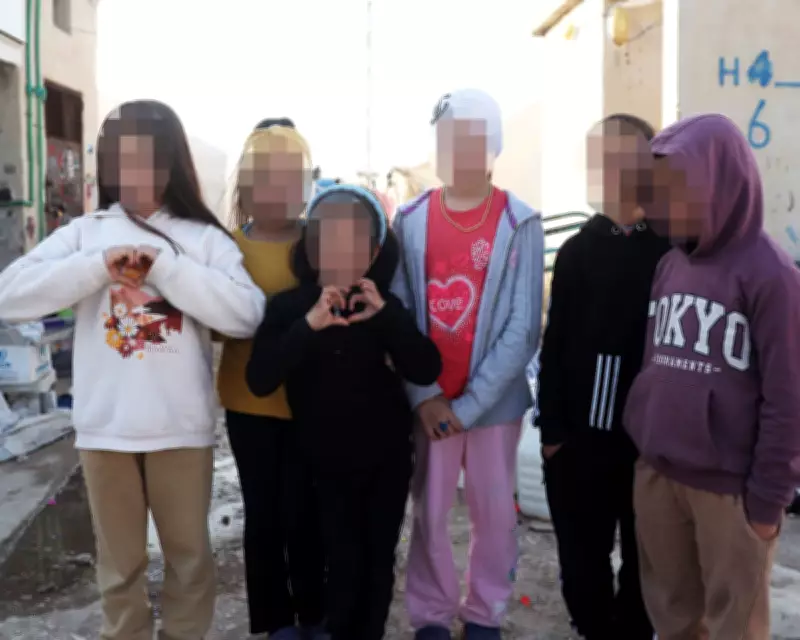
Australian Mothers in Syrian Detention Offer Heart-Wrenching Choice: Send Children Home Without Them
In a desperate plea from the confines of a Kurdish-controlled detention camp in north-east Syria, eleven Australian women have declared they would accept permanent separation from their children if it meant the youngsters could return safely to Australia. These women, held at the al-Roj camp over alleged ties to Islamic State fighters, are mothers to twenty-three Australian children, some as young as six years old.
A Costly Sacrifice for Safety
The women stated on Monday that they want the Australian government to repatriate their children "at any cost," even if it means placing them with relatives in Australia while the mothers remain imprisoned. This extraordinary offer underscores the dire conditions and psychological toll of years-long detention in the squalid tent encampment.
"I have continuously asked for my children to be saved from this camp and from this continuous fear," said Zahra Ahmad, a Melbourne mother of three detained since at least 2019. "They experience night terrors. Omar, my second-eldest son, bites his fingers till the tips bleed and he doesn't sleep."
Psychological Regression and Trauma
The mothers report witnessing severe psychological regression in their children, linked directly to the trauma of their confinement. Ahmad described "regressive behaviour" in her children, including bed-wetting by her twelve-year-old son—behaviour psychologists confirm is often tied to emotional trauma in adolescents.
"They can't cope any more and they can't understand why they're kept in this situation," Ahmad pleaded. "Please save the children; the children are innocent in all of this and they need to feel safe and grow up in a safe and healthy environment. Our children need to heal and put this nightmare behind them."
Failed Repatriation Attempt Deepens Despair
The families' desperation intensified following an aborted repatriation attempt last week. Kurdish authorities briefly released the eleven women and twenty-three children, who attempted to reach Damascus to board flights to Australia. Their convoy was forced to turn back after Syrian government intervention, with officials citing a lack of proper coordination.
For the children, this failed escape was particularly devastating. Eleven-year-old Baidaa, asked why they were returned to the camp, broke down in tears: "I was so happy we were leaving, but then when we turned around I was so sad and upset. It was terrible. Why do I have to be in here? I don't want to live in a tent, I don't want to be in a camp, I don't want to be in a prison. I just want to be free and live in houses and live a normal life, not like here."
Government Opposition and Growing Risks
The Australian government maintains its opposition to repatriating the women and children, stating it will not assist their attempted re-entry to Syria. This stance persists despite warnings from human rights organizations that the arbitrary detention violates fundamental rights and that camp conditions—with tents offering minimal shelter from extreme temperatures—are unsuitable for life.
Rights groups emphasize that children in al-Roj face particular dangers, including exposure to radicalized women attempting to inculcate extremist ideologies and the risk of trafficking. The urgency has escalated since Damascus took control of the nearby al-Hawl camp last month, which housed 25,000 families linked to IS. That camp was nearly emptied, with most foreign women and children smuggled to unknown locations, raising fears of trafficking and recruitment by extremist groups.
Uncertain Future for al-Roj Camp
Al-Roj's future remains uncertain, with Kurdish officials suggesting it might close, though camp security administration head Çavre Afrin stated she was unaware of such plans. Parents fear that if al-Roj becomes vulnerable to smugglers like al-Hawl, their children could fall back into IS hands or become victims of traffickers.
Women in al-Roj have reported to Human Rights Watch that guards from the Kurdish Asayish security forces conduct nightly raids involving beatings, property destruction, verbal harassment, threats, theft, and extortion. Boys are also being separated from their mothers during these operations.
Calls for Compassionate Repatriation
Australian rights organizations, including Save the Children, have campaigned for seven years to repatriate Australians from Syrian camps. Save the Children CEO Mat Tinkler expressed deep concern about mothers relinquishing their children: "What the global evidence base says is that, almost always, the best interest of the child is served by the child remaining with parents... For this group of children, they have known only their mums in these camps for seven years: imagine that person, the only source of support and comfort and nurturing, being taken away from them, that will have a traumatic and lifelong impact."
Tinkler revealed that in "dozens of meetings" with Australian security officials, the consistent advice was that women and children should be repatriated together. "Consistently what I have heard from national security agencies, and the advice provided by government departments, was that the safest course of action was to bring all of these people home to Australia," he said.
Adam Coogle, deputy Middle East director at Human Rights Watch, warned that increasing chaos is exposing women and children to serious risks: "After years of terrible conditions in the camps, women and children are fleeing in fear, with nothing, and could risk further ill-treatment. Unless there is evidence they have committed a crime, all residents, regardless of nationality, need to be given support to return, reintegrate, rehabilitate, and rebuild their lives."
The standoff continues as these Australian families remain trapped between international politics, security concerns, and the fundamental human right to safety and dignity.