Public Opinion Pushes for Safer Social Media for Children
It is no surprise that the idea of a government-mandated ban on social media for children is popular with parents, but less so with the kids themselves. As a science and technology editor, I reflect on how the landscape has shifted dramatically over the past decade.
More than 10 years ago, I filmed my children for a report on the impact of screens on young minds. My eldest daughter was six at the time, and her twin sisters were nearly three. They did not have their own devices—platforms like Instagram, Snapchat, and YouTube were beyond their imagination, and TikTok had not even been invented.
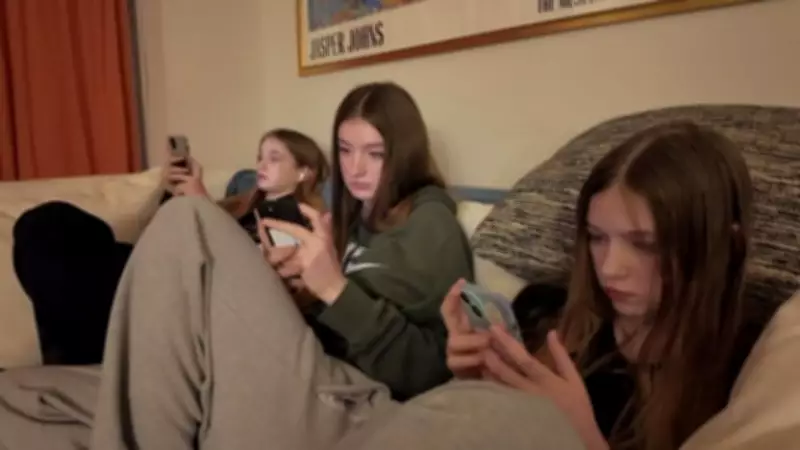
Now, as teenagers, their lives, like those of nearly every other child we know, are dominated by social media. Snapchat is central to their social interactions, and TikTok serves as a go-to source for dopamine fixes. As parents, we strive to pry devices from their hands and limit screen time, but it is an ongoing battle.

Global Legislative Moves Against Social Media for Kids
France and Spain are promising laws to ban child access to social media as early as this year. Countries such as Austria, the Czech Republic, Denmark, Finland, Greece, Italy, and Slovenia have proposed similar legislation. Portugal is considering requiring parental consent for child social media access.
Last month, the Westminster government announced it would consult on the issue of social media for under-16s. As a bloc, the European Union has expressed support for a Europe-wide ban, signaling a potential tipping point in regulatory efforts.
Clare Melford, chief executive of the Global Disinformation Index, draws a parallel to historical battles: "We knew cigarettes were harmful and addictive and killed people for decades before we got legislation that made a difference. Social-media companies have only been around for 15, 20 years. So it is relatively quick on a historical scale, but for those of us who have teenagers now, it's not quick enough."
Resistance from Big Tech and Political Backing
A Big Tech-backing White House is not aiding the cause. In December, US Secretary of State Marco Rubio banned Ms. Melford and three other European online safety campaigners from entering the US. Another campaigner, a legal resident in New York, was threatened with deportation.
Imran Ahmed, the British boss of the US-based Centre for Countering Digital Hate, commented: "I wasn't surprised because we know the impact of Big Tech and big money on government in America and around the world. But of course, it was shocking as a family to be threatened with potential detention just for the things I said."
Tech leaders are fighting back aggressively. Elon Musk has faced European criticism over allegedly extremist content on his platform and the now-curtailed "nudification" powers of his Grok AI. When Spain's Prime Minister Pedro Sanchez announced his social media ban earlier this month, Musk responded with a derogatory post on X, calling Sanchez "the true fascist totalitarian" and "a tyrant and traitor to the people of Spain."
Growing Support for Bans in the United States
Contrary to the White House's stance, US public opinion is shifting. American parents are increasingly angry, and their elected representatives are taking note. States like Florida, under Marco Rubio's influence, have backed child social media bans. Regulations to protect children online are gaining traction and rare bipartisan support in Congress.
In the absence of federal restrictions, court cases are adding pressure. A case in California this week centers on the "addictiveness" of apps and could force social media platforms to amend their offerings to children if successful.
Imran Ahmed from the CCDH expressed optimism: "From my perspective... we are further along in that battle than we ever have been. I think that ultimately we will be able to renegotiate the toxic relationship that we have with tech, where they are exploiting rather than enriching our kids."
It now appears that public opinion will ultimately compel Big Tech to make social media a safer and better place for children. However, given the industry's deep pockets and significant influence, parents like me may continue to argue with their kids about screen time for some time to come.