
Pragmata Review: The Greatest Xbox 360 Game That Never Was
In an industry dominated by sequels, remakes, and licensed properties, Capcom's Pragmata emerges as a genuine anomaly—a completely original third-person shooter that feels like it teleported straight from the Xbox 360 and PlayStation 3 era. This standalone title represents a rare creative gamble in today's risk-averse gaming landscape, delivering a polished, action-focused experience that prioritizes innovative gameplay over franchise building.
A Return to Creative Risk-Taking
The Xbox 360 and PlayStation 3 generation represented the last period when development costs remained manageable enough for publishers to occasionally gamble on new intellectual properties. While even then such risks were uncommon, Pragmata revives this spirit of innovation with remarkable confidence. This isn't merely another entry in an established series but a completely fresh creation born from genuine creative vision rather than market calculations.
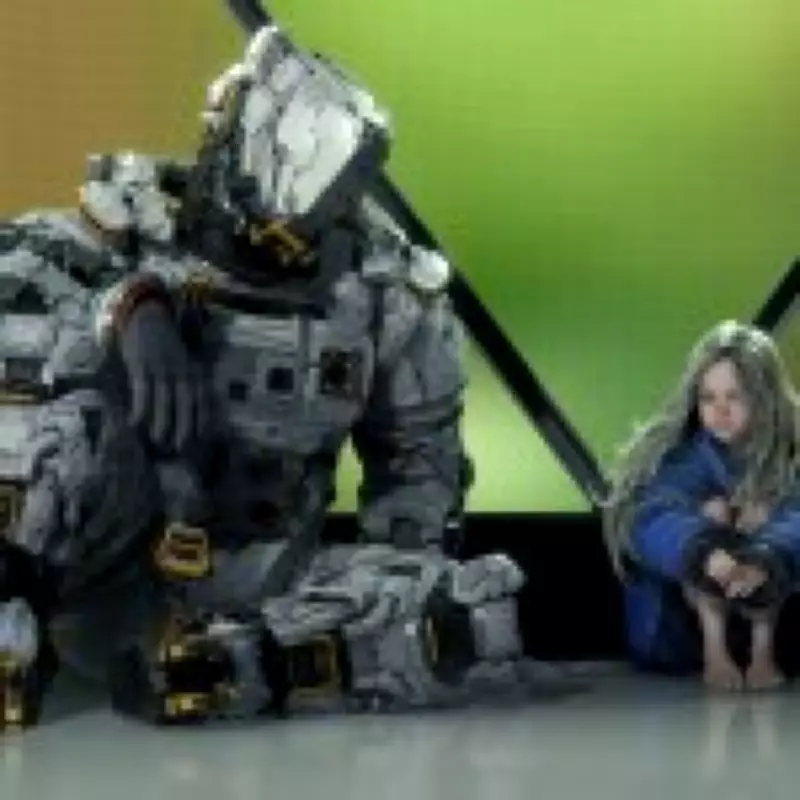
Set entirely on the Moon, Pragmata follows engineer Hugh and his companions during what should have been a routine mission. Instead, they discover abandoned facilities and hostile robots running amok. Hugh's only ally becomes Diana, an android in the form of a young girl whom he quickly adopts a protective role toward. While the narrative framework may sound familiar, Pragmata distinguishes itself through execution and mechanical innovation.
Mechanical Innovation Meets Classic Design
Pragmata's most immediately striking feature is its hacking mechanic, which transforms standard third-person combat into something genuinely unique. While Hugh battles robotic enemies with limited-ammunition weapons that must be discarded after use, Diana can expose enemy weak points through puzzle-based hacking. Players must navigate a grid-based puzzle using controller face buttons while simultaneously managing combat—a challenging but surprisingly intuitive system that never feels burdensome.
The game draws clear inspiration from classics like PlatinumGames' Vanquish (particularly in Hugh's exo-suit design), Binary Domain, and even Capcom's own P.N.03. These influences manifest primarily in the clinical visual aesthetic and robotic enemy designs rather than direct mechanical borrowing. While some might question why Capcom would reference historically underperforming titles, Pragmata transcends its influences through polished execution and mechanical cohesion.
Structural Sophistication and Endgame Content
Beyond its immediate combat systems, Pragmata demonstrates surprising structural depth. The game organizes its 10-hour campaign around intricately designed areas connected to an underground shelter hub. Players can return to this hub at checkpoints to upgrade abilities, replenish resources, and undertake increasingly difficult challenge levels—some of which represent the game's most demanding content.
This structure bears some resemblance to Dark Souls' approach to progression and difficulty, though Pragmata remains generally more accessible once players master its systems. The endgame content receives particular attention, with substantial rewards for exploration and completionist play. Optional challenge rooms test both player skill and game design by removing safety nets and allowing the combat systems to shine in their purest form.
Technical Polish and Narrative Shortcomings
Technically, Pragmata represents a remarkably polished experience. Across the entire campaign, we encountered no glitches, bugs, or performance issues—a testament to Capcom's development discipline. The visual presentation, while occasionally monotonous in its clinical aesthetic, maintains consistent quality throughout.
Where Pragmata falters slightly is in narrative execution and character development. Hugh embodies the archetypal video game protagonist without distinctive personality traits, relying on generic action-hero dialogue that feels dated. Diana avoids becoming an annoying companion but remains underdeveloped. More disappointingly, the game misses opportunities to explore its potentially rich themes about artificial intelligence and corporate ethics, relegating interesting commentary to optional emails rather than integrating it into the main narrative.
A Refreshing Standalone Experience
Perhaps Pragmata's greatest achievement is its commitment to being a complete, self-contained experience. While sequel potential exists, the game never emphasizes future installments, instead focusing on delivering a satisfying standalone journey. This approach feels refreshing in an era where every new property seems designed with franchise potential in mind.
Available at less than full price, Pragmata offers substantial value through its main campaign, challenge content, and exploration rewards. The game proves that original ideas can still thrive when executed with confidence and polish. While its soundtrack may be forgettable and its art direction occasionally repetitive, these minor flaws hardly diminish what represents one of the most refreshing gaming experiences in recent memory.
In an industry increasingly dominated by safe bets and established franchises, Pragmata stands as a testament to the value of creative risk-taking. It channels the spirit of gaming's more experimental past while delivering thoroughly modern polish—a combination that feels both nostalgic and forward-looking. For those weary of endless sequels and reboots, Pragmata offers exactly what its title suggests: practical proof that original ideas still have a place in contemporary gaming.




