
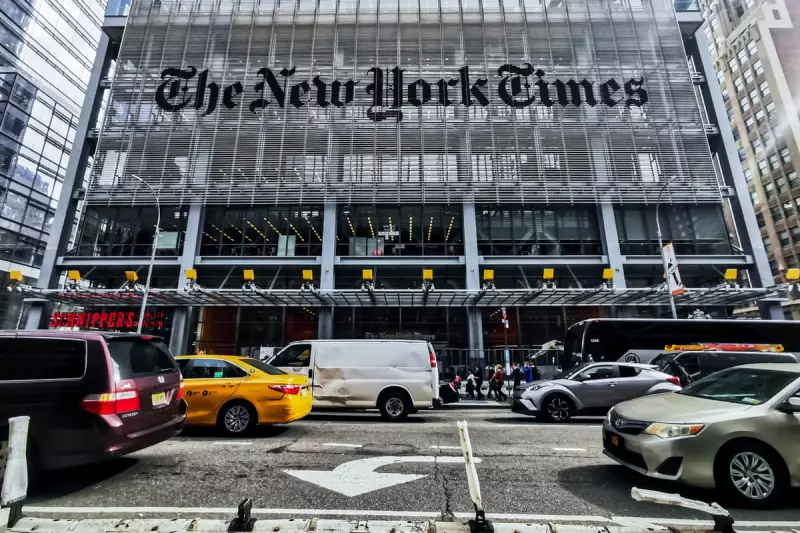
The New York Times has launched a major legal offensive against artificial intelligence startup Perplexity AI, filing a federal lawsuit that accuses the company of illegally copying and distributing millions of the newspaper's copyrighted articles.
Core Allegations and Legal Claims
Filed on Friday, the lawsuit alleges that Perplexity's business model is fundamentally built on the unauthorised scraping of online content, including material protected by paywalls. The newspaper claims this copied content is used to power Perplexity's generative AI products.
Beyond copyright infringement, The Times also accuses Perplexity of violating trademark law under the Lanham Act. The suit states that the AI firm's tools sometimes generate fabricated information, known as "hallucinations," and then falsely attribute this content to The New York Times by displaying it alongside the newspaper's registered trademarks.
A Growing List of Legal Challenges
Perplexity now finds itself at the centre of a widening storm of legal disputes from media and tech companies. The lawsuit from the Murdoch-owned Dow Jones and New York Post adds significant weight to the claims. Other publishers, including Forbes, Wired, the Chicago Tribune, Merriam-Webster, and Encyclopedia Britannica, have also taken legal action in recent months with similar accusations of plagiarism and copyright infringement.
The legal pressure isn't limited to publishers. Tech giant Amazon filed a lawsuit last month over Perplexity's AI shopping agent, alleging covert access to user accounts. Infrastructure provider Cloudflare has previously accused the startup of hiding its web-crawling activities. Furthermore, social media platform Reddit sued Perplexity in October, claiming unlawful data scraping to train its AI search engine.
Financial Backing and Market Ambitions
Despite the legal turmoil, the San Francisco-based startup has attracted substantial investment. Over the past three years, Perplexity has raised approximately $1.5 billion. A recent $200 million funding round in September 2024 valued the company at around $2 billion. Its investor roster includes industry heavyweights like chipmaker Nvidia and Amazon founder Jeff Bezos.
The case represents a critical flashpoint in the ongoing, bitter conflict between content creators and AI developers. Publishers are aggressively challenging the practice of using copyrighted material without permission or payment to build and operate commercial AI systems. Perplexity has denied the various allegations against it and did not immediately respond to a request for comment from Reuters.




