
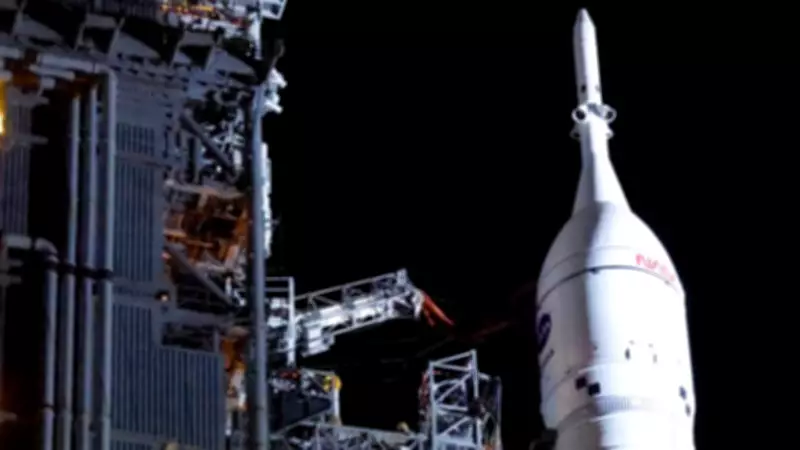
NASA's Artemis II Mission Enters Final Phase with Rocket on Pad, Crew in Quarantine
NASA has officially moved the Artemis II space launch system rocket and its Orion spacecraft to Launch Pad 39B at the Kennedy Space Center in Florida, marking a critical step forward for the first crewed lunar mission in over five decades. The space agency is now targeting a launch window from April 1 to April 6, 2026, after a series of delays pushed back the original February 8 start date.
Pre-Launch Preparations and Technical Adjustments
Engineers began the meticulous process of rolling the massive rocket to the launchpad on Thursday night, with a livestream on NASA's YouTube channel confirming its successful placement. This move comes after a liquid hydrogen leak during a practice launch in February forced NASA to postpone the operation, highlighting the rigorous safety protocols in place for such ambitious missions.
The Artemis II mission is a cornerstone of NASA's long-term vision to establish a sustainable human presence on the moon, ultimately supporting the construction of the Lunar Gateway space station where astronauts will live and work. This 10-day journey will take the crew further into space than humans have ever ventured before, testing vital systems in deep space environments.
Crew Quarantine and Mission Objectives
In parallel with the rocket's relocation, the four-astronaut crew entered quarantine in Houston, Texas, on Wednesday to ensure their health remains optimal leading up to launch. The team includes three US astronauts—Reid Wiseman, Victor Glover, and Christina Koch—alongside Canadian astronaut Jeremy Hansen, representing a collaborative international effort in space exploration.
During the mission, the crew will conduct extensive tests on life support, navigation, and communication systems to verify their functionality in deep space. Many of these evaluations will occur while the Orion capsule remains in Earth's orbit, providing a safer proximity to home in case of any unforeseen issues. Subsequently, the capsule will enter Earth's high orbit, where the astronauts will manually pilot Orion before control is handed back to mission controllers at NASA's Johnson Space Center.
Historical Context and Future Implications
This mission follows the successful Artemis I launch in November 2022, which involved sending an uncrewed Orion capsule to circle the moon to test the Space Launch System rocket. Artemis II builds on that foundation, paving the way for future missions aimed at lunar landings and beyond. NASA's commitment to advancing space exploration is evident in these meticulous preparations, ensuring that every aspect of the mission aligns with the highest standards of safety and innovation.
As the launch window approaches, the global space community watches with anticipation, recognizing the significance of this endeavor in expanding human horizons and deepening our understanding of the cosmos. The Artemis II mission not only represents a technological milestone but also inspires a new generation of explorers to reach for the stars.




