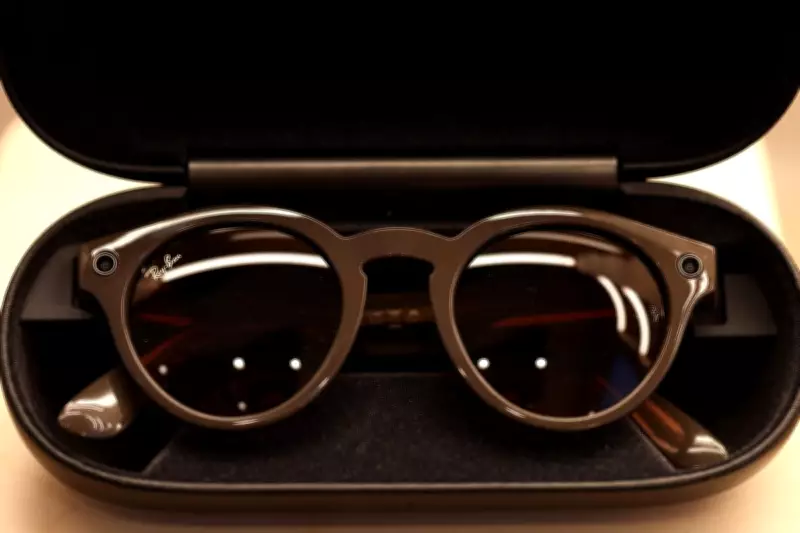
The Rise of Meta Smart Glasses in Professional Environments
Meta smart glasses are transitioning from niche technological curiosities to mainstream workplace accessories, raising profound questions about privacy, security, and organizational governance. With 7 million Ray-Ban Meta smart glasses sold in 2025 alone, and production expected to increase to between 20 and 30 million units annually by year's end, these devices are becoming ambient fixtures in offices, trading floors, and factory environments.
Recording Without Governance: The Emerging Workplace Reality
Cameras mounted at eye level and microphones embedded in frames are fading into the background of professional settings, creating continuous recording environments whether formal governance frameworks exist or not. A significant number of employees in medium and large organizations are already wearing these devices at work, yet most companies lack clear policies addressing what can be recorded, who can be identified, and where the data ultimately resides.
The evolution of shadow IT has taken a physical turn, moving from unsanctioned software slipping through browsers to recording devices worn on faces. This shift represents a fundamental change in how workplace technology integrates with daily operations, creating new vulnerabilities that traditional IT policies were never designed to address.
Beyond Speculation: Demonstrated Security Vulnerabilities
The technology involved is neither speculative nor theoretical. Harvard students demonstrated in 2024 how Meta glasses could be hacked to create I-XRAY, a system capable of identifying strangers in under two minutes and extracting names, addresses, and other personal details from public databases using readily available components.
Meanwhile, Chinese police are already deploying augmented glasses for identification and traffic enforcement, while UK police continue expanding live facial recognition in public spaces. This distribution is occurring simultaneously in both public and private sectors, creating parallel adoption curves that reinforce each other.
The Scale Problem: When Economics Outpace Policy
Scale fundamentally changes the economics of risk before policy can catch up. Meta's financial position illustrates this dynamic perfectly: with Q4 2025 revenue reaching $59.89 billion and full-year revenue hitting $200.97 billion, regulatory fines have become normalized as a cost of doing business rather than functioning as meaningful deterrents.
Europe's AI Act allows for substantial penalties of up to €35 million or seven percent of global turnover for certain violations, but enforcement mechanisms typically move more slowly than product development cycles. By the time regulators intervene effectively, tens of millions of devices may already be embedded in daily workplace routines.
Productivity Versus Surveillance: The Inextricable Link
Productivity gains represent the primary driver for workplace adoption, with compelling case studies accumulating across multiple industries. Manufacturing firms deploying smart glasses for hands-free documentation report efficiency improvements of 20-30 percent in complex assembly operations alongside measurable reductions in error rates.
Energy operators describe significantly shorter training cycles, while healthcare teams cite substantial improvements in documentation accuracy and workflow consistency. In safety-critical environments, these gains translate directly into fewer mistakes, faster onboarding, and tighter operational control.
The critical risk lies in assuming that productivity and surveillance capabilities travel separately. A device guiding a technician through a complex repair simultaneously records the whiteboard behind them. A camera supporting remote maintenance also captures negotiation dynamics and sensitive financial information.
From Gadget to Infrastructure: The Governance Imperative
Smart glasses must be treated as workplace infrastructure rather than as gadget trials delegated to IT departments. The fundamental decision organizations face isn't whether workflow gains appear attractive in demonstrations, but whether identification features that offer marginal benefits justify the exposure they create.
Recording boundaries in deal rooms, client briefings, and human resources settings need to be established before adoption hardens into standard practice. Insurance coverage must be tested against biometric and continuous capture risks, while consumer device terms need to be thoroughly understood before those devices enter secure professional environments.
The Responsibility Shift: From Platform to Enterprise
When employees become nodes in sensing networks that no board formally approved, legal and reputational risk transfers from the platform company to the enterprise using the device. Insurance policies written for laptops and mobile phones may not extend to continuous recording on privately owned glasses, while employment contracts rarely contemplate biometric capture between colleagues.
Consumer terms frequently grant broad rights over uploaded content, creating scenarios where confidential client meetings recorded through smart glasses and synced to third-party cloud services present fundamentally different risks than unauthorized software subscriptions.
The Path Forward: Proactive Rather Than Reactive Governance
Smart glasses won't wait for governance frameworks to mature, and the companies selling them possess balance sheets capable of absorbing whatever fines might follow. Responsibility will ultimately rest with the businesses that allowed these devices inside their walls without adequate safeguards.
Platform companies can price penalties into their growth models, but most organizations cannot afford to discover too late that their own employees have become the data infrastructure for someone else's artificial intelligence models. Procurement discipline must evolve beyond software considerations to actively shape behavioral norms and technological boundaries in the modern workplace.