New Astronaut Crew Docks at International Space Station After Unprecedented Medical Evacuation
In a significant development for space exploration, four new astronauts have successfully arrived at the International Space Station (ISS) to replace a crew that was evacuated early due to health concerns. This event marks NASA's first medical evacuation in over six decades, highlighting the challenges and protocols of long-duration space missions.
Historic Crew Replacement Amid Health Emergency
The newcomers, comprising NASA's Jessica Meir and Jack Hathaway, France's Sophie Adenot, and Russia's Andrey Fedyaev, were delivered to the orbital laboratory by a SpaceX Dragon spacecraft. They launched from Cape Canaveral and docked at the ISS, which orbits 277 miles (446 kilometers) above Earth. Their arrival comes after the previous crew was forced to evacuate following a serious health issue involving one astronaut on January 7, 2026.
NASA has maintained strict privacy regarding the identity of the ailing astronaut and the specifics of the medical condition, citing confidentiality. The evacuation left only three crew members on board—one American and two Russians—leading to a temporary pause in spacewalks and a reduction in research activities at the station.

Experienced Astronauts Join the Mission
The new crew brings a wealth of experience to the ISS. Jessica Meir, a marine biologist, previously lived on the station in 2019 and participated in the first all-female spacewalk. Andrey Fedyaev, a former military pilot, also has prior ISS residency. Sophie Adenot, a military helicopter pilot, is notably the second French woman to travel to space, while Jack Hathaway serves as a captain in the US Navy.
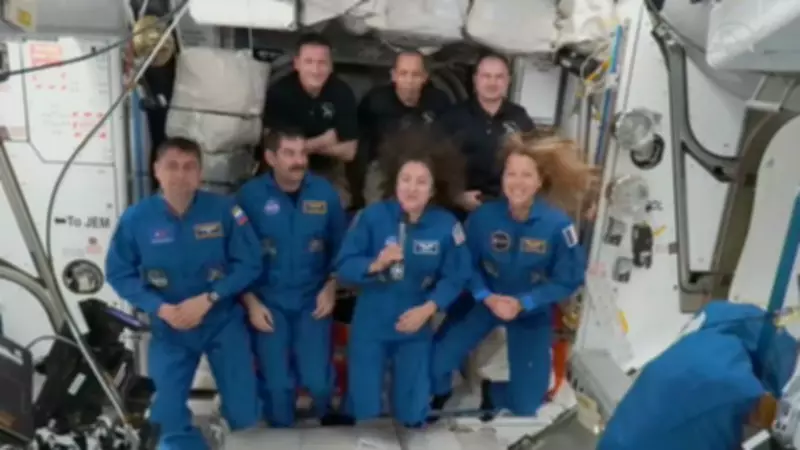
Upon arrival, video footage shared by NASA captured the moment the four astronauts floated through the hatch from the Dragon spacecraft into the ISS. They were greeted with hugs and high-fives by the existing crew in the zero-gravity environment, with Adenot cheerfully saying "Bonjour" as she entered.
Mission Details and Future Plans
The crew is scheduled to spend approximately eight to nine months aboard the International Space Station, conducting various research experiments and maintenance tasks. This extended stay aims to restore normal operations after the disruption caused by the evacuation.
The medical evacuation itself was a rare event, with the affected astronaut and three colleagues returning to Earth more than a month ahead of schedule. They spent their initial night back in a hospital before reuniting with their families in Houston, underscoring the rigorous health monitoring and support systems in place for space travelers.
This incident underscores the ongoing risks and complexities of human spaceflight, even as advancements in technology and international collaboration continue to push the boundaries of exploration. The successful docking of the new crew demonstrates resilience and preparedness in the face of unforeseen challenges.