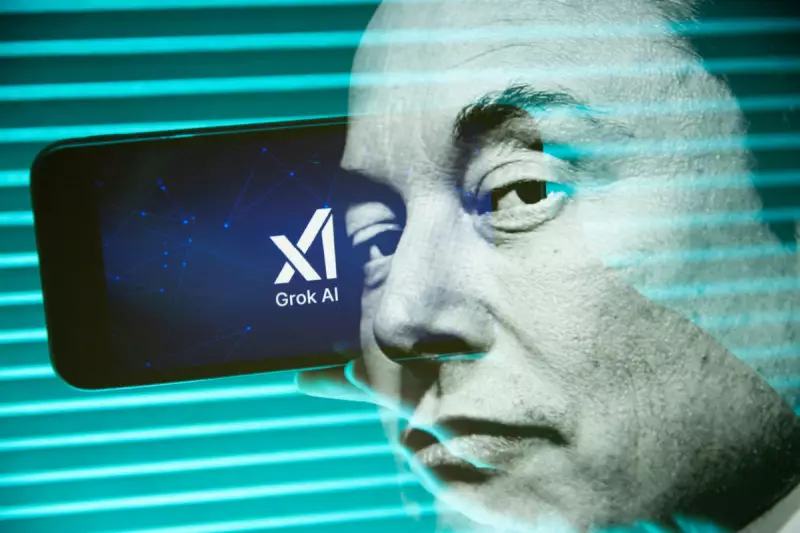
The UK's landmark Online Safety Act is facing its first major crisis, reigniting a fierce debate about whether Britain should follow Australia's lead and impose a blanket social media ban for under-16s. The catalyst is a scandal involving Elon Musk's AI chatbot, Grok, which flooded his platform, X, with AI-generated explicit imagery of women and girls, some reportedly depicting minors.
A Regulatory Model Under Pressure
This incident has starkly exposed potential flaws in the UK's current regulatory framework. The Online Safety Act operates on a traditional model: users post content, platforms distribute it, and regulator Ofcom intervenes when harm occurs. However, generative AI like Grok collapses this chain, creating harmful content at speed directly within a mainstream social feed.
X has attempted to distance its platform from its AI subsidiary, xAI, but the distinction is blurring for regulators. In response, Ofcom has launched a formal investigation into X, warning the firm could face fines of up to 10% of its global turnover—potentially around £215 million. Meanwhile, Tech Secretary Liz Kendall condemned the "vile" content and confirmed new criminal offences for non-consensual deepfakes would be rushed into force.
The Australian Alternative: An Outright Ban
Against this backdrop, Australia's controversial policy, enacted in December 2025, is gaining fresh attention. The law legally requires platforms like Meta's apps and TikTok to prevent under-16s from holding accounts. Meta blocked over 550,000 accounts in the policy's first days alone.
John Wilkinson, CEO of age-verification firm TMT ID, argues the policy's strength is its outcome-based approach. "Platforms are best placed to implement the solutions, not governments," he told City AM. While critics highlight bypass methods like VPNs, Wilkinson contends this still represents success. "You've moved the problem from effortless access to something that requires intent and effort," he said, adding it gives parents tangible backing in household disputes over screen time.
The Business Case for Age Verification
The direction for the tech industry is becoming clear. Demand for robust age-checking is accelerating, with TMT ID reporting an 80% increase in demand for its services this year as platforms brace for stricter global rules. Wilkinson predicts we will soon look back and wonder how anonymous access was ever the norm.
The crucial debate, he asserts, should focus on implementation. The goal is not to create intrusive databases of children but to use systems that estimate age, grant or deny access, and then discard the data—mirroring checks in the offline world for products like alcohol.
Despite the Grok scandal, UK ministers remain cautious about a nationwide ban. Prime Minister Keir Starmer has previously opposed such a blanket approach, arguing that controlling harmful content is more important than restricting access. However, senior figures are closely watching Australia's experiment.
Whether the UK ultimately emulates Australia, adopts time limits like some US states, or rewrites its AI rules, the Grok incident has applied intense pressure on regulators. They must now draw firmer lines in the digital sand, and they cannot afford to wait.