
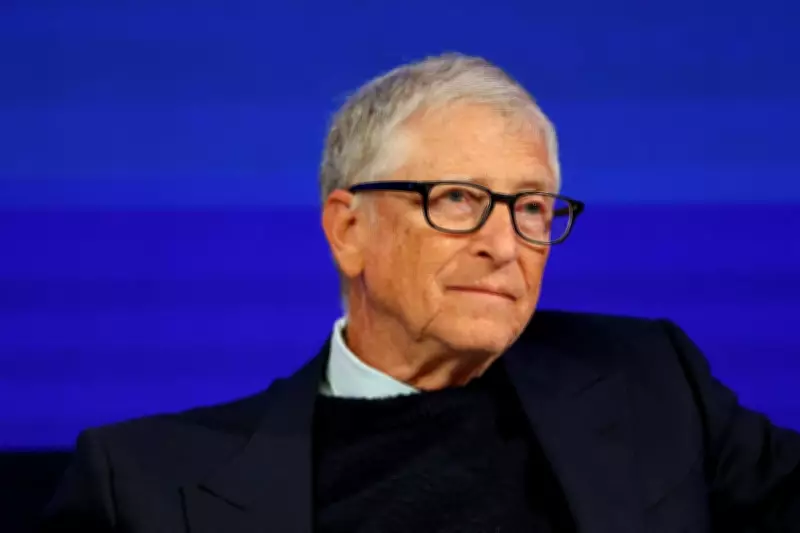
Bill Gates Abruptly Cancels Keynote at India's AI Summit
Bill Gates, the billionaire co-founder of Microsoft, has withdrawn from delivering a keynote address at the AI Impact Summit in India just hours before he was scheduled to speak. The Gates Foundation stated the decision was made to "ensure the focus remains on the AI summit's key priorities."
Epstein Controversy Shadows Tech Titan's Appearance
The sudden cancellation comes as Gates continues to face intense scrutiny over his past relationship with the late convicted sex offender Jeffrey Epstein. Gates had traveled to India earlier this week, where his foundation collaborates with the government on artificial intelligence initiatives for social good.
He was prominently advertised as a speaker following an appearance by Indian Prime Minister Narendra Modi at the international summit. However, on Thursday morning, Gates pulled out of his scheduled address to delegates that included French President Emmanuel Macron and Indian billionaire Mukesh Ambani.
The Gates Foundation released a statement explaining: "After careful consideration and to ensure the focus remains on the AI summit's key priorities, Mr. Gates will not be delivering his keynote address."
Foundation's Reversal on Attendance
This move represents a significant reversal from the foundation's position just 48 hours earlier, when they had firmly insisted: "Bill Gates is attending the AI Impact Summit. He will be delivering his keynote as scheduled."
While the foundation did not explicitly mention what might distract from the summit's intended focus, the timing coincides with renewed controversy surrounding Gates' connections to Epstein following the late January release of court documents related to the financier's case.
Gates has publicly expressed regret over his association with Epstein, telling Australian news outlet 9News earlier this month: "Every minute I spent with him, I regret." The tech billionaire has denied allegations that appeared in a draft email written by Epstein claiming Gates hid a sexually transmitted disease from his then-wife after contact with "Russian girls."
Personal and Professional Repercussions
Epstein died by suicide in August 2019 while awaiting trial on sex trafficking charges in New York's Metropolitan Correctional Center. In 2008, he had pleaded guilty to Florida state charges of solicitation of prostitution and solicitation of prostitution with a minor, serving 13 months of an 18-month sentence.
The recent release of Epstein files has had personal repercussions for Gates as well. His ex-wife, Melinda French Gates, described how the documents brought back "memories of some very, very painful times in my marriage." She told NPR that questions about Epstein connections "are for those people and for even my ex-husband" to answer.
Summit Continues with High-Profile Speakers
Despite Gates' absence, the Gates Foundation emphasized its continued commitment to work in India, stating it "remains fully committed to our work in India to advance our shared health and development goals." The foundation will be represented at the summit by Ankur Vora, president of its Africa and India offices.
The AI summit in Delhi continues to feature an impressive roster of speakers, including:
- OpenAI CEO Sam Altman
- Google CEO Sundar Pichai
- White House AI adviser Sriram Krishnan
- UK Deputy Prime Minister David Lammy
- UK AI Minister Kanishka Narayan
Global Leaders Weigh In on AI's Future
Former UK Chancellor George Osborne, now with OpenAI, warned summit attendees that countries failing to embrace powerful AI systems risk "Fomo" (fear of missing out) and could become weaker and poorer. "Don't be left behind," he cautioned the audience.
Former UK Prime Minister Rishi Sunak, who now advises OpenAI rival Anthropic and Microsoft, urged political leaders to take bolder steps in leading AI rollout. "If you are a prime minister you can only do a few things that you drive personally, and this has to be one of them," Sunak stated.
In a contrasting perspective, UN Secretary-General António Guterres cautioned that AI's future cannot be left to "the whims of a few billionaires." He called on technology leaders to support a $3 billion global fund to ensure open access to advancing AI technology for all nations.
The summit highlights both the promise and challenges of artificial intelligence as world leaders, tech executives, and policymakers gather to shape the technology's global trajectory while navigating complex personal and ethical considerations surrounding its most prominent advocates.




