As we welcome 2026, the technological landscape is poised for seismic shifts that will touch every corner of the globe. From the infrastructure powering artificial intelligence to the vehicles on our streets, the coming year promises accelerated change. Here are the five pivotal trends set to define the next twelve months in tech.
The Global Datacentre Gold Rush Expands
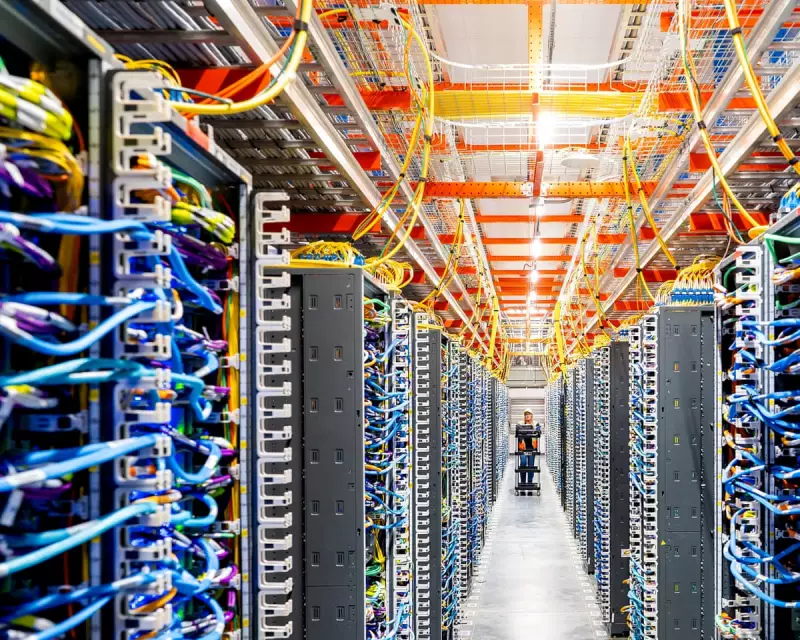
The breakneck construction of datacentres, which swept across the United States and the United Kingdom in 2025, is now going truly global. The multitrillion-dollar project to build the infrastructure behind artificial intelligence is rapidly expanding into new territories, driven by colossal investments from tech titans.
India has emerged as a primary battleground. In a striking display of competition, Microsoft committed $17.5 billion to new datacentres in the country, only for rival Amazon to announce a $35 billion investment moments later. Google and Meta are also pouring billions into the subcontinent, signalling a five-year build-out frenzy.
This pattern is repeating worldwide. Southeast Asia, including Indonesia, Malaysia, and Vietnam, is forecast to see double-digit growth in computing capacity. Brazil is making a strong play to become Latin America's hub, though its power grid struggles with the immense energy demand, having already caused blackouts. In the Middle East, Saudi Arabia and the UAE have struck AI deals worth around $600 billion with the US, aiming to diversify from oil and dominate regional AI.
However, a cautionary tale comes from China. Despite a rush to construct over 150 new datacentres in 2023-2024, reports indicate a significant portion now sits unused, with up to 80% of new computing capacity struggling to find buyers—a stark warning about potential global oversaturation.
Self-Driving Cars Arrive on the World Stage
2026 will be the year autonomous vehicles become a common sight in major cities worldwide. A fierce race between US and Chinese firms is set to deploy robotaxis across multiple continents, moving beyond limited test zones.
On the American side, Waymo, Google's driverless venture, will expand its robotaxi service from San Francisco and Los Angeles into Washington DC, New York City, and London. Chinese competitors are advancing just as aggressively. Baidu's Apollo Go is already operating in Dubai and Abu Dhabi, while firms like WeRide, Momenta, and Pony AI have concrete plans to launch services across Europe, including in Germany.
This means that for the first time, millions more people will encounter self-driving cars as part of their daily commute, marking a pivotal step towards mainstream adoption.
Tech Billionaires' Fortunes Set to Soar Further
The astronomical wealth accumulation seen in the tech sector shows no sign of abating. In 2025, ten of the industry's top executives saw their fortunes swell by a collective $550 billion. Two looming blockbuster initial public offerings (IPOs) could turbocharge this trend in 2026.
SpaceX, valued at approximately $800 billion, and OpenAI, valued at around $830 billion, are both expected to go public. These events could push their valuations to $1 trillion and add tens of billions to the net worth of SpaceX's Elon Musk. Musk is also poised to benefit from two enormous Tesla pay packages, one worth $56 billion and another, newly approved, worth a staggering $1 trillion.
The picture is less certain for Oracle founder Larry Ellison. After briefly becoming the world's richest man, his fortune has been hit by an $80 billion drop in Oracle's market value, as investors grow wary of the company's massive AI-related financial commitments.
AI's Uneven Transformation of the Workplace
Artificial intelligence is reshaping work, but in a fragmented and inconsistent manner. While it has revolutionised fields like computer coding and is replacing some customer service roles with chatbots, its broader impact on productivity remains limited.
A seminal MIT study found that 95% of corporate AI pilot programmes fail to deliver a return on investment. This hasn't stopped companies from freezing hiring in anticipation of AI's potential, affecting today's job market based on tomorrow's promises. Industries like Hollywood are turning to AI to cut production costs, while newspaper readers have largely rejected AI-generated articles for being unreliable.
In 2026, the focus will likely shift towards generative AI finding genuine, useful niches—such as summarising complex legal documents—rather than attempting wholesale worker replacement.
The Quest for the Next Must-Have Device
After a decade of smartphone stagnation, consumer hardware is entering a period of bizarre and innovative experimentation. The hunt is on for a device that can effectively channel the capabilities of AI into a physical form.
All eyes are on Apple and its long-rumoured folding iPhone, which would bring a new form factor to its vast, loyal user base. Simultaneously, tech firms are desperately trying to create the first successful standalone AI device. OpenAI invested $6.5 billion in designer Jony Ive's startup in 2025, with a product expected soon. Failed experiments like the Humane Pin and Friend necklace have not deterred the industry.
The most promising avenue appears to be smart glasses, led by Meta, which could seamlessly integrate responsive AI into daily life. Furthermore, expect AI to pop up in increasingly unexpected places—following Samsung's lead of putting its Bixby assistant in refrigerators, 2026 might introduce the smart hotel duvet.
In summary, 2026 will be defined by the physical expansion of digital infrastructure, the tangible arrival of autonomous transport, continued wealth concentration, AI's pragmatic—not revolutionary—integration into work, and a wave of strange new gadgets vying for our attention.