
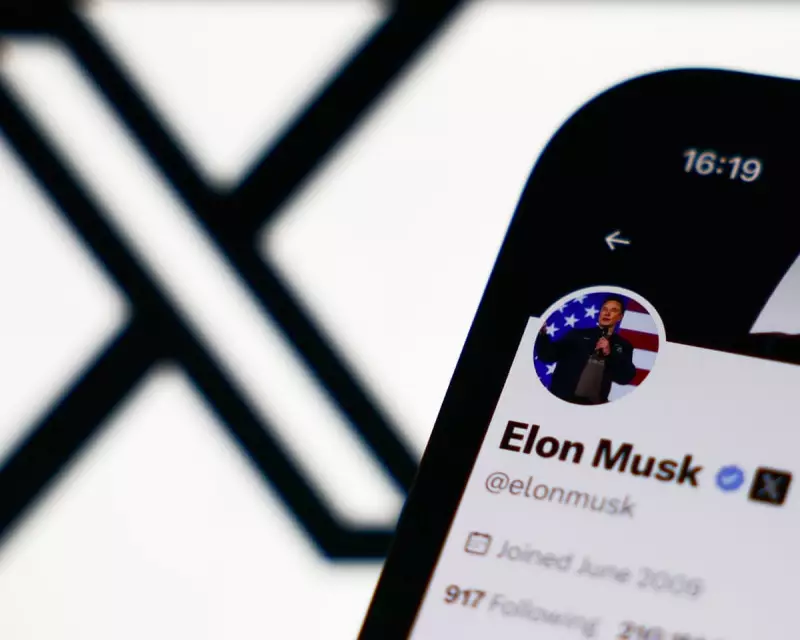
The European Union has imposed a landmark €120 million (approximately £105 million) fine on Elon Musk's social media platform, X, marking its first major enforcement action under new bloc-wide digital regulations.
Three Key Breaches Under the Digital Services Act
The European Commission ruled that X was in breach of the Digital Services Act (DSA) in three critical areas. The fine concludes a two-year investigation into the platform's practices, though other probes remain ongoing.
The first breach centred on what EU officials labelled a "deceptive" blue tick verification system. After Musk acquired Twitter, rebranding it as X, the platform altered its policy so that the iconic blue badge could be purchased via an X Premium subscription. The commission argued this left users unable to distinguish between accounts verified for authenticity—such as politicians, journalists, and public bodies—and those who had simply paid for the status.
The second breach involved a lack of transparency in online advertising. The DSA mandates that large tech companies provide a publicly accessible repository of advertisers. This is designed to help combat illegal scams, fake adverts, and coordinated disinformation campaigns, particularly around elections. The commission found X failed to comply with this obligation.
A third breach concerned data access for researchers. The EU concluded that X did not provide the required level of access to public data for researchers who monitor contentious issues like political content and platform manipulation.
Financial Penalty and Ongoing Investigations
The €120 million penalty is broken down into three parts: €45 million for the deceptive verification system, €35 million for advertising transparency failures, and €40 million for the data access breach.
Under the DSA, which came into full force in 2023, platforms can be fined up to 6% of their global annual revenue. X's revenue for 2024 is estimated to be between $2.5 and $2.7 billion.
This ruling does not close the book on X's regulatory challenges in Europe. Three other DSA investigations are still active. Two relate to the platform's content and the algorithms that promote it, which underwent significant changes after Musk's takeover. A third is examining X's compliance with rules against illegal content, including incitement to violence and terrorism, and the effectiveness of its user reporting tools.
Broader Political and Trade Implications
The decision risks escalating tensions between Brussels and powerful US figures. The ruling was announced shortly after US Commerce Secretary Howard Lutnick suggested the EU should reconsider its tech regulations to secure a reduction in US tariffs on steel—a move Spanish Commissioner Teresa Ribera denounced as "blackmail."
Senior EU officials insisted the fine was independent of these trade discussions, asserting the bloc's "sovereign right" to regulate major tech firms, including approximately 25 companies like TikTok that fall under the DSA's strictest rules.
Elon Musk now has 90 days to submit an "action plan" to address the cited breaches. He retains the right to appeal the decision to the European Court of Justice, a path previously taken by other tech giants like Apple.
In a contrasting development, the commission announced it had secured commitments from TikTok to provide the required advertising transparency, highlighting a cooperative path to compliance.




