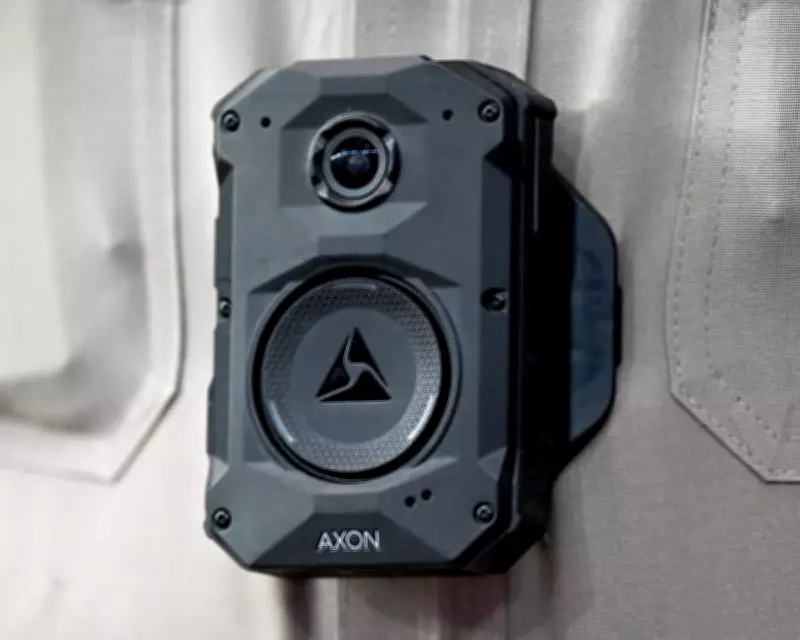
Axon Celebrates Record Financial Results as DHS Plans Body Camera Expansion
Axon, the leading manufacturer of body cameras in the United States, reported unprecedented revenue figures on Tuesday, highlighting a significant surge in growth driven by federal law enforcement initiatives. The company, also known for its Taser devices, revealed earnings of $797 million, marking a 39% increase compared to the previous year, surpassing Wall Street expectations.
Federal Contracts and Growth Opportunities
During the earnings presentation, Axon executives emphasized "major opportunities" in collaborating with federal agencies, particularly the Department of Homeland Security (DHS). This aligns with congressional proposals to allocate $20 million for body cameras for Immigration and Customs Enforcement (ICE) officers, following aggressive lobbying efforts by Axon, which spent over $1.4 million in advocacy last year.
CEO Rick Smith acknowledged concerns around privacy and data handling, stating that missteps in these areas could have "outsized negative consequences." However, the company is pushing forward with its "AI era plan," which includes voice-activated companions for body cameras and expanded software offerings.
Privacy and Surveillance Concerns
Data privacy experts have raised alarms about the potential misuse of body-camera footage by DHS. Spencer Reynolds, a national security attorney at the NAACP Legal Defense Fund, warned that expanded use could turn every agent into a surveillance tool, with selective video releases often serving as propaganda. Emily Tucker, executive director at the Center on Privacy & Technology at Georgetown Law, argued that DHS cannot be trusted with such data, suggesting independent oversight as a necessary safeguard.
Axon's dominance in the market has not been without controversy. In 2023, the company faced a lawsuit from three cities alleging monopolistic practices, though the case was largely dismissed. Currently, DHS holds a $5.1 million contract with Axon for body cameras and cloud storage licenses.
Political and Ethical Dimensions
Legislative efforts, such as a bill introduced by Arizona Democratic senators Ruben Gallego and Mark Kelly, aim to mandate body cameras for all DHS officers. Notably, Gallego has received more than $20,000 in campaign donations from Axon executives since 2017, according to FEC data. While Democrats advocate for body cameras with data protections, current spending proposals lack these guardrails, with Republicans also supporting funding as part of DHS negotiations.
Axon's Expanding AI Ecosystem
Beyond body cameras, Axon positions itself as a holistic, AI-powered crime center, leveraging technologies like automated license plate readers, drones, and real-time data analytics. Andrew Guthrie Ferguson, a law professor at George Washington University, noted that the real revenue lies in data storage and analytics, with software and services revenue growing 40% to $343 million in the fourth quarter.
The company is also revisiting facial recognition technology, despite pausing its deployment in 2019 due to bias and accuracy concerns. A limited program with the Edmonton police in Alberta signals a cautious return, as Smith emphasized that facial recognition is already prevalent in law enforcement.
Market Competition and Community Backlash
Axon's entry into the automated license plate reader market comes amid controversy over competitors like Flock Safety, which has been criticized for aiding immigration enforcement and abortion-related pursuits. In Denver, the mayor proposed replacing Flock's systems with Axon's, citing better privacy promises, though activists remain skeptical about the improvement.
Joshua Isner, Axon's COO, highlighted that the company's track record on ethics and privacy has been a deciding factor for customers switching from other vendors. However, as Axon continues to expand its surveillance capabilities, the balance between security and civil liberties remains a critical issue for policymakers and the public alike.