
NASA's Artemis II Mission to Send Astronauts Around Moon After 50-Year Hiatus
For the first time in more than five decades, astronauts are set to embark on a journey around the moon and back, as NASA's Artemis II mission pushes human exploration further into space than ever before. After a delay caused by a liquid hydrogen leak during a practice launch, the space agency has now scheduled a launch window from April 1 to April 6, 2023. This historic mission represents a significant milestone in lunar exploration, reviving ambitions that have lain dormant since the Apollo era.
Artemis Explained: NASA's Lunar Exploration Programme
Artemis is NASA's comprehensive four-part lunar exploration programme, initiated in 2017 with the goal of returning humans to the moon for the first time since the last lunar landing in December 1972, which concluded the Apollo programme. The Artemis missions are integral to NASA's long-term strategy to establish a space station known as Lunar Gateway, where astronauts will live and work on the lunar surface, preparing for future missions to Mars. The first phase, Artemis I, launched in November 2022, sending an uncrewed Orion capsule to orbit the moon to test the Space Launch System (SLS) rocket. This programme underscores a renewed global interest in lunar exploration, driven in part by competitive efforts from nations like China, which plans its own moon landing mission by 2030.
The Rocket and Spacecraft: Engineering Marvels
The SLS rocket, unveiled by NASA on January 17, 2023, is a towering structure standing at 98 meters, taller than Big Ben. It consists of a core stage with fuel tanks containing two million liters of liquid hydrogen and 750 million liters of liquid oxygen, which, when ignited, produce steam expelled at 10,000 mph. Two boosters attached to the core stage generate 75% of the rocket's power in the initial two minutes of flight, each producing thrust equivalent to 14 jumbo jets. After reaching orbit, the boosters detach, leaving the upper stage with the Orion crew capsule to continue the journey. NASA asserts that the SLS is the only rocket capable of transporting astronauts, cargo, and the Orion capsule directly to the moon in a single mission. However, this capability comes at a high cost: the SLS programme has incurred $23.8 billion since 2011, with the Orion capsule adding $20.4 billion over a decade, totaling $49.9 billion by 2022, and each launch estimated at $4 billion.
The Crew: International Team of Astronauts
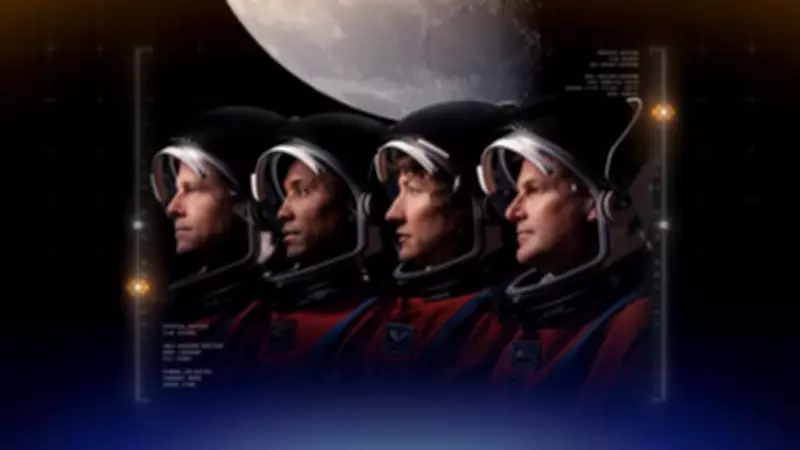
Artemis II's crew comprises three American astronauts and one Canadian, all with prior space experience except for Jeremy Hansen, a mission specialist who will become the first Canadian to fly around the moon. On March 20, 2023, the crew entered quarantine, part of the health stabilisation programme, to prevent illness before launch, typically starting 14 days prior to scheduled take-off. This diverse team highlights the collaborative nature of modern space exploration.
The Mission: Ten-Day Deep Space Test
During the 10-day mission, the crew will rigorously test life support, navigation, and communication systems in deep space. Initial tests will occur in Earth's orbit to ensure safety, followed by entry into high orbit where astronauts will manually pilot Orion before control transfers to NASA's Johnson Space Center in Houston, Texas. The astronauts will then spend four days circling the moon, venturing approximately 4,600 miles beyond its far side, reaching the mission's maximum distance from Earth on day six. Upon returning around the moon, gravity will naturally pull Orion back to Earth, culminating in a splashdown in the Pacific Ocean, with recovery assisted by the US Navy.
Delays to Launch: Overcoming Challenges
The original launch date of February 6, 2023, was postponed due to a cold spell in Florida delaying the wet dress rehearsal, which simulates countdown sequences. The rehearsal began on February 2 but was cut short by a liquid hydrogen leak. NASA administrator Jared Isaacman emphasized that such tests are designed to identify issues before flight, prioritizing safety for astronauts and the public. Repairs and additional rehearsals are underway to address flaws, including those from a 2022 test flight that revealed problems with the Orion capsule's life support system and heat shield, requiring design modifications. Weather remains a critical factor, with NASA enforcing strict criteria on temperature, wind, precipitation, lightning, clouds, and solar activity; any rain likely results in a launch delay.
This mission marks a pivotal step in humanity's quest to explore beyond Earth, blending technological innovation with international cooperation to pave the way for future lunar and Martian expeditions.




